
ANCA Eastern Region: United for Artsakh Armenian Weekly
Day: September 27, 2023

Since November 2020, the prospects of Armenian-Azerbaijani normalization have been considered a valid possibility, for the first time since the beginning of the first Artsakh (Nagorno-Karabakh) War in the 1990s. The ceasing of Artsakh remained the first and a non-negotiable condition of Azerbaijan to engage in further reconciliation processes, somehow accepted by the Armenian government. After Azerbaijan launched a full-scale military invasion of Artsakh on September 19, it became clear that the fate of Artsakh has been sealed, this way or another.
We have seen the photos of 40,000 people gathered at the airport in Stepanakert, where the Russian peacekeeping mission of Artsakh is based. Some inhabitants of Artsakh will flee if given the opportunity. However, some will choose to stay regardless of the danger. The humanitarian consequences of another border change in the South Caucasus were never considered as a tangible prediction, even though such a scenario was possible, considering the history and existing struggles of Azerbaijani citizens of Armenian origin. In the 21st century, we understand the strategies and practicalities of state-sponsored discrimination and ethnic cleansings much too well. Still, we pretended not to know what will happen to an ethnic minority thrown to the mercy of an oppressive and hatred-driven state.
In 2004, during the NATO training in Budapest, Ramil Safarov, an officer of the Azerbaijani army, broke into the dormitory room of Gurgen Margaryan, an Armenian army lieutenant, and brutally murdered him with an ax. Two years later, he was found guilty of first-degree murder and sentenced to life imprisonment in Hungary. This is not the end of the story, however. Safarov was extradited six years later and welcomed in Baku with honors. He was promoted to the rank of a major, provided with an apartment and compensated with six years back-pay. In Azerbaijan, he rose to the fame of a national hero, with the full support of national political elites.
This story exemplifies the scale of ethnic hatred against Armenians in Azerbaijan better than any report or statistics. These are, as well, telling. According to official Azerbaijani governmental data, there are 30,000 Armenians living in Azerbaijan (excluding the population of Artsakh, usually included as well). However, the European Commission Against Racism and Intolerance (ECRI) has estimated only 700 individuals identifying as Armenian, which counts for less than three-percent of the official numbers. In fact, during six monitoring cycles, the authors of each ECRI report on Azerbaijan devote a separate chapter to Armenians, the only ethnic group residing in the country given a specific focus. Their situation is not only grave, but has also deteriorated over time, as ethnic hatred has intensified over the years and many Armenians attempt to hide their identity, based on which they are deprived of access to pensions, state services and the job market. They live in a country where Armenians are considered the biggest enemies and traitors. Azerbaijani individuals or NGOs assisting Armenians in attempts to exercise their basic rights are reportedly victims of “anonymous threats, defamation campaigns in some media and harassment by some authorities,” according to the ECRI. Human rights activists “working inter alia towards reconciliation with Armenia have been sentenced to heavy prison terms on controversial accusations (…). Political opponents are accused of having Armenian roots or of receiving funds from Armenian sources,” the ECRI says. Both in 2020 and today, Azerbaijani citizens who speak up against aggression are being detained. In Azerbaijan, the word “Armenian” is used as an insult.
As noted by Joe Nerssessian, addressing the international audience, Azerbaijani President Ilham Aliyev states: “‘We don’t have a problem with Armenian people.’ At the same time, while referring to national media, he consequently refers to Armenians as ‘fascist,’ ‘dogs,’ ‘rats,’ ‘barbarians’ and ‘vandals’.” The dehumanizing language of Azerbaijani political elites, an invitation to ethnic-based violence, was largely ignored by leading news outlets and international organizations and rarely mentioned in statements referring to the conflict. Meanwhile, the hate against Armenians in Azerbaijan has been nurtured for the past 30 years. Soon enough, the remaining population of Artsakh will be forced to pledge loyalty to a country where killing an Armenian is a virtue.
The best thing that can happen to them is a subsequent Palestinization of their cause, taken to the extreme. They will live within a de facto occupied territory, with no possibility to safely move or travel to other provinces of Azerbaijan. Armenian-owned businesses will no longer be allowed to operate legally, and Artsakh will quickly become an isolated black-market zone. All state buildings will be seized by the Azeri government—that includes schools, universities and hospitals, which will either be closed, repurposed or taken over by Azerbaijani staff. From that moment, the access to these institutions will be denied to the local population. All regulated professions such as teachers, doctors and police will be purged and adjusted to the Azerbaijani state regulations. As a reminder—Armenians in Azerbaijan have no right to own schools. 30,000 children will have no access to education. At best, they will be forced to attend Azerbaijani schools, facing daily bullying and discrimination. A state the size of Lebanon will become a ghetto. ECRI will write another report during the next monitoring cycle. Meanwhile, Azerbaijan will most likely start the policy of rapid settlement of Azerbaijani citizens in Artsakh. Reclaiming Artsakh will proceed equally on cultural, political, economic and demographic levels. Armenians will lose rights to their property, and their homes will be forcefully seized (this practice already continues, as stated by ECRI reports in 2001 and 2007).
***
This scenario, which only a week ago seemed like the most pessimistic vision of further developments, has quickly become invalid. While I tried to predict the further scope of discrimination, the integration plan of Azerbaijan seems to be limited to the simple annihilation of the entire Artsakh population. The only remaining question is if the subsequent purge of Armenians in Artsakh will be limited to disarmed soldiers, extend to all male inhabitants or the entire population. I see reports of rape and torture committed against the civilian population, including children. Seeing the valid possibility of another Bucha or Srebrenica, I sadly realize that as soon as the whole territory is ceded to Azerbaijani control, there will be no possibility of documenting possible war crimes and holding the perpetrators accountable. No journalist, publicist or social scientist will be allowed to enter without official permission and report on the situation on the ground. The remaining residents of Artsakh will be left alone and subjected to terror. There will be no justice for the dead and no protection for the living.
Author information

Karolina Pavlovska
Karolina Pawłowska is a cultural anthropologist and educator living and working in Armenia for over 10 years. She has worked at the American University in Central Asia and American University in Armenia, currently
finalizing her Ph.D. on the repatriation of Armenian diaspora. Her main research interests are issues related to integration, migration, discourse analysis and diaspora.
|
The post Integration or annihilation? The fate of the Armenians of Artsakh appeared first on The Armenian Weekly.
Categories
The Hail Mary bank shot
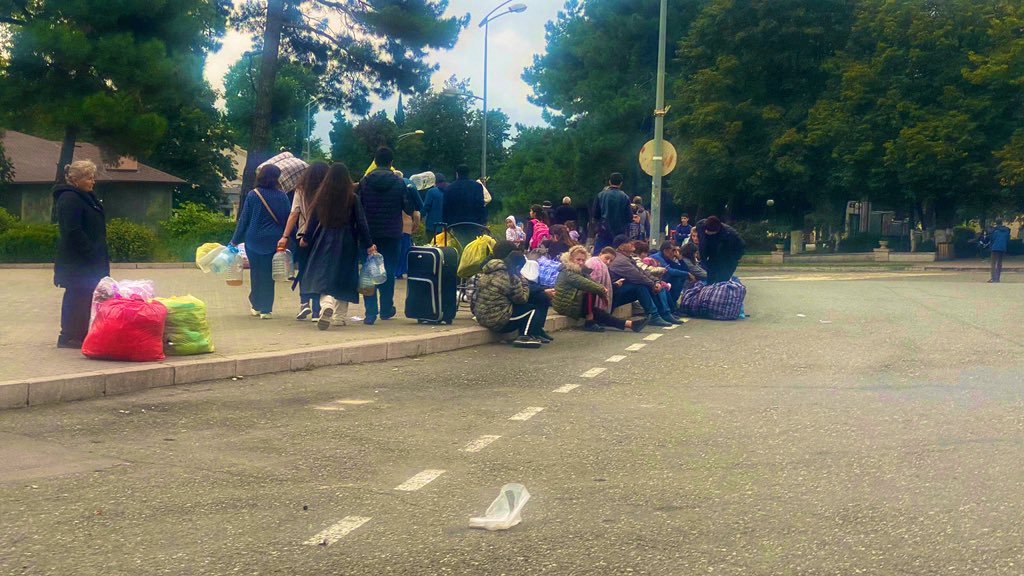 Artsakh civilians wait for a bus to flee to Armenia (Photo: Siranush Sargsyan)
When you start an opinion piece about the current situation in Armenia by mixing a couple of American sports metaphors, there is a lot of explaining to do. The first metaphor represents the need for divine intervention in the face of long odds. The second illustrates the complexity of any potential way out of this morass. Sitting in Yerevan, I feel desperate and confused by the situation, like most Armenians. We are blaming everything and everyone, often with contradictions in the same thought, calling for heads to roll and coming up with conspiracy theories that would make Q-Anon cringe. This is what happens when we’re short on facts and bad at statecraft. Rather than pouncing on the villain of the day (literally or metaphorically), let’s consider potential solutions based on facts, assumptions and inferences.
Several failures have brought us to this reality. We are woefully outgunned against our adversaries. We picked the wrong friends, though at the time it may not have been obvious. Underlying both is a lack of statesmanship and gross ineptitude in governance.
I don’t dwell on statesmanship to blame the victim, which often comes on the heels of defeat. Yet we are inexperienced in this critical skill as a result of going through long stretches of history without full sovereignty and not knowing what to do with it when we have it. Unfortunately, within this reality we have honed another skill, which is to undermine the state.
In the most recent iteration of our would-be statehood, no one has undermined the state more than those in charge of it. Their insatiable loot of the country’s meager resources, both natural and created through economic activity, has led to our current impoverished state, where poorly armed and nourished boys or contracted servicemen are left to confront their adversaries with very little more than their boundless courage.
Yet those in charge of the state are not alone in undermining it. In the last few days, I have met so many loving parents who desperately want to get their fighting age sons out of the country considering the imminent danger, most likely in the form of an attack on Syunik. They don’t want their sons to die for any individual in government, as if those in power were medieval warlords. The idea of dying for the country through the agency of the state escapes them totally, and who can blame them.
Despite this bleak backdrop, all may not be lost. In the past, we made defining gains during other stretches of weakness and subjugation. In the fourth and fifth centuries, we shaped our identity when we adopted Christianity, invented our alphabet and consolidated our unique identity, all under Roman and Persian rule.
If we want Armenia to emerge from this grim state with security, peace and prosperity, here are some thoughts.
Security: The last three years are proof that Armenia cannot rely on others for her security. As statehood matures and takes hold, Armenia should adopt the Garrison State as its model and primary national goal. Getting the population to buy into this concept will be difficult, yet if recent history and the current chaos are not convincing enough, then Armenia will never attain real national security. The hardware for this level of militarization is costly and will require a strong economy to build up the required wealth. Recent economic trends are hopeful.
Economy and wealth: According to the International Monetary Fund’s (IMF) 2023 rankings, Armenia’s Gross Domestic Per Capita Income (PCI) is now higher than those of three of her neighbors: Georgia, Azerbaijan and Iran. Real economic growth in recent years is the primary driver of this significant rise in ranking. Part of it can be attributed to the appreciation of the Armenian dram relative to the U.S. dollar and other currencies, as Russians and others have brought enormous amounts of hard currency into the country while fleeing after Russia’s invasion of Ukraine. The IMF’s PCI matric adjusted for Purchasing Power Parity (PPP) captures this effect. With this adjustment, Georgia leaps slightly ahead of Armenia, but Armenia remains in a tie with Iran and well ahead of Azerbaijan.
Considering the countless headwinds with which the Armenia economy must contend, this is a remarkable achievement, although not surprising if we subscribe to the notion of an inherent Armenian acumen for wealth creation. Though many serious obstacles remain, crippling corruption, one huge element that has weighed on the economy, has reduced significantly in the last five years. The government should do all it can to maintain this trajectory by continuing and even intensifying its fight against corruption. Reducing corruption provides better access to the economy for entrepreneurs, who no longer must contend with the obstacles created by the oligarchs. More importantly, it provides tax revenue flows into government coffers, as corrupt tax collectors no longer line their pockets instead of the state treasury. In addition to fighting corruption, a democratic system is vital for overall economic growth. Apart from some small states and offshore tax havens, the wealthiest countries in the world are liberal democracies.
Developing statehood through democratic means: Since the fall of Artsakh, street demonstrations in Yerevan (though their sizes are surprisingly small) and senseless arrests have been daily occurrences. Public dissatisfaction is on the rise, but many people continue to support the regime. There are constant rumors that politicians associated with former regimes or external interests are plotting to topple the government and take it over. While they are just rumors, they may also be true. We may never know, because there is so little reliable information. The current government’s shortcomings are painfully obvious, yet it is vital that changes in government occur through democratic means in order to promote the development of statehood. No messiah-like figure or organization has the wherewithal to appear and fix everything with the flip of a switch. The next parliamentary election must take place before February 2026. Any change brought about by force will be a terrible blow to the development of statehood and the rule of law.
More reliable neighbors and partners: It is overly optimistic, and even foolish, to think that a small country like Armenia surrounded by hostile neighbors can go it alone. Armenia must look for new neighbors and partners. With Russia’s complicity in losing Artsakh, Armenia may be freer to look for partners elsewhere, mainly in Europe and the United States. Even at the price of sacrificing economic and political independence, real alliances, particularly with European countries, are the best path forward. Georgia’s overtures to Europe offer a contiguous path for Armenia. This may be the silver lining of losing Artsakh and rendering Russia less relevant.
This is all bleak and upsetting, especially for those who genuinely and fairly want immediate change in government at all costs. Yet these steps may offer a more reasonable path forward. It’s a terribly long shot.
Author information
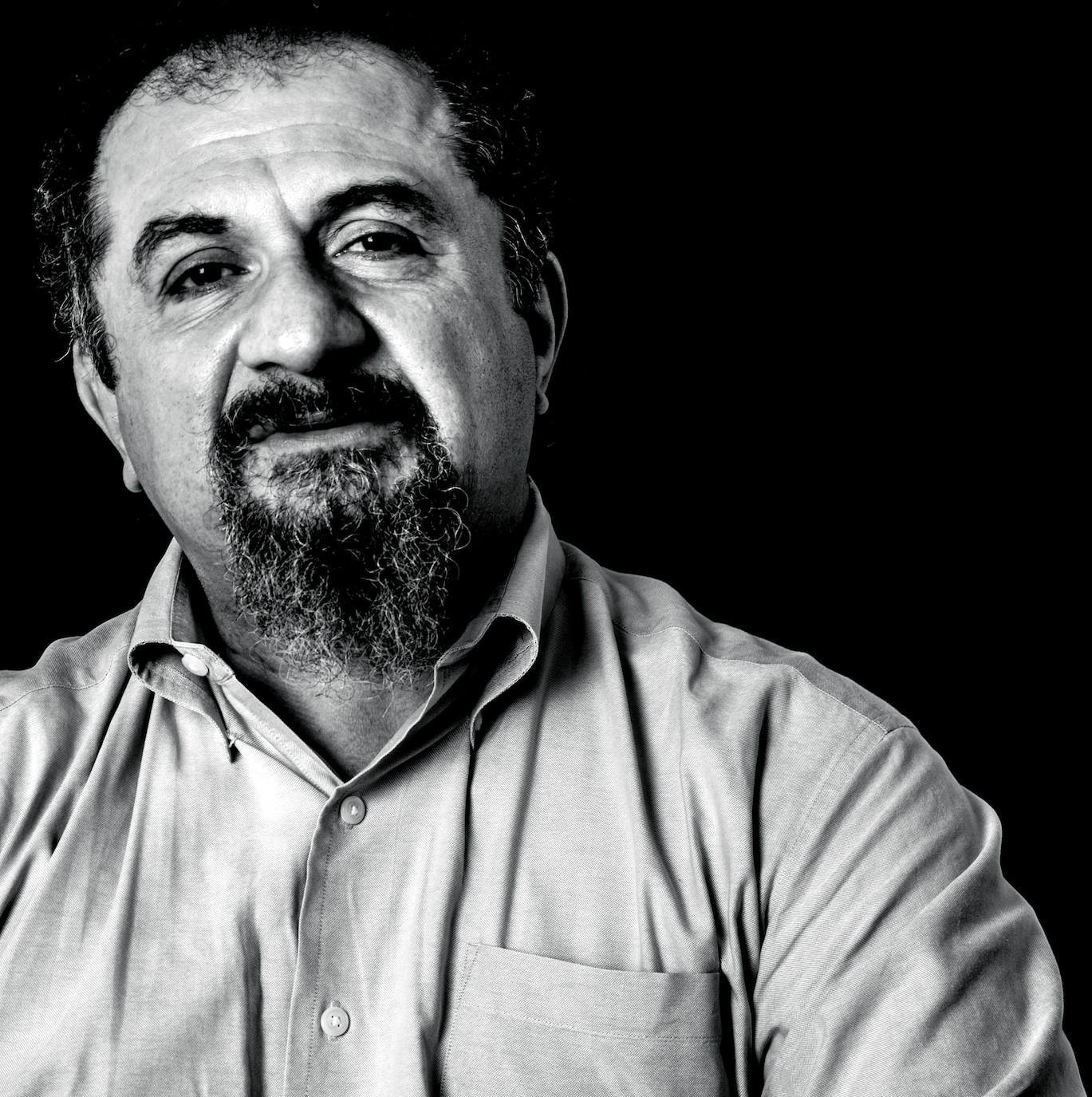
Kevork Khrimian
Kevork Khrimian was born in Yerevan, Soviet Armenia in 1960 of parents who had repatriated there from Lebanon and Egypt. He attended Hagop Baronian School No. 59 in the Nor Zeytoun section of Yerevan through the fourth grade. The Khrimians emigrated to the US in 1971, and Kevork completed his primary and secondary education in the New York City public school system. He received his undergraduate degree from the State University of New York at Buffalo where he studied engineering and economics, followed immediately with a master’s degree in 1986 from Carnegie-Mellon University in finance and decision analysis. After a brief stint in the New York City government, Khrimian spent almost his entire professional career at Moody’s Investors Service as a vice president and senior analyst. While at Moody’s, in 1995 Kevork assumed a temporary assignment with the United States Department of Treasury to serve as an advisor to the government of Armenia and helped establish the Armenian Treasury Bond system. Since retiring from Moody’s, Khrimian is involved in numerous projects in Armenia and New York, one of which is serving on the working group for potential Armenian Diaspora Bonds.
|
The post The Hail Mary bank shot appeared first on The Armenian Weekly.
Tehran Names Five Iranians For Looming Prisoner Swap With U.S., Says Americans ‘In Full Health’ Radio Free Europe / Radio Liberty