

Day: September 26, 2023
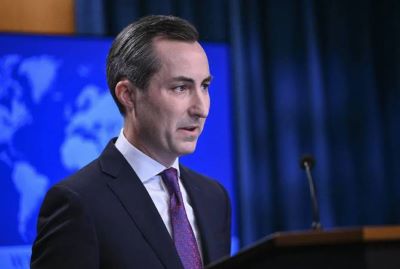
Congressman Adam Schiff says his office is closely monitoring the developing situation in Artsakh.
“The reports of hundreds injured by an explosion are deeply alarming. I’m calling on the Biden Administration to direct immediate humanitarian aid and to assist with medical airlifts for those affected,” Rep. Schiff said in a post on X.
“President Aliyev must allow the free flow of aid without conditions or restrictions,” he said.
My office is closely monitoring the developing situation in Artsakh. The reports of hundreds injured by an explosion are deeply alarming. I’m calling on the Biden Administration to direct immediate humanitarian aid and to assist with medical airlifts for those affected. President…
— Adam Schiff (@RepAdamSchiff) September 25, 2023
About 300 people were taken to hospital with injuries after a huge blast a a fuel depot near Stepanakert-Askeran highway. Seven have been confirmed dead, 13 bodies are unidentified, many are still missing.
“In the past, you (Erdoğan – ed.) and I laid the foundation of the TANAP project and inaugurated the TANAP pipeline. Today, we are starting work on the construction of a gas pipeline from Türkiye to Nakhchivan, a part of Azerbaijan,” President of Azerbaijan Ilham Aliyev said in a press statement together with President of Turkiye Recep Tayyip Erdogan, according to Azerbaijan in Focus, reporting AzerTac.
“The signing of the protocol of intent on the construction of the Kars-Nakhchivan railway is also a historic event. I am sure that this project will be successfully implemented and serve the interests of Azerbaijan, Türkiye and other countries as a part of the Middle Corridor,” the head of state added.
The post Signing of protocol of intent on the construction of the Kars-Nakhchivan railway is a historic event appeared first on Azerbaijan In Focus.
As the recent anti-terror operation against illegal Armenian forces in the Karabakh region concludes, it is imperative to examine the legal, political and military factors driving Azerbaijan’s actions
During the Second Karabakh War, Azerbaijan exercised its inherent right to self-defense as stipulated in Article 51 of the U.N. Charter, leading to the liberation of territories that had been under occupation for three decades.
The conflict was brought to a halt on Nov. 10, 2020, with the signing of a declaration, wherein both parties committed to resolving remaining issues through diplomatic means. The primary objective of these diplomatic negotiations was to ensure the full implementation of the conditions outlined in the Nov. 10 tripartite declaration and ultimately secure a comprehensive peace agreement between Azerbaijan and Armenia. These ongoing talks held the promise of entering an era of peace and cooperation in the South Caucasus, marking a significant turning point after years of conflict.
However, concerns arose as the Armenian side failed to fulfill many of the agreed-upon commitments, including the fourth article of the Nov. 10 tripartite declaration, which called for the removal of armed Armenian forces from Azerbaijani territory in Karabakh. This deviation from the agreed-upon terms increased the risk of renewed conflict in the region. In addition, illegal armed groups in the Karabakh region of Azerbaijan initiated attacks on Azerbaijani armed forces.
Consequently, Baku was compelled to launch an anti-terrorist operation on Sept. 19 aimed at disarming these illegal armed units. Last week’s military operation, which lasted for 23 hours and 47 minutes, culminated in the surrendering of the illegal armed forces and the dismantling of the self-proclaimed administration in Karabakh. It is important to note that the Azerbaijani side had valid legal, political, and military justifications for initiating this operation.
Legal reasons
While Armenians and their supporters frame the issue of the occupation of Azerbaijani lands as a political and propaganda tool, it is fundamentally rooted in international law. The Azerbaijani position’s strength lies in its alignment with international legal principles. In this context, Azerbaijan’s decision to launch an anti-terrorist operation was firmly grounded in three key legal foundations: First, 1993 resolutions adopted by the U.N. Security Council; second, the tripartite declaration; and third, international recognition of the region as Azerbaijani territory.
The U.N. Security Council resolutions adopted in 1993 stressed on the immediate and unconditional withdrawal of armed Armenian forces from the occupied territories of Azerbaijan, including Karabakh. During the 44-day Second Karabakh War, the Azerbaijani army successfully liberated some portions of these territories. The fourth article of the tripartite declaration stipulated that the Russian Federation’s peacekeeping contingent would be deployed in conjunction with withdrawing Armenian armed forces from the remaining occupied areas. However, although three years have passed since the tripartite declaration, Armenian armed forces had not left the region nor been removed by Russian peacekeeping troops or Armenia. This meant that the conditions of the U.N. Security Council resolutions adopted in 1993 and the Nov. 10 tripartite declaration were not fulfilled.
On the other hand, Karabakh has always been internationally recognized as Azerbaijani territory. An important milestone in the process occurred during an agreement reached in Prague on Oct. 6, 2022, where both parties committed to recognizing the principles of territorial integrity by the Alma-Ata Declaration of 1991. By signing this declaration, Azerbaijan and Armenia reaffirmed their recognition of Karabakh as Azerbaijani territory.
Subsequently, during ongoing peace negotiations, Armenian Prime Minister Nikol Pashinyan publicly acknowledged the territorial integrity of Azerbaijan, including Karabakh. This statement was seen as a significant step. Russian President Vladimir Putin indicated that all matters related to Karabakh were resolved with Pashinyan’s recognition, thereby implying that the anti-terrorist operation was well within Azerbaijan’s jurisdiction.
Furthermore, Hikmet Hajiyev, Assistant to the President of the Republic of Azerbaijan, had made it clear prior to the operation that Azerbaijan would not tolerate any gray areas or illegal armed forces on its sovereign territory. This stance was reiterated by Foreign Minister Ceyhun Bayramov during a U.N. Security Council meeting on Sept. 21, where he emphasized that no state could tolerate the presence of illegal armed forces on its territory.
Adding to the legitimacy of Azerbaijan’s anti-terrorist operation, U.S. Secretary of State Anthony Blinken personally engaged with President Ilham Aliyev, seeking to understand Azerbaijan’s conditions for halting the operation. This interaction indicated that the operation was being considered legitimate from the perspective of the United States. In summary, the international community’s recognition of Karabakh as Azerbaijani territory, combined with the statements and actions of key political figures and leaders, underscores the legitimacy of Azerbaijan’s anti-terrorist operation in Karabakh in the context of international law.
Political reasons
This operation launched against terrorism in Karabakh had three political reasons. First of all, Armenia’s demand for an international mechanism. Although Armenia had verbally recognized Karabakh as Azerbaijani territory, it sought the establishment of an international mechanism to protect the rights and security of Karabakh Armenians. This implied a desire to transfer Azerbaijani sovereignty in the region to an international entity. Essentially, Armenia aimed to resurrect a mechanism similar to the old Minsk Group to bolster these demands. To exert pressure on Azerbaijan and bolster its position, Armenia maintained the presence of approximately 10,000 illegal armed forces in the area.
Furthermore, Armenia attempted to reinforce these illegal armed groups by sending weapons and personnel through routes outside of Azerbaijan’s control, particularly during the period when the Lachin road was not under Azerbaijani authority. The involvement of Armenian citizens as armed forces in Azerbaijan’s Karabakh region was proved by video evidence provided by Azerbaijani border troops.
Additionally, the situation in Karabakh was further complicated by the presence of illegal armed groups who had effectively held the civilian population hostage. These armed groups provided political support to separatist elements in the region, who were in direct contravention of international agreements by demanding a special status for Karabakh and refusing to acknowledge Azerbaijani sovereignty. The separatists in Karabakh vehemently opposed direct talks between Azerbaijani-Karabakh Armenians, which had begun following the decision made in Prague in 2022 and received support on other international platforms. Instead, they insisted on the involvement of mediators.
The first meeting between Azerbaijani and Karabakh Armenian representatives took place in Khojaly on March 1, with the mediation of Russian peace troops. Subsequently, the Azerbaijani side proposed that these meetings continue without a mediator and be held in Baku for a more direct dialogue. However, the Karabakh separatists declined this proposal. It is noteworthy that an agreement had been reached at the level of foreign ministers of Azerbaijan and Armenia in Moscow for a direct meeting to be held in Yevlakh, a city in Azerbaijan. Unfortunately, the separatist forces in Karabakh declined at the last moment. In essence, both Armenia and the separatist elements in Karabakh were persistently disregarding agreed-upon decisions and using illegal armed forces as a protective shield.
On Sept. 9, 2023, separatists in Khankendi held a new so-called presidential election in the region to “renew their legitimacy.” After the 2020 war, the separatists’ attitudes completely failed and they thought that they would get different results with new faces in these new so-called elections. However, these elections backfired and international organizations and states condemned these elections and declared that they recognized the region as Azerbaijani territory. On the other hand, President Aliyev stated that the illegal elections held in Karabakh were against the verbal agreement reached between the parties.
As a matter of fact, the first demand of the newly elected so-called president was special status for separatists. Therefore, the presence of armed forces in the region increased the so-called administration’s desire to use the status quo in the region to its advantage.
Military reasons
On the other hand, although Armenia was defeated in the 44-day war, it was making plans for a new war with Azerbaijan. While the Nikol Pashinyan administration was playing for time to prevent any results in the ongoing peace talks with Azerbaijan, Armenia was preparing for a favorable geopolitical environment. In parallel with this, experts and politicians close to the government or the opposition in Armenia, it was argued that Armenia, like Azerbaijan, could wait 20 or 30 years and eventually take back Karabakh. Therefore, Armenia was planning to play for time, strengthen itself militarily and economically, and then launch a new attack. As a matter of fact, its efforts towards armament increased recently and it has been intensifying its activities to increase the human potential to fight.
Illegal Armenian armed forces in Karabakh were constantly threatening Azerbaijan militarily. They laid mines on newly constructed roads in the regions liberated from occupation, and interfered with the electronic systems of planes flying over Azerbaijan and wounded two Azerbaijani soldiers in Aghdam the day before the operation began. On the same day, as a result of their sabotage actions, seven Azerbaijani police officers were martyred as a result of the mines laid on the Fuzuli-Shusha road. The main purpose here is to threaten the reconstruction works in the regions of Azerbaijan liberated from occupation, to prevent the civilian population from returning to their own lands, and to gain deterrent power. Therefore, these were the factors that made the military anti-terrorist operation necessary.
The anti-terrorist operation that was launched primarily aimed at military targets, and areas with civilians were not targeted. Strategic heights were captured in a short span of time and supply routes of the illegal armed groups were cut off. This caused them to surrender within one day. The establishment of Azerbaijani sovereignty in Karabakh and the beginning of the integration process of Karabakh Armenians into Azerbaijan led to the elimination of one of the most important obstacles to lasting peace between Azerbaijan and Armenia.
ABOUT THE AUTHOR
Head of Department at the Baku-based think tank Center of Analysis of International Relations (AIR Center)
This article was originally published on Daily Sabah on September 25, 2023.
The post Legal, political and military reasons for Azerbaijan’s anti-terror ops appeared first on Azerbaijan In Focus.
Russia hopes meetings between Recep Tayyip Erdoğan and Ilham Aliyev help ensure normalcy and security in Karabakh, Kremlin spokesperson Dmitry Peskov said Monday, according to Azerbaijan in Focus, reporting Daily Sabah.
“We hope every time that all of the meetings held by the president of Azerbaijan, including with the president of Türkiye, will contribute to security in the region, normalization of life in Karabakh,” Peskov said at a news conference in Moscow.
Russia welcomes all efforts to help resolve the Karabakh issue, Peskov said.
The official noted that anyone who can help reduce tensions and assist in the “integration of the Armenian population of Karabakh into the new reality can only be welcomed.”
Armenian PM Pashinyan’s claim rejected
The Kremlin spokesperson rejected Armenian Prime Minister Nikol Pashinyan’s claim that Russia is “partly responsible” for recent tensions in the region.
“We understand the emotional intensity of this moment, but we categorically disagree with the attempt to impose responsibility on the Russian side, even more so on the Russian peacekeepers, who show real heroism, performing their functions in accordance with the mandate they have,” Peskov stressed.
“No one can blame the peacekeepers for doing something wrong. We will never agree with such reproaches,” he added.
Moscow continues dialogue with the parties at various levels, but at the moment there are no agreements on a meeting of the leaders, he said.
According to him, Russian peacekeepers will continue to work in Karabakh, but it is too early to talk about the length of their stay in the region.
“They are now on the territory of Azerbaijan. We continue our contacts with Baku, and the peacekeepers provide assistance and are present at the negotiations that have already begun between the Karabakh Armenians and the Azerbaijani authorities. So far, at the moment this work continues,” he noted.
‘Armenia trying to sever ties with Russia’
Meanwhile, Moscow on Monday accused Armenia of trying to sever ties after Yerevan accused Russian peacekeepers of failing to stop Azerbaijan’s military offensive against Armenian separatists in Karabakh last week.
“The leadership in Yerevan is making a huge mistake by deliberately trying to destroy Armenia’s multifaceted and centuries-old ties with Russia, and by holding the country hostage to the geopolitical games of the West,” Russia’s foreign ministry said.
On Sunday, Armenian Prime Minister Nikol Pashinyan criticized Moscow for refusing to intervene in the conflict, which ended with Armenian-backed separatists agreeing to lay down their arms.
Pashinyan said Armenia’s current foreign security alliances were “ineffective” and “insufficient.”
Moscow said Pashinyan’s statement contained “unacceptable attacks on Russia.”
“It is an attempt to absolve himself of the responsibility for the failures in domestic and foreign policy,” its foreign ministry said.
“Russia has always… respected Armenian statehood,” the foreign ministry said, adding that Yerevan “preferred… running to the West to working with Russia and Azerbaijan.”
Armenia is a member of the Collective Security Treaty Organization (CSTO) —a Russian-dominated group comprised of six post-Soviet states.
The group pledges to protect other members that come under attack.
Azerbaijan suspended its counterterrorism measures on Sept. 13, a day after they were launched to disarm Armenian forces in Karabakh and uphold the 2020 trilateral peace agreement.
Relations between Baku and Yerevan have been tense since 1991, when the Armenian military occupied Karabakh, a territory internationally recognized as part of Azerbaijan, and seven adjacent regions.
In the fall of 2020, Azerbaijan liberated several cities, villages, and settlements from Armenian occupation during 44 days of clashes. The war ended with a Russia-brokered cease-fire, and talks for normalization of ties began.
The post Russia expects Azerbaijan, Türkiye to ensure normalcy in Karabakh appeared first on Azerbaijan In Focus.