
Azerbaijan’s sovereignty over Karabakh reinforced with recent … Anadolu Agency | English
Day: September 26, 2023

За январь-июнь 2023 года объем инвестиций из России в Грузию увеличился в 7 раз. Информацию распространяется «Трансперенси Интернешнл-Грузия» (Transparency International — Georgia). В организации сравнили упомянутые данные с данными за аналогичный период прошлого года. По данным TI, в январе-июне 2023 года из России в качестве прямых инвестиций в Грузию поступило $56 млн. Как указано в […]

By Zachary Yost
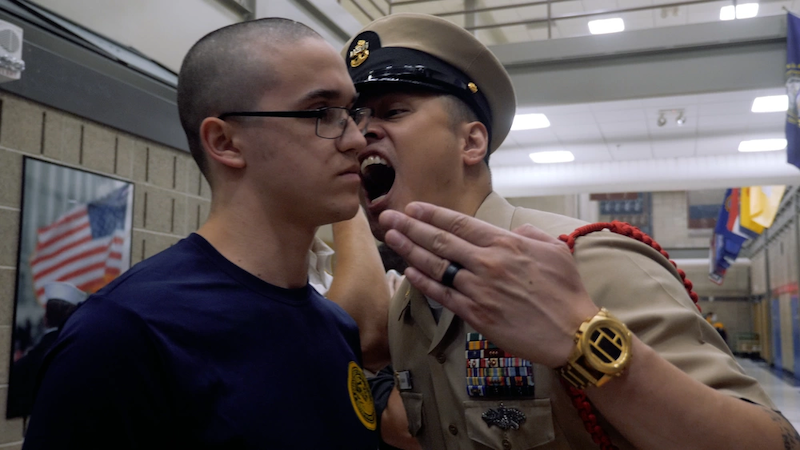
The most recent edition of the US Army War College’s academic journal includes a highly disturbing essay on what lessons the US military should take away from the continuing war in Ukraine. By far the most concerning and most relevant section for the average American citizen is a subsection entitled “Casualties, Replacements, and Reconstitutions” which, to cut right to the chase, directly states, “Large-scale combat operations troop requirements may well require a reconceptualization of the 1970s and 1980s volunteer force and a move toward partial conscription.”
An Industrial War of Attrition Would Require Vast Numbers of Troops
The context for this supposed need to reinstate conscription is the estimate that were the US to enter into a large-scale conflict, every day it would likely suffer thirty-six hundred casualties and require eight hundred replacements, again per day. The report notes that over the course of twenty years in Iraq and Afghanistan, the US suffered fifty thousand casualties, a number which would likely be reached in merely two weeks of large-scale intensive combat.
The military is already facing an enormous recruiting shortfall. Last year the army alone fell short of its goal by fifteen thousand soldiers and is on track to be short an additional twenty thousand this year. On top of that, the report notes that the Individual Ready Reserve, which is composed of former service personnel who do not actively train and drill but may be called back into active service in the event they are needed, has dropped from seven hundred thousand in 1973 to seventy-six thousand now.
Prior to the Ukraine war, the fad theory in military planning was the idea of “hybrid warfare,” where the idea of giant state armies clashing on the battlefield requiring and consuming vast amounts of men and material was viewed as out of date as massed cavalry charges. Instead, these theorists argued that even when states did fight, it would be via proxies and special operations and would look more like the past twenty years of battling nonstate actors in the hills of Afghanistan. In a recent essay in the Journal of Security Studies, realist scholar Patrick Porter documents the rise of this theory and the fact that it is obviously garbage given the return of industrial wars of attrition.
As military planners have woken up from the fevered dream of imagining that modern war consisted of chasing the Taliban through the hills with complete and overwhelming airpower, they have similarly started to wake up to the idea that industrial war has vast manpower requirements and that seemingly the only way to fill these requirements is by forcing young people into the ranks. That has certainly been the only way Ukraine has been able to maintain its forces, although it has required increasingly draconian measures to do so as conscripts face attrition rates of 80 to 90 percent by Ukraine’s own admission.
Obviously, the reintroduction of conscription is an extremely disturbing prospect given America’s propensity for getting involved in meaningless wars that accomplish nothing other than empowering our enemies, killing and maiming our soldiers, and wasting vast resources.
This is especially true given the unstated assumptions implicit in this paper. Who is the enemy that would be inflicting thirty-six hundred casualties a day? A war in the Pacific against China would primarily be a naval and airpower war with an extremely limited role for the army (even the current inept regime seems unlikely to be stupid enough to try and wage a land war against China) which obviously leaves Russia as the main adversary that would require the US Army to round up conscripts to feed into the attritional meat grinder.
There Is No American National Interest That Requires a Standing Army
However, while these manpower shortages may be a valid concern for someplace like Russia, Ukraine, or Poland, we here in the US are quite fortunate that we have no compelling national interest that would require us to engage in an industrial war of attrition in Eastern Europe.
To the extent we are at risk of becoming involved in such a disastrous mess, it is entirely of our own doing via the entangling alliance known as the North Atlantic Treaty Organization and our leader’s own messianic gnostic crusades for democracy or whatever pseudo religious ideology is presently in vogue.
The US is blessed as being the most secure power in history. We are the hegemon of the western hemisphere, with vast moats in the form of the Atlantic and Pacific Oceans that no other state has the capability to project military force across, and all our neighbors are weak and relatively friendly. We are not at any risk of being forced to fight an industrial land war on the home front. Any war the army would be used in would be as an expeditionary force fighting in the eastern hemisphere, where we have no compelling defensive need to do so.
From the beginning of the US, there have been warnings against the dangers of both entangling alliances and standing armies. The best solution to the military recruitment crisis is to simply abolish the standing army and not plan to wage a costly and pointless war on the other side of the planet that would result in trillions of dollars down the drain and who knows how many tens or hundreds of thousands of Americans being killed, maimed, and psychologically scarred.
About the author: Zachary Yost is a freelance writer and Mises U alum. You can subscribe to his newsletter here.
Source: This article was published by the Mises Institute
By Kalpit A Mankikar and Aqib Rehman
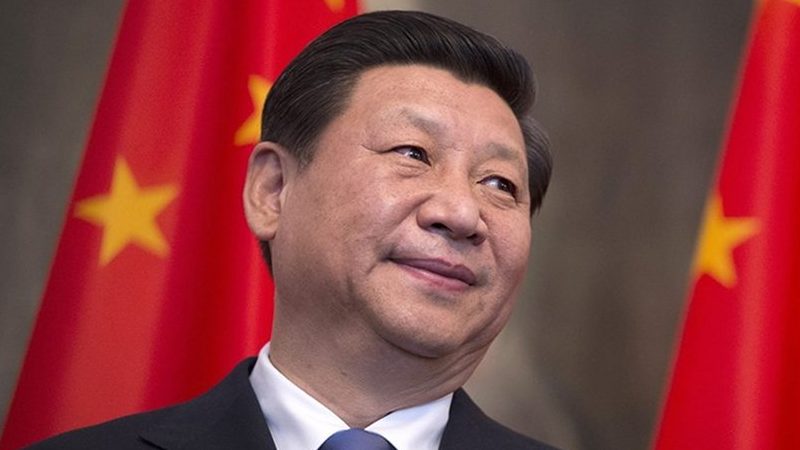
The case of China’s political elite is getting curiouser and curiouser. Close on the heels of the disappearance and political eclipse of Foreign Minister Qin Gang, reports have emerged that Defence Minister and Central Military Commission member Li Shangfu and some of his erstwhile associates are under a cloud over corruption charges. The defence ministry and foreign office are among the big offices of the state, and any kind of uncertainty here does not augur well.
In the recent past, there has been a steady churn among the People’s Liberation Army’s upper echelons. Significantly ahead of the People’s Liberation Army’s (PLA) Foundation Day, its elite Rocket Force that is in charge of the nation’s nuclear arsenal witnessed a leadership shuffle on both operational and ideological fronts.
Wang Houbin and Xu Xisheng were pitchforked as Rocket Force’s chief and political commissar, a crucial position that deals with maintaining the Communist Party of China’s (CPC) control over an institution. The Rocket Force’s erstwhile leadership—former commander General Li Yuchao, and his deputies Zhang Zhenzhong and Liu Guangbin—are also under investigation for alleged corruption. Significantly, Li Yuchaowas embedded in the Party’s power structure being a member of its Central Committee, and a deputy to the National People’s Congress. The abrupt leadership rejig of an important military unit accompanied by an investigation against its former leadership is unusual, and represents a deeper malaise.
The intermeshing of the PLA’s and CPC’s power structures and the opacity of the system are key factors that breed corruption. The PLA has representation in China’s decision-making bodies—the Politburo and the Central Committee. Two senior PLA generals sit on the Politburo, whereas in the Central Committee, the military establishment accounts for around 20 percent of the 205 permanent and 171 alternate members. The kin of the CPC elite had considerable stakes in China’s defence industrial complex. For example, the relatives of senior Chinese leaders Deng Xiaoping, Ye Jianying, and Yang Shangkun had ties to large defence companies in China.
L’affaire Li Shangfu does leave behind some uneasy questions. First, there is the issue of evaluating China’s intent behind building up its military muscle and its subsequent behaviour. At the 20th Party Congress, Xi promised rapid modernisation of the PLA, and beefing up of its capabilities to “win local wars”. Subsequently, a powerful apex institution like the Central Military Commission, which maintains the CPC’s control over the PLA, was packed with generals having experience in combat.
Xi has been touring military installations, inspecting facilities there and exhorting his generals to train troops in actual combat conditions. However, of late, the focus has shifted from the preparedness of personnel to the quality of PLA’s hardware—armaments and equipment. CMC vice-chairperson General Zhang Youxia (Li Shangfu’s colleague) called for improvement in PLA’s weapons acquisitions, and upgrading the quality of weaponry. In a separate incident, the People’s Daily front-paged a report of a CPC inspection team that unearthed “glaring shortcomings” in the Rocket Force units in charge of conventional and nuclear missiles.
These assessments seemed to be a stinging indictment of Li, who served in the CMC’s Equipment Division. Some rightly argue that in his capacity as the PLA’s supreme commander, Xi is bound to assess defence preparedness, but the question is what has merited this spring-cleaning exercise? Since last year, China has resorted to military drills in the Taiwan straits, giving the pretext of visits by American leaders to Taiwan or the trips of Taiwanese politicians overseas. Have these PLA manoeuvres revealed the proverbial chinks in the armour? Another possibility is that repeated “stress tests” in the form of cross-straits war games to gauge the efficacy of personnel and weaponry revealed the shortcomings, in which case, is there a bigger military game plan in the near future?
Second, there is considerable speculation regarding policy directions in the Xi regime. Reports recently surfaced that Xi had been censured at the Beidaihe conclave—a key institutional intra-party dialogue mechanism—that sees participation from CPC seniors. In recent times, Xi has ratcheted up tensions that have led to deteriorating relations with the United States (US), which has responded with curbs on technology access and capital inflow.
In addition to this, Xi’s Zero-COVID strategy which led to several cities being shut down for long spells last year has wrecked the economy, causing rampant unemployment. The US assessment of the situation is that there are divisions between those within the CPC who are keen to kickstart economic engagement with the US versus Xi acolytes who stress on the importance of national security over economic considerations. Have the factional fights now transformed into more serious cloak-and-dagger intrigues as evidenced by the mysterious demise of General Wang Shaojun, who was in charge of security of Zhongnanhai, China’s leadership compound? Is opinion within CPC ranks turning against Xi, who is responding by unleashing a purge against prodigies with doubtful loyalties?
Lastly, to conclude, data from the Stockholm International Peace Research Institute reveals that Chinese defence companies are making a killing, accounting for 80 percent of arms sales in the Asia-Oceania region. There was a sense of triumphalism with a Chinese academic downplayed India’s defence manufacturing capabilities in comparison to China’s during this year’s Shangri La Dialogue. Now, if indeed Li’s fall is on account of shoddy defence equipment, then nations buying Chinese weaponry may have to re-assess their efficacy.
In light of the deteriorating US-China relations, Xi has warned that China was facing the most “complicated internal and external factors in its history”, and that the challenges were “interlocked and mutually activated”. There are fears that Western powers may instigate regime change in the nation. Given this background, there is a substantial change in the Party’s conceptualisation of corruption from being seen as a mere social evil to that having implications for regime stability. The anxiety remains that if Chinese generals are susceptible to bribes and allurements, then they may offer hostile powers a new opening to breach the Bamboo Curtain.
About the authors:
- Kalpit A Mankikar is a Fellow with the Strategic Studies programme at the Observer Research Foundation
- Aqib Rehman is a research intern with the Strategic Studies programme at the Observer Research Foundation
Source: This article was published by Observer Research Foundation

(EurActiv) — Russian crude oil supplies increased 50% this spring despite the G7 countries imposing sanctions due to war in Ukraine, the Financial Times reported on Sunday (24 September) citing data from analytics company Kpler.
The European Union, G7 countries and Australia introduced a price cap of $60 a barrel on Russian oil in last December, aiming to curb Russia’s ability to finance the conflict in Ukraine.
However, Russian oil revenues are likely to increase due to constant increases in crude prices and a reduction in the discount on its own oil, the FT report said, citing Kyiv School of Economics (KSE) estimates.
Almost three-quarters of all the seaborne Russian crude flows travelled without western insurance in August, according to an analysis of shipping and insurance records by the Financial Times.
Russia cut its seaborne diesel and gasoil exports by nearly 30% to about 1.7 million metric tons in the first 20 days of September from the same time in August. Russia’s temporary ban on exports of gasoline and diesel to most countries, announced last week, was expected to further tighten supplies.
New export route
Russian oil producers supplied their first cargoes of CPC Blend crude to the United Arab Emirates (UAE) in August and September, four traders told Reuters, opening up a new export route as Moscow looks to find new customers and skirt Western sanctions.
Moscow has found new markets for its oil despite sanctions imposed by G7 countries since the start of the war in Ukraine.
The world’s third largest oil exporter, Russia has rerouted most of its oil to China, India and Turkey over the past year, and has also sent cargoes to countries including Brazil, Sri Lanka and Pakistan.
In August and September two Russian firms – oil major Lukoil and independent producer CenGeo – sold their oil to the UAE, the four traders said.
Both supplied CPC Blend, a grade that is being mostly produced in Kazakhstan and supplied to global markets through Russia’s Black Sea port of Yuzhnaya Ozereyevka.
The UAE has not imposed sanctions on Russia over war in Ukraine.
The US Office of Foreign Assets Control (OFAC) said earlier that CPC Blend oil was not subject to sanctions if it was of Kazakh origin and suggested that buyers of the blend should seek certificates of origin.
The US warning on CPC Blend only applies to buyers which are observing sanctions.
The two traders, who declined to be named, said that the CPC crude from Russia was sold at discount to Kazakh cargoes.
By Alex Willemyns
U.S. President Joe Biden on Monday called on Congress to approve $40 billion in infrastructure spending for the Pacific Islands, the latest in the administration’s push to stem Chinese influence in the region.
The proposal came on the first day of the second Pacific Islands Forum in Washington in a year. The United States also recognized two new Pacific Islands nations – Niue and the Cook Islands, both self-governing states in free association with New Zealand.
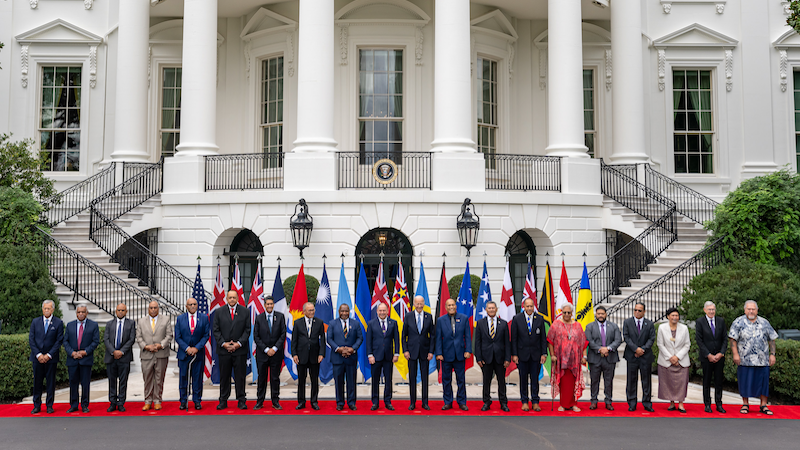
Speaking alongside the leaders of the Pacific Island states after a morning meeting and a “family photo” at the White House, Biden said the United States was a committed friend of the 18 small nations who said they want more substance and less rhetoric from America.
“We hear your warnings of a rising sea, that it poses an existential threat to your nations,” Biden said to the leaders. “We hear your calls for reassurance that you never, never, never will lose your statehood, or membership with the U.N., as the result of a climate crisis.”
The U.S. would provide $20 million to the Pacific Islands countries to deal with climate change mitigation, he said, adding Congress should approve far more for infrastructure projects.
“Strong growth begins with a strong infrastructure,” Biden said. “So today I’m pleased to announce that we’re working with Congress to address $40 billion in our Pacific Islands Infrastructure Initiative.”
Cook Islands Prime Minister Mark Brown said he appreciated Biden’s proposals, which he said represented a welcome focus on the Pacific in just the second such forum hosted on U.S. soil.
But he called for a “more engaged” United States, and said the senior partner’s engagement “cannot be restricted to annual summits.”
“The United States is a country that’s 247 years old. Our Pacific countries here celebrate 40, 50 and 60 years as independent nations from decolonization,” said Brown, this year’s forum chairman, noting that his country and Niue were just getting U.S. diplomatic recognition.
“It must be a year-long effort, working to an agreed plan of action and supported by requisite resources to deliver transformative actions,” he said. “Our gathering today is our joint commitment to elevating our efforts as the Pacific [Islands] Forum and the United States.”
Charm offensive
The feasibility of Congress passing such a hefty package – clearly aimed at countering China’s growing influence in the Pacific thanks to its own high-spending Belt and Road Initiative – is less than assured.
Last year’s Pacific Islands Forum in Washington, spurred on by Chinese inroads in the Solomon Islands, produced a pledge of a comparatively less impressive $800 million in funding for the Pacific over a decade, a multiple of 50 times less than Monday’s proposal.
Biden’s latest proposal also comes with Congress deadlocked in last-minute talks to keep the U.S. government open past Saturday, with the Republican-led House unable to pass a budget even with heavy spending cuts as hardliners push for more penny-pinching.
That has left the Biden administration searching for other ways to woo the leaders, including a charm offensive taking advantage of the fact the leaders were in New York for the U.N. General Assembly.
On Sunday, they were given their own special Amtrak train to travel from New York to Washington, with a quick day-trip to Baltimore.
In Baltimore, they were feted on the field during the Baltimore Ravens 22-19 loss to the Indianapolis Colts, before boarding a Coast Guard cutter to meet with Coast Guard Commandant Linda Fagan and discuss U.S. efforts to help counter illegal fishing in the Pacific.
The leaders are next scheduled to meet with Biden’s climate envoy, John Kerry, on Monday evening. On Tuesday, they take part in a trade roundtable with U.S. Treasury Secretary Janet Yellen and attend a barbeque hosted by Australia’s ambassador, Kevin Rudd.