Categories
South Caucasus News

Chidem Inch: Armenian Grief


What we are experiencing now with the surrender of Artsakh and the ongoing Azerbaijani persecution of Armenians is nothing new.  We felt it with the loss of the horrible 2020 Artsakh War and the fall of Shushi. We felt it in February 1988 with the Sumgait pogrom that resulted in the deaths of hundreds of Armenians and the exodus of most of the Armenians of Baku to Europe and the U.S. Back in 1988, it was shocking to witness this kind aggression against Armenians, which had not been seen since the Genocide and earlier. It was nothing we ever expected to occur in our lifetime. How naïve we were.

I lived in Detroit in 1988. Following the pogrom, we gathered at St. Sarkis Church for prayers and speeches in the church hall. Everyone in the community came out. The church was completely full, as was the hall. Our Der Hayr (priest), Goriun Shirikian, gave the most impassioned sermon I ever heard from him. He started on the verge of tears but soon turned to fiery indignation.

I recited a poem from Hovhaness Toumanian that conveyed what we all felt. That very same poem captures our grief today, as we process what is happening in Artsakh.

“The Armenians’ Grief”

The Armenian grief is a boundless sea,

An immense dark sea,

In pain, in that black water,

My soul swims aimlessly.

Now it rises up with fury

Toward the clear sky above,

And tired now, it plunges

To the endless depths.

Wine is not unendingly deep

Nor can it raise me as far as the sky…

In the vast sea of Armenian sorrow

My tired soul moves, always in grief.

Translation by Aram Tolegian

Our great poet tapped into something that Armenians have felt for too long throughout our history.

We have to be together, to grieve together, because we are alone in this.

In the mainstream news, stories about Artsakh refer to “Armenian Separatists” and almost never refer to the Republic of Artsakh, just Nagorno-Karabakh. On Wednesday, September 21, the story of the Azerbaijani offensive was on page A8 of the Wall Street Journal.  A day later, the story of the Armenian surrender was on page A18. The front page stories were certainly worthy, but it is sad to recognize that we are a minor story at best. 

We must grieve, but we must also unite with fiery indignation and fierce determination.

It is natural and necessary for us to grieve. We should feel anger at the present injustice and that no one is going to stand up for us. Yet we need to rise from our grief with righteous indignation and do whatever we can do to aid the refugees leaving Artsakh. We cannot tolerate any corruption from the Republic of Armenia in delivering aid to the Armenians of Artsakh. Armenia needs to forge a strong defense, because we have to believe Aliyev’s statements referring to Armenia as Western Azerbaijan and Erdogan’s calls that Turkey must finish the work of Enver Pasha. Azerbaijan and Turkey want Syunik. Who will stop them? No one is going to do it for us. 

We must grieve, but we must also unite with fiery indignation and fierce determination. During his prayer service in Antelias on September 21, Catholicos Aram said, “The strength of our nation lies in its collective faith, determination and unity. We have no other way before us. Let’s walk together on this road, strengthened by renewed faith and luminous hope.”

This is the same message of Yeghishe Charents on the Hairenik Building in Watertown: “Oh Armenian people, your only salvation lies in the power of your unity.”

We are at a critical point in our history.
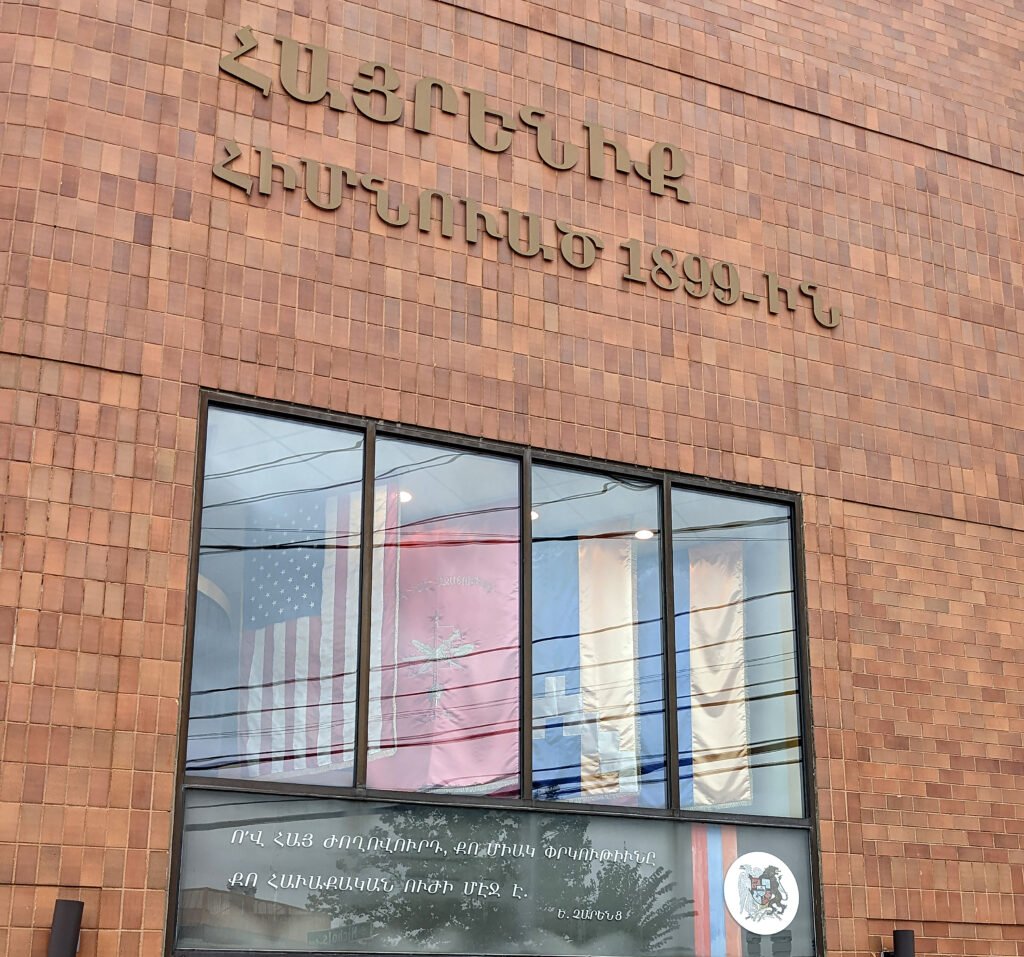
The front of the Hairenik building featuring the quote by Yeghishe Charents over the door

Author information

Mark Gavoor

Mark Gavoor is Associate Professor of Operations Management in the School of Business and Nonprofit Management at North Park University in Chicago. He is an avid blogger and oud player.

|

The post Chidem Inch: Armenian Grief appeared first on The Armenian Weekly.

Categories
Audio Review - South Caucasus News

125 dead in blast as Armenian refugees flee disputed enclave


azerbaijan-f_hpMain_20230926-073049_16x9

LONDON — At least 125 people were killed in an explosion on Monday night at a makeshift gas station being used by ethnic Armenian refugees as thousands sought to flee the disputed enclave of Nagorno-Karabakh, according to local authorities, as senior U.S. officials visited Armenia to signal concern over the humanitarian crisis affecting the region’s civilians.

Dozens of people are in a critical condition with severe burns and in urgent need of evacuation from the enclave where medical assistance was already minimal, the health ministry of the Nagorno-Karabakh’s unrecognized ethnic Armenia government, the Republic of Artsakh, said in a statement. It said many people were still missing following the blast.

The explosion and fire ripped through the fuel store on Monday night as hundreds of refugees were lining up for gas for their vehicles to leave Nagorno-Karabakh, according to local officials.

Thousands of ethnic Armenians have been leaving the enclave following a successful military offensive last week by Azerbaijan that defeated the local Armenian authorities and restored Azerbaijan’s rule over the region.

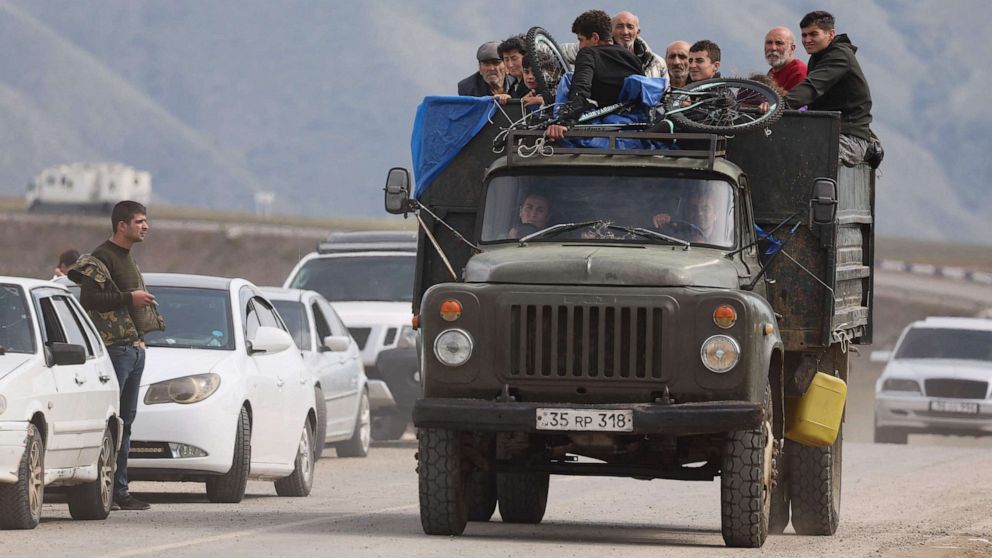
Over 28,000 people have crossed from Nagorno-Karabakh into Armenia since Sunday, according to a statement from Armenia’s government. It’s feared the enclave’s entire population — estimated at 120,000 — may seek to flee in the coming days.

Armenia’s prime minister on Monday said what was happening was the “ethnic cleansing” of Nagorno-Karabakh’s Armenian population.

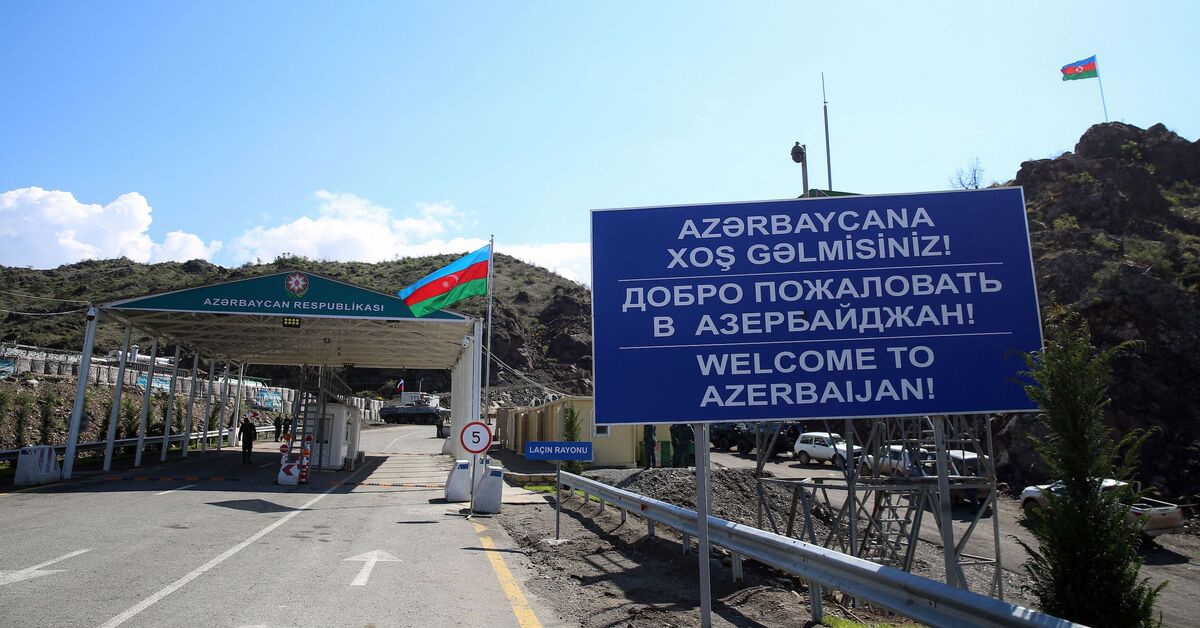
Long traffic jams of people seeking to leave were visible snaking miles along the only road out of Nagorno-Karabakh to a checkpoint in the “Lachin Corridor” that links the enclave to Armenia.

Nagorno-Karabakh has been at the center of a decadeslong conflict between Armenia and Azerbaijan. Internationally recognized as Azerbaijan’s territory, the two countries fought a bloody war over the enclave amid the collapse of the Soviet Union, in which Armenia backed local ethnic Armenian separatists, who succeeded in establishing control over most of the region. Hundreds of thousands of Azerbaijani civilians were driven from the region during that war.

Azerbaijan reopened the conflict in 2020, launching a full-scale war that decisively defeated Armenia and forced it to largely abandon its claims to Nagorno-Karabakh. Russia helped broker a truce and dispatched a peacekeeping force there that remains deployed. Last week, Azerbaijan launched a new offensive that swiftly forced the Nagorno-Karabakh Armenian’s leadership to surrender.

Since then thousands of ethnic Armenians have been preparing to leave the enclave, which has been under Azerbaijani blockade for nine months, unwilling to live under Azerbaijan’s rule and fearing they will face persecution.

Western countries, including the United States, France and Germany, have expressed concern for Nagorno-Karabakh’s Armenian population and warned Azerbaijan it bears responsibility for their rights and security.

The Biden administration has dispatched Samantha Power, currently administrator of USAID and senior another State Department official to Armenia to express U.S. support for the country amid the crisis.

Power on Tuesday visited the checkpoint at Armenia’s border with Nagorno-Karabakh where refugees have been arriving, and called for international monitors and aid groups to be given access to the enclave and for Azerbaijan to facilitate the evacuation of injured civilians from there.

“It is absolutely critical that independent monitors as well as humanitarian organizations get access to the people in Nagorno-Karabakh who still have dire needs,” Power told journalists at the checkpoint. “There are still tens of thousands of Ethnic Armenians there living in very vulnerable conditions,” announcing the U.S. would provide $11.5 million in humanitarian assistance that would include everything from food to psychiatric support.

Power, who has been a high-profile campaigner for human rights, said she was in Armenia to also hear testimonies from people fleeing Nagorno-Karabakh and that she would be reporting back to the Biden Administration as it considers how to respond to the crisis.

Power and the Acting Assistant Secretary for Europe and Eurasian Affairs, Yuri Kim met with Armenia’s prime minister Nikol Pashinyan on Monday. Power delivered a letter from President Joe Biden in which he expressed condolences for the loss of life in Nagorno-Karabakh and promised help on addressing humanitarian needs.

“I have asked Samantha Power, a key member of my cabinet, to personally convey to you the strong support of the United States and my Administration for Armenia’s pursuit of a dignified and durable regional peace that maintains your sovereignty, independence, territorial integrity, and democracy,” the letter read.

Pashinyan told Power the international community and Armenia had failed to prevent the “ethnic cleansing” of Nagorno-Karabakh’s Armenians.

“Unfortunately, at the moment the process of the ethnic cleansing of Armenians in Nagorno-Karabakh is continuing, it is happening right now. It’s a very tragic fact. We tried to inform the international community that this ethnic cleansing would happen, but, unfortunately, we did not manage to prevent it,” Pashinyan told Power and Yuri Kim, the State Department’s acting assistant secretary for Europe and Eurasian Affairs, according to the prime minister’s press service.

Armenia and Azerbaijan were due to hold talks mediated by the European Union in Brussels on Tuesday, the first talks between the sides since Azerbaijan’s retook Nagorno-Karabakh.

Monday’s blast at the fuel station added a horrific complication to the exodus from Nagorno-Karabakh, with local authorities pleading for people to hold off leaving as the traffic-choking the roads out was preventing the evacuation of the severely injured.

Helicopters from Armenia’s capital, Yerevan, were reported to have flown to Nagorno-Karabakh to help evacuate some of the worst injured. A long line of ambulances was also filmed by Russian media crossing into the enclave.

The enclave’s Armenian health authorities said the hospitals in the enclave, already short of medicine and other equipment, were not equipped for the disaster.

Russia’s peacekeeping contingent said it was also providing medical assistance and showed videos of its soldiers evacuating some of the injured.


Categories
Selected Articles

125 dead in blast as Armenian refugees flee disputed enclave


azerbaijan-f_hpMain_20230926-073049_16x9

LONDON — At least 125 people were killed in an explosion on Monday night at a makeshift gas station being used by ethnic Armenian refugees as thousands sought to flee the disputed enclave of Nagorno-Karabakh, according to local authorities, as senior U.S. officials visited Armenia to signal concern over the humanitarian crisis affecting the region’s civilians.

Dozens of people are in a critical condition with severe burns and in urgent need of evacuation from the enclave where medical assistance was already minimal, the health ministry of the Nagorno-Karabakh’s unrecognized ethnic Armenia government, the Republic of Artsakh, said in a statement. It said many people were still missing following the blast.

The explosion and fire ripped through the fuel store on Monday night as hundreds of refugees were lining up for gas for their vehicles to leave Nagorno-Karabakh, according to local officials.

Thousands of ethnic Armenians have been leaving the enclave following a successful military offensive last week by Azerbaijan that defeated the local Armenian authorities and restored Azerbaijan’s rule over the region.

Over 28,000 people have crossed from Nagorno-Karabakh into Armenia since Sunday, according to a statement from Armenia’s government. It’s feared the enclave’s entire population — estimated at 120,000 — may seek to flee in the coming days.

Armenia’s prime minister on Monday said what was happening was the “ethnic cleansing” of Nagorno-Karabakh’s Armenian population.

Long traffic jams of people seeking to leave were visible snaking miles along the only road out of Nagorno-Karabakh to a checkpoint in the “Lachin Corridor” that links the enclave to Armenia.

Nagorno-Karabakh has been at the center of a decadeslong conflict between Armenia and Azerbaijan. Internationally recognized as Azerbaijan’s territory, the two countries fought a bloody war over the enclave amid the collapse of the Soviet Union, in which Armenia backed local ethnic Armenian separatists, who succeeded in establishing control over most of the region. Hundreds of thousands of Azerbaijani civilians were driven from the region during that war.

Azerbaijan reopened the conflict in 2020, launching a full-scale war that decisively defeated Armenia and forced it to largely abandon its claims to Nagorno-Karabakh. Russia helped broker a truce and dispatched a peacekeeping force there that remains deployed. Last week, Azerbaijan launched a new offensive that swiftly forced the Nagorno-Karabakh Armenian’s leadership to surrender.

Since then thousands of ethnic Armenians have been preparing to leave the enclave, which has been under Azerbaijani blockade for nine months, unwilling to live under Azerbaijan’s rule and fearing they will face persecution.

Western countries, including the United States, France and Germany, have expressed concern for Nagorno-Karabakh’s Armenian population and warned Azerbaijan it bears responsibility for their rights and security.

The Biden administration has dispatched Samantha Power, currently administrator of USAID and senior another State Department official to Armenia to express U.S. support for the country amid the crisis.

Power on Tuesday visited the checkpoint at Armenia’s border with Nagorno-Karabakh where refugees have been arriving, and called for international monitors and aid groups to be given access to the enclave and for Azerbaijan to facilitate the evacuation of injured civilians from there.

“It is absolutely critical that independent monitors as well as humanitarian organizations get access to the people in Nagorno-Karabakh who still have dire needs,” Power told journalists at the checkpoint. “There are still tens of thousands of Ethnic Armenians there living in very vulnerable conditions,” announcing the U.S. would provide $11.5 million in humanitarian assistance that would include everything from food to psychiatric support.

Power, who has been a high-profile campaigner for human rights, said she was in Armenia to also hear testimonies from people fleeing Nagorno-Karabakh and that she would be reporting back to the Biden Administration as it considers how to respond to the crisis.

Power and the Acting Assistant Secretary for Europe and Eurasian Affairs, Yuri Kim met with Armenia’s prime minister Nikol Pashinyan on Monday. Power delivered a letter from President Joe Biden in which he expressed condolences for the loss of life in Nagorno-Karabakh and promised help on addressing humanitarian needs.

“I have asked Samantha Power, a key member of my cabinet, to personally convey to you the strong support of the United States and my Administration for Armenia’s pursuit of a dignified and durable regional peace that maintains your sovereignty, independence, territorial integrity, and democracy,” the letter read.

Pashinyan told Power the international community and Armenia had failed to prevent the “ethnic cleansing” of Nagorno-Karabakh’s Armenians.

“Unfortunately, at the moment the process of the ethnic cleansing of Armenians in Nagorno-Karabakh is continuing, it is happening right now. It’s a very tragic fact. We tried to inform the international community that this ethnic cleansing would happen, but, unfortunately, we did not manage to prevent it,” Pashinyan told Power and Yuri Kim, the State Department’s acting assistant secretary for Europe and Eurasian Affairs, according to the prime minister’s press service.

Armenia and Azerbaijan were due to hold talks mediated by the European Union in Brussels on Tuesday, the first talks between the sides since Azerbaijan’s retook Nagorno-Karabakh.

Monday’s blast at the fuel station added a horrific complication to the exodus from Nagorno-Karabakh, with local authorities pleading for people to hold off leaving as the traffic-choking the roads out was preventing the evacuation of the severely injured.

Helicopters from Armenia’s capital, Yerevan, were reported to have flown to Nagorno-Karabakh to help evacuate some of the worst injured. A long line of ambulances was also filmed by Russian media crossing into the enclave.

The enclave’s Armenian health authorities said the hospitals in the enclave, already short of medicine and other equipment, were not equipped for the disaster.

Russia’s peacekeeping contingent said it was also providing medical assistance and showed videos of its soldiers evacuating some of the injured.


Categories
South Caucasus News

Iran breaks U.S. monopoly on brain stroke medication – Tehran Times


Iran breaks U.S. monopoly on brain stroke medication  Tehran Times

Categories
Selected Articles

Armenians leaving “in a free manner”: Azerbaijan official – DW – 09/26/2023


66932482_6.jpg

09/26/2023September 26, 2023

Azerbaijan is not forcing anyone to leave Nargono-Karabakh, says Hikmet Hajiyev, Foreign Policy Adviser to the President of Azerbaijan. Speaking to DW, he insisted that it was the “personal and individual decision” of people, to leave.


Categories
South Caucasus News

At least 20 dead in gas station explosion as Nagorno-Karabakh residents flee to Armenia – CBS News


At least 20 dead in gas station explosion as Nagorno-Karabakh residents flee to Armenia  CBS News

Categories
Selected Articles

Erdogan: Iran ‘views positively’ a land corridor linking Turkey to Azerbaijan


GettyImages-1252523890.jpg?h=b2589b4a&it

ANKARA — Turkish President Recep Tayyip Erdogan said Tuesday that Iran is now warming up to a joint Turkish-Azeri plans to set up a transport corridor connecting Turkey to Azerbaijan via Armenia.

Speaking on his way back from the Azerbaijani exclave of Nakhchivan, Erdogan reiterated his country’s resolve to set up the corridor through which Ankara is seeking to boost its trade ties with Azerbaijan and Central Asia. “Establishment of this corridor is very important for Turkey and Azerbaijan. This is a strategic issue and must be completed,” he said.

Iran has in the past opposed the plan on the grounds that it would cut off the transport routes connecting its territories to Armenia. Without elaborating on the nature of the positive signals now coming out of the country, Erdogan said “it is pleasing to see positive signals from Iran on this issue.”

The so-called Zangezur corridor aims to connect Azeri exclave Nakhchivan bordering Turkey to mainland Azerbaijan through the Armenian southern province of Syunik. Armenia is opposing the plans on the grounds that it would violate its sovereignty. 

“If Armenia does not pave the way for [the corridor], where will it pass through? It will pass through Iran,” Erdogan said Tuesday. “Iran currently considers this positively. So, it would be possible to pass from Iran to Azerbaijan.”

Speaking after a Cabinet meeting later Tuesday, Erdogan reiterated his messages. He added that plans to link Turkey to Azerbaijan through railway and road projects would also involve Iran. “Through joint projects that will include our neighbor Iran, we want to turn our region into a basin of peace and prosperity. We will advance this process without excluding anyone,” he said. 

“We will establish the Zangezur corridor as soon as possible. We will have uninterrupted road and railway connection with our friend and brother Azerbaijan through Nakhchivan,” Erdogan added.

Erdogan’s visit to Nakhchivan came only days after a daylong Azerbaijani offensive in the Nagorno-Karabakh region last week, which resulted in Armenian forces in the region surrendering their weapons. Nagorno-Karabakh has been contested between Azerbaijan and Armenia since the early 1990s and came under the control of Azeri forces in a 2020 war. While Turkey and Israel backed Azeri forces in the 44-day war, Iran backed Armenia.

Azerbaijan’s recapturing of the Nagorno-Karabakh areas — which were largely considered under Armenian occupation by several UN Security Council resolutions — and changes in the balance of power in the Southern Caucasus have led to an increase in the tensions between Baku and Tehran, as the latter is wary of its own restive Azeri population in the Iranian north.


Categories
South Caucasus News

Azerbaijan insurance market expands by 30% | Business Insurance – Business Insurance


Azerbaijan insurance market expands by 30% | Business Insurance  Business Insurance

Categories
South Caucasus News

Azerbaijan – Second Right of Reply, 78th Session | UN Web TV – UN Web TV


Azerbaijan – Second Right of Reply, 78th Session | UN Web TV  UN Web TV

Categories
South Caucasus News

Yerevan, Baku Resume EU-Brokered Talks in Brussels


High-level government representatives from Armenia and Azerbaijan met in Brussels on Tuesday to further discuss the normalization of relations between the two countries, as tens of thousands of Armenians fled Artsakh after Azerbaijan launched a large-scale attack there last week, killing and injuring hundreds and displacing thousands of civilians.

The meeting in Brussels was attended by Armenian National Security chief Armen Grigorian and the chief advisor to Azerbaijan’s president, Hikmet Hajiyev who were joined by advisors of the French President Emmanuel Macron and the German Chancellor Olaf Scholz, as well as the EU Special Representative for the South Caucasus and Georgian crisis, Toivo Klaar, a press statement reported.

Hajiyev called the talks “quite constructive.”

“Now there are more opportunities to move towards the normalization of Armenian-Azerbaijani relations,” Hajiyev said, according to Reuters.

In a statement issued after the meeting the European Union reiterated its strong opposition to last week’s attack on Artsakh by Azerbaijani forces. Nevertheless, it said, “concrete action and decisive compromise solutions are needed on all tracks of the normalization process.”

The EU also said there was an imperative for both sides to reiterated their stated commitment to recognize each other’s territorial integrity.

The statement said that Yerevan and Baku could use an upcoming meeting in Granada, Spain “to reiterate publicly their commitment to each other’s territorial integrity and sovereignty in line with agreements reached previously in Prague and Brussels.”

According to the statement, Hajiyev outlined Azerbaijan’s plans to provide humanitarian assistance and security to the local population.

“The EU stressed the need for transparency and access for international humanitarian and human rights actors and for more detail on Baku’s vision for Karabakh Armenians’ future in Azerbaijan. The EU is providing assistance to Karabakh Armenians,” the statement said.

The participants took note of the shared interest of Armenia and Azerbaijan to make use of the possible meeting in Granada to continue their normalization efforts.

“In this regard, Armen Grigoryan and Hikmet Hajiyev engaged in talks on possible concrete steps to advance the Armenia-Azerbaijan peace process in the upcoming possible meeting, such as those with regard to border delimitation, security, connectivity, humanitarian issues, and the broader peace treaty,” the EU statement added.