
Iran, Jordan FMs hold meeting in New York The Cradle
Day: September 25, 2023

Sea ice that packs the ocean around Antarctica hit record low levels this winter, the U.S. National Snow and Ice Data Center (NSIDC) said Monday, adding to scientists’ fears that the impact of climate change at the southern pole is ramping up.
Researchers warn the shift can have dire consequences for animals like penguins who breed and rear their young on the sea ice, while also hastening global warming by reducing how much sunlight is reflected by white ice back into space.
Antarctic sea ice extent peaked this year on September 10, when it covered 16.96 million square kilometers (6.55 million square miles), the lowest winter maximum since satellite records began in 1979, the NSIDC said. That’s about 1 million square kilometers (about 621,371 square miles) less ice than the previous winter record set in 1986.
“It’s not just a record-breaking year, it’s an extreme record-breaking year,” said NSIDC senior scientist Walt Meier.
NSIDC in a statement said that the figures were preliminary with a full analysis to be released next month.
Seasons are reversed in the Southern hemisphere with sea ice generally peaking around September near the end of winter and later melting to its lowest point in February or March as summer draws to a close.
The summer Antarctic sea ice extent also hit a record low in February, breaking the previous mark set in 2022.
The Arctic has been hit hard by climate change over the last decade, with sea ice rapidly deteriorating as the northern region warms four times faster than the global average.
While climate change is contributing to melting glaciers in Antarctica, it has been less certain how warming temperatures are impacting sea ice near the southern pole. Sea ice extent there grew between 2007 and 2016.
The shift in recent years toward record-low conditions has scientists concerned climate change may finally be presenting itself in Antarctic sea ice.
While Meier cautioned it is too soon to say, an academic article published earlier this month in the journal Communications Earth and Environment pointed to climate change as a potential factor.
The study found that warming ocean temperatures, driven mainly by human-caused greenhouse gas emissions, are contributing to the lower sea ice levels seen since 2016.
“The key message here is that to protect these frozen parts of the world that are really important for a whole number of reasons,” said Ariaan Purich, a sea ice researcher at Australia’s Monash University who co-authored the study, “we really need to reduce our greenhouse gas emissions.”
Sea ice that packs the ocean around Antarctica hit record low levels this winter, the U.S. National Snow and Ice Data Center (NSIDC) said Monday, adding to scientists’ fears that the impact of climate change at the southern pole is ramping up.
Researchers warn the shift can have dire consequences for animals like penguins who breed and rear their young on the sea ice, while also hastening global warming by reducing how much sunlight is reflected by white ice back into space.
Antarctic sea ice extent peaked this year on September 10, when it covered 16.96 million square kilometers (6.55 million square miles), the lowest winter maximum since satellite records began in 1979, the NSIDC said. That’s about 1 million square kilometers (about 621,371 square miles) less ice than the previous winter record set in 1986.
“It’s not just a record-breaking year, it’s an extreme record-breaking year,” said NSIDC senior scientist Walt Meier.
NSIDC in a statement said that the figures were preliminary with a full analysis to be released next month.
Seasons are reversed in the Southern hemisphere with sea ice generally peaking around September near the end of winter and later melting to its lowest point in February or March as summer draws to a close.
The summer Antarctic sea ice extent also hit a record low in February, breaking the previous mark set in 2022.
The Arctic has been hit hard by climate change over the last decade, with sea ice rapidly deteriorating as the northern region warms four times faster than the global average.
While climate change is contributing to melting glaciers in Antarctica, it has been less certain how warming temperatures are impacting sea ice near the southern pole. Sea ice extent there grew between 2007 and 2016.
The shift in recent years toward record-low conditions has scientists concerned climate change may finally be presenting itself in Antarctic sea ice.
While Meier cautioned it is too soon to say, an academic article published earlier this month in the journal Communications Earth and Environment pointed to climate change as a potential factor.
The study found that warming ocean temperatures, driven mainly by human-caused greenhouse gas emissions, are contributing to the lower sea ice levels seen since 2016.
“The key message here is that to protect these frozen parts of the world that are really important for a whole number of reasons,” said Ariaan Purich, a sea ice researcher at Australia’s Monash University who co-authored the study, “we really need to reduce our greenhouse gas emissions.”
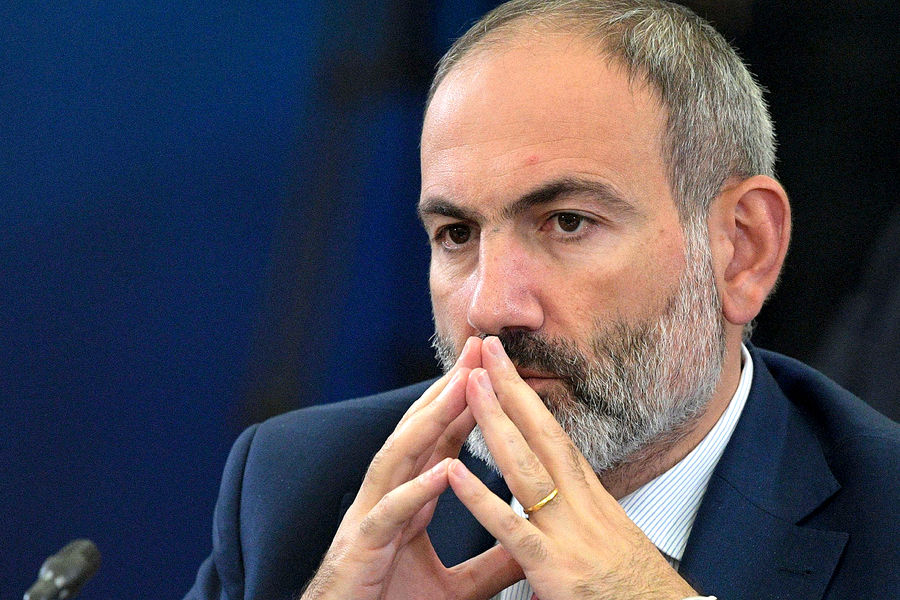
An address by Prime Minister Nikol Pashinyan, who further accused Russia of faltering in its responsibilities toward Armenia, has angered Moscow, which on Monday said the Armenian leader, with his “unacceptable attacks,” was seeking to ruin Russian-Armenian relations and is looking to the West for support.
In a statement issued on Monday, the Russian foreign ministry rejected Pashinyan’s claims, who in a televised address, accused “outside forces” of attempting to sow dissent in Armenia.
“We are convinced that the Yerevan leadership is making a huge mistake by deliberately trying to destroy the multifaceted and centuries-old ties between Armenia and Russia and making the country a hostage to geopolitical games of the West,” the Russian Foreign Ministry said.
Pashinyan also seemed to blame Russia for Armenians’ exodus from Artsakh following last week’s large scale offensive by Azerbaijan, which left hundreds dead and injured and displacing thousands of Artsakh residents.
Pashinyan also stepped up his attacks, saying that membership in the Collective Security Treaty Organization and an alliance with Russia were not enough to ensure Armenia’s national security, adding that Armenia will normalize relations with Azerbaijan through frameworks put forth by the European Union.
The Russian Foreign Ministry hit back at Pashinyan, saying the prime minister was attempting “relieve himself of responsibility for failures in domestic and foreign policy by shifting the blame to Moscow.”
“Russia has always been faithful to its allied obligations, respected Armenian statehood and never confronted the republic with a choice: with us or against us,” it said in a statement.
The statement blamed the Azerbaijani offensive on Pashinian’s controversial decision to recognize Azerbaijani sovereignty over Karabakh during October 2022 and May 2023 talks with Azerbaijani President Ilham Aliyev organized by the European Union. “This fundamentally changed … the position of the Russian peacekeeping contingent [in Karabakh,]” the Russian foreign ministry said.
These sentiments were echoed by Russia’s Interior Minister Vladimir Kolokoltsev, who visited Yerevan and met with Pashinyan, telling him that the West wanted to use the situation in Ukraine to squeeze Russian out the South Caucasus region.
“The West wants to use the situation around Ukraine to squeeze Russia out of the South Caucasus, to destroy the Russian-Armenian bond. The United States and the EU obsessively offer their prescriptions for reforming key areas, including intelligence and law enforcement agencies, defense, and the judicial system. This state of affairs is undermining our alliance. Americans always pursue only their own interests, they don’t care about Armenia and Armenians,” Kolokoltsev said, according to the RIA Novosti news agency.
The Kremlin’s spokesperson Dmitry Peskov also took note of the remarks, categorically rejecting Pashinyan’s criticism of the Russian peacekeeping forces in Artsakh.
“The Russian peacekeepers have demonstrated real heroism in performing their duties according to their mandate,” Person said, adding that Moscow still regards Yerevan as an ally and will continue its “dialogue” with Pashinyan.