
Day: September 24, 2023
13:21, 24 September 2023
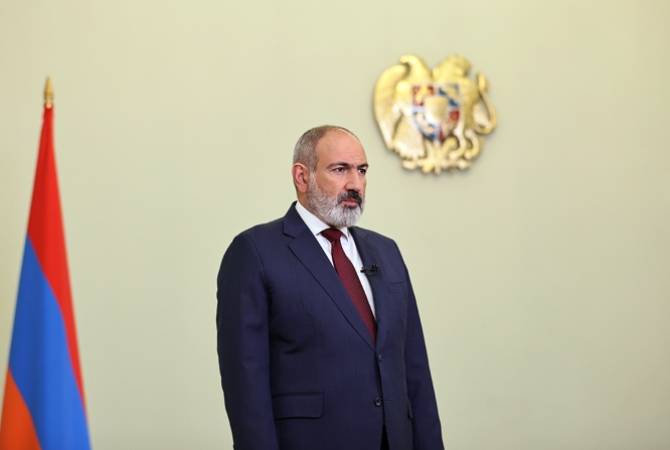
YEREVAN, SEPTEMBER 24, ARMENPRESS. The Azerbaijani attacks against Armenia over the past years have lead to the obvious conclusion that Armenia’s external security systems are ineffective in terms of national interests and security, Prime Minister Nikol Pashinyan has said.
In an address to the nation on Sunday, PM Pashinyan said that a number of developments over the past years have led to the imperative of making assessments, re-assessments and conclusions.
Below is the transcript of PM Pashinyan’s speech as published by his office.
“Dear people, dear compatriots,
A number of events that have taken place in recent years have forced all of us to evaluate, re-evaluate the situation, and draw conclusions. What happened in Armenia, what is happening and what should happen? These are the questions the answer to which is strategic for the future.
The attacks undertaken by Azerbaijan against the Republic of Armenia in recent years lead to an obvious conclusion that the external security systems in which we are involved are not effective for the state interests and security of the Republic of Armenia. This was seen both during the 44-day war and during the May and November events in 2021, as well as in September 2022, and this list goes on.
The capture of Khtsaberd and the Hin Tagher of Nagorno-Karabakh in December 2020 and the capture of more than 60 Armenian servicemen, the events of Parukh, the numerous expressions of intimidation of the Armenian population of Nagorno-Karabakh, the illegal blocking of the Lachin Corridor, the September 19 Azerbaijani attack on Nagorno-Karabakh, raise serious questions in Nagorno-Karabakh as well about the goals and motives of the peacekeeping troops of the Russian Federation.
In spite of the tripartite declaration of November 9, 2020, the Armenians of Nagorno-Karabakh are still facing the threat of ethnic cleansing. In recent days, humanitarian goods have entered Nagorno-Karabakh, but this does not change the situation. And if real conditions for Nagorno-Karabakh Armenians to live in their homes and effective mechanisms of protection from ethnic cleansing are not created, the chances that the Nagorno-Karabakh Armenians will see leaving their homeland as the only way to save their lives and identity is greatly increased.
The responsibility for such a development of events will fall entirely on Azerbaijan, which has adopted the policy of ethnic cleansing, and on the peacekeeping troops of the Russian Federation in Nagorno-Karabakh. Of course, the Armenian government is working with international partners on the formation of international mechanisms for ensuring the rights and security of the Armenians of Nagorno-Karabakh. But if these efforts do not give concrete results, the Government will welcome our sisters and brothers of Nagorno Karabakh to the Republic of Armenia with all care.
By doing so, however, the issues mentioned above will not only be not addressed, but will be exacerbated. The Republic of Armenia has never abandoned its obligations as an ally and has never betrayed its allies. But the analysis of the events shows that the security systems and the allies we have relied on for many years have set a task to demonstrate our vulnerabilities and justify the impossibility of the Armenian people to have an independent state. Moreover, such a policy has nothing to do with the Government established by the popular, non-violent, velvet revolution that took place in 2018 in Armenia, we have seen the manifestations of that policy regularly in recent decades. The four-day war of 2016, the border escalations of 2014-2015 were also an expression of that policy.
We have never agreed with formulations calling into question the independence of Armenia. However, it is concerning that instead of heeding our desire for an independent, sovereign, free and democratic state, some of our partners are increasingly making efforts to expose our security vulnerabilities, putting at risk not only our external, but also internal security and stability, while violating all norms of etiquette in diplomatic and interstate relations, including obligations assumed under treaties.
In response to these steps, we call and urge our partners to respect our statehood and sovereignty, and express our determination to strengthen our statehood, sovereignty, democracy, external and internal security. We call on the international community to express unwavering support for Armenia’s independence, sovereignty, territorial integrity and democracy. We will take all measures to protect our independence. In this regard, it is necessary to transform, supplement, and enrich the external and internal security tools of the Republic of Armenia, cooperating with all partners ready for mutually beneficial steps. Among those measures, we observe not only the deep and comprehensive reforms of the army and security forces, but also the de jure recording of the Prague agreement of October 6, 2022, and Brussels agreement of May 14, 2023, by which the administrative borders of Soviet Armenia are de jure formulated as the state borders of the Republic of Armenia. We are also looking at the ratification of the Rome Statute as another measure, which will enable the Republic of Armenia to use the capabilities of the International Criminal Court in ensuring external security. We made the decision to ratify the Rome Statute in December 2022, when it became clear to all of us that the CSTO and the instruments of the Armenian-Russian strategic partnership are not enough to ensure Armenia’s external security, and that decision is not directed against the CSTO or the Russian Federation in any way. It stems from our external security interest and it is our sovereign right to make such a decision.
Dear people, dear compatriots,
Armenia should be a peaceful, developed, happy, free and democratic state. But on this path, it is necessary to reaffirm our will to be a free and sovereign state, and we go along that path, respecting all our partners, but also expecting the same respect for our people, our state, our sovereignty, our freedom. The deep meaning of the events taking place with us in recent years and even today is this: will Armenia be a sovereign, free, democratic state or a frightened outlying region? This is the choice that is almost openly and transparently brought forward in the internal political field of Armenia. And every citizen must make a choice: he is a participant in the movement for the defense of independence or a supporter of the outlying province.
I am the Prime Minister of the Republic of Armenia, therefore I lead the independence defense movement. If I were not the prime minister, as a citizen I would go after the prime minister leading the movement of the defense of the independence of Armenia, knowing that it will not be easy, but it will happen, because the future of Armenia depends on one person and that one person is me, the future of Armenia depends on one person and that one person is you.
The citizen of the Republic of Armenia has not lost and will not lose his pride and determination and the citizen of the Republic of Armenia will win in this struggle for independence, sovereignty, democracy, happiness and freedom.
Glory to the martyrs and long live the Republic of Armenia.”
13:21, 24 September 2023
YEREVAN, SEPTEMBER 24, ARMENPRESS. The Azerbaijani attacks against Armenia over the past years have lead to the obvious conclusion that Armenia’s external security systems are ineffective in terms of national interests and security, Prime Minister Nikol Pashinyan has said.
In an address to the nation on Sunday, PM Pashinyan said that a number of developments over the past years have led to the imperative of making assessments, re-assessments and conclusions.
Below is the transcript of PM Pashinyan’s speech as published by his office.
“Dear people, dear compatriots,
A number of events that have taken place in recent years have forced all of us to evaluate, re-evaluate the situation, and draw conclusions. What happened in Armenia, what is happening and what should happen? These are the questions the answer to which is strategic for the future.
The attacks undertaken by Azerbaijan against the Republic of Armenia in recent years lead to an obvious conclusion that the external security systems in which we are involved are not effective for the state interests and security of the Republic of Armenia. This was seen both during the 44-day war and during the May and November events in 2021, as well as in September 2022, and this list goes on.
The capture of Khtsaberd and the Hin Tagher of Nagorno-Karabakh in December 2020 and the capture of more than 60 Armenian servicemen, the events of Parukh, the numerous expressions of intimidation of the Armenian population of Nagorno-Karabakh, the illegal blocking of the Lachin Corridor, the September 19 Azerbaijani attack on Nagorno-Karabakh, raise serious questions in Nagorno-Karabakh as well about the goals and motives of the peacekeeping troops of the Russian Federation.
In spite of the tripartite declaration of November 9, 2020, the Armenians of Nagorno-Karabakh are still facing the threat of ethnic cleansing. In recent days, humanitarian goods have entered Nagorno-Karabakh, but this does not change the situation. And if real conditions for Nagorno-Karabakh Armenians to live in their homes and effective mechanisms of protection from ethnic cleansing are not created, the chances that the Nagorno-Karabakh Armenians will see leaving their homeland as the only way to save their lives and identity is greatly increased.
The responsibility for such a development of events will fall entirely on Azerbaijan, which has adopted the policy of ethnic cleansing, and on the peacekeeping troops of the Russian Federation in Nagorno-Karabakh. Of course, the Armenian government is working with international partners on the formation of international mechanisms for ensuring the rights and security of the Armenians of Nagorno-Karabakh. But if these efforts do not give concrete results, the Government will welcome our sisters and brothers of Nagorno Karabakh to the Republic of Armenia with all care.
By doing so, however, the issues mentioned above will not only be not addressed, but will be exacerbated. The Republic of Armenia has never abandoned its obligations as an ally and has never betrayed its allies. But the analysis of the events shows that the security systems and the allies we have relied on for many years have set a task to demonstrate our vulnerabilities and justify the impossibility of the Armenian people to have an independent state. Moreover, such a policy has nothing to do with the Government established by the popular, non-violent, velvet revolution that took place in 2018 in Armenia, we have seen the manifestations of that policy regularly in recent decades. The four-day war of 2016, the border escalations of 2014-2015 were also an expression of that policy.
We have never agreed with formulations calling into question the independence of Armenia. However, it is concerning that instead of heeding our desire for an independent, sovereign, free and democratic state, some of our partners are increasingly making efforts to expose our security vulnerabilities, putting at risk not only our external, but also internal security and stability, while violating all norms of etiquette in diplomatic and interstate relations, including obligations assumed under treaties.
In response to these steps, we call and urge our partners to respect our statehood and sovereignty, and express our determination to strengthen our statehood, sovereignty, democracy, external and internal security. We call on the international community to express unwavering support for Armenia’s independence, sovereignty, territorial integrity and democracy. We will take all measures to protect our independence. In this regard, it is necessary to transform, supplement, and enrich the external and internal security tools of the Republic of Armenia, cooperating with all partners ready for mutually beneficial steps. Among those measures, we observe not only the deep and comprehensive reforms of the army and security forces, but also the de jure recording of the Prague agreement of October 6, 2022, and Brussels agreement of May 14, 2023, by which the administrative borders of Soviet Armenia are de jure formulated as the state borders of the Republic of Armenia. We are also looking at the ratification of the Rome Statute as another measure, which will enable the Republic of Armenia to use the capabilities of the International Criminal Court in ensuring external security. We made the decision to ratify the Rome Statute in December 2022, when it became clear to all of us that the CSTO and the instruments of the Armenian-Russian strategic partnership are not enough to ensure Armenia’s external security, and that decision is not directed against the CSTO or the Russian Federation in any way. It stems from our external security interest and it is our sovereign right to make such a decision.
Dear people, dear compatriots,
Armenia should be a peaceful, developed, happy, free and democratic state. But on this path, it is necessary to reaffirm our will to be a free and sovereign state, and we go along that path, respecting all our partners, but also expecting the same respect for our people, our state, our sovereignty, our freedom. The deep meaning of the events taking place with us in recent years and even today is this: will Armenia be a sovereign, free, democratic state or a frightened outlying region? This is the choice that is almost openly and transparently brought forward in the internal political field of Armenia. And every citizen must make a choice: he is a participant in the movement for the defense of independence or a supporter of the outlying province.
I am the Prime Minister of the Republic of Armenia, therefore I lead the independence defense movement. If I were not the prime minister, as a citizen I would go after the prime minister leading the movement of the defense of the independence of Armenia, knowing that it will not be easy, but it will happen, because the future of Armenia depends on one person and that one person is me, the future of Armenia depends on one person and that one person is you.
The citizen of the Republic of Armenia has not lost and will not lose his pride and determination and the citizen of the Republic of Armenia will win in this struggle for independence, sovereignty, democracy, happiness and freedom.
Glory to the martyrs and long live the Republic of Armenia.”

A lightning military operation, lasting barely twenty-four hours, has put an end to the dream of an independent Nagorno Karabakh. This was announced by the President of Azerbaijan, Ilham Aliyev, after proclaiming the “reintegration” into the country of the entire region, inhabited until now by slightly more than 120,000 people, mainly ethnic Armenians. Since December 2022 the enclave had been completely encircled following the blockade by Azeri troops and activists of the Lachin corridor, the territory’s only connection to Armenia.
The security of the road had been taken over by Russia, which had erected interposition troops and aspired to mediation work. Absorbed in its energies by the war it was waging against Ukraine, Russia neglected to pay attention to this commitment, all the more so since the Kremlin had warned of Armenia’s pro-Western fickleness with the consequent cooling of relations with Moscow.
For President Aliyev, this victory, which puts an end to thirty years of frozen conflict, represents an obvious strengthening of his international position. His main supporters also share part of this triumph: Erdogan’s Turkey, confronting Armenia since the genocide of 1915, which Ankara refuses to recognize as such, and Netanyahu’s Israel, which supplies arms to Azerbaijan, an equipment that has proved sufficient and decisive for the triumph of Baku.
The last issue of this war is to determine the fate of the Armenian inhabitants of the failed republic of Artsakh, the name with which they had baptized the territory and whose capital they had established in Stepanakert. After being subjected to a nine-month siege, with a lack of food, water and medicine, many have gone into hiding, fearful of being put to the sword by the victorious troops. This was dramatically stated to Agence France Presse by Armine Hayrapetian, the spokeswoman for the government of the separatist republic of Artsakh, who warned of the “massacres” which, in her opinion, the Azeris would undertake as soon as they entered the capital.
More likely, however, is that an agreement will be reached on the evacuation of the 120,000 Armenians, to be hosted by Yerevan. In addition to the human crisis that this entails, there will undoubtedly be a political crisis in Armenia itself. Its current government of Nikol Pashinyan has already been accused of passivity and of not having done enough to defend and help its beleaguered countrymen. This pressure will be accentuated by the arrival of these refugees, who will bring to the country not only bitterness over the tragedy of their exile and the hardships suffered, but also reproaches to the “Armenian motherland” for not having effectively defended her children.
The two countries, Armenia and Azerbaijan, will further accentuate their animosity and differences. Both had gained independence from the Russian Empire in 1918, but both were again swallowed up by the USSR, which determined that Nagorno-Karabakh would remain an autonomous territory within the then Azerbaijan Soviet Socialist Republic.
Like many other peoples forcibly subdued by the central power in Moscow, the two countries appeased their mutual enmity, but it flared up again as soon as the Soviet Union disintegrated. Three years of war, between 1991 and 1994, ended with the ethnic Armenian rebels conquering most of the territory, invading in the process other surrounding regions of Upper Karabakh, inside Azerbaijan, which were not in dispute.
Baku never recognized the borders that emerged from that confrontation; it always claimed the territory arguing that the Azeri population living in Upper Karabakh had been expelled and massacred by the Armenians, and the tension resulted in periodic skirmishes that would again reach their climax in the 2020 war, when Armenia and Azerbaijan crossed mutual accusations of shelling civilian settlements.
The cease-fire agreement that halted hostilities, later punctuated by new clashes, was broken last December, when Azerbaijan closed the Lachin corridor and began the encirclement by hunger and thirst that has now concluded with the lightning military operation that is supposed to be definitive, although in this as in so many other stories in history nothing can ever be taken for granted forever and ever.
A lightning military operation, lasting barely twenty-four hours, has put an end to the dream of an independent Nagorno Karabakh. This was announced by the President of Azerbaijan, Ilham Aliyev, after proclaiming the “reintegration” into the country of the entire region, inhabited until now by slightly more than 120,000 people, mainly ethnic Armenians. Since December 2022 the enclave had been completely encircled following the blockade by Azeri troops and activists of the Lachin corridor, the territory’s only connection to Armenia.
The security of the road had been taken over by Russia, which had erected interposition troops and aspired to mediation work. Absorbed in its energies by the war it was waging against Ukraine, Russia neglected to pay attention to this commitment, all the more so since the Kremlin had warned of Armenia’s pro-Western fickleness with the consequent cooling of relations with Moscow.
For President Aliyev, this victory, which puts an end to thirty years of frozen conflict, represents an obvious strengthening of his international position. His main supporters also share part of this triumph: Erdogan’s Turkey, confronting Armenia since the genocide of 1915, which Ankara refuses to recognize as such, and Netanyahu’s Israel, which supplies arms to Azerbaijan, an equipment that has proved sufficient and decisive for the triumph of Baku.
The last issue of this war is to determine the fate of the Armenian inhabitants of the failed republic of Artsakh, the name with which they had baptized the territory and whose capital they had established in Stepanakert. After being subjected to a nine-month siege, with a lack of food, water and medicine, many have gone into hiding, fearful of being put to the sword by the victorious troops. This was dramatically stated to Agence France Presse by Armine Hayrapetian, the spokeswoman for the government of the separatist republic of Artsakh, who warned of the “massacres” which, in her opinion, the Azeris would undertake as soon as they entered the capital.
More likely, however, is that an agreement will be reached on the evacuation of the 120,000 Armenians, to be hosted by Yerevan. In addition to the human crisis that this entails, there will undoubtedly be a political crisis in Armenia itself. Its current government of Nikol Pashinyan has already been accused of passivity and of not having done enough to defend and help its beleaguered countrymen. This pressure will be accentuated by the arrival of these refugees, who will bring to the country not only bitterness over the tragedy of their exile and the hardships suffered, but also reproaches to the “Armenian motherland” for not having effectively defended her children.
The two countries, Armenia and Azerbaijan, will further accentuate their animosity and differences. Both had gained independence from the Russian Empire in 1918, but both were again swallowed up by the USSR, which determined that Nagorno-Karabakh would remain an autonomous territory within the then Azerbaijan Soviet Socialist Republic.
Like many other peoples forcibly subdued by the central power in Moscow, the two countries appeased their mutual enmity, but it flared up again as soon as the Soviet Union disintegrated. Three years of war, between 1991 and 1994, ended with the ethnic Armenian rebels conquering most of the territory, invading in the process other surrounding regions of Upper Karabakh, inside Azerbaijan, which were not in dispute.
Baku never recognized the borders that emerged from that confrontation; it always claimed the territory arguing that the Azeri population living in Upper Karabakh had been expelled and massacred by the Armenians, and the tension resulted in periodic skirmishes that would again reach their climax in the 2020 war, when Armenia and Azerbaijan crossed mutual accusations of shelling civilian settlements.
The cease-fire agreement that halted hostilities, later punctuated by new clashes, was broken last December, when Azerbaijan closed the Lachin corridor and began the encirclement by hunger and thirst that has now concluded with the lightning military operation that is supposed to be definitive, although in this as in so many other stories in history nothing can ever be taken for granted forever and ever.