Categories
South Caucasus News

China’s Belt And Road Initiative: Politics Over Economics – Analysis


China’s Belt And Road Initiative: Politics Over Economics – Analysis

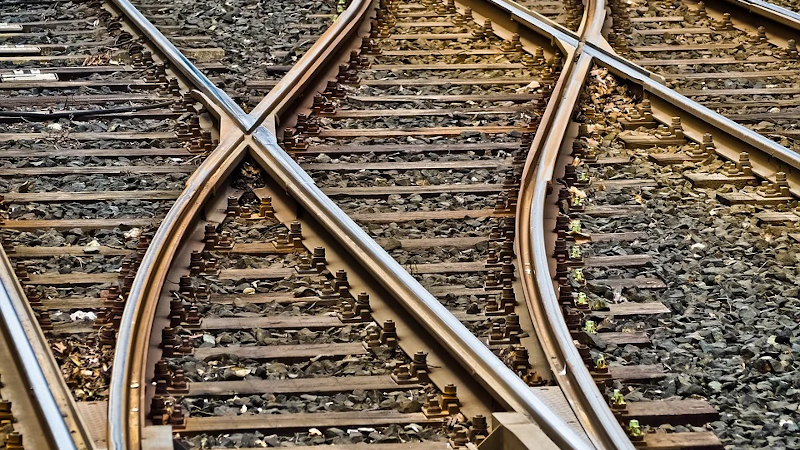
Rails Soft Tracks Railroad Railroad Line Train Tram

By Felix K. Chang

When international delegates to the Third Belt and Road Forum gather in October 2023, they might find the focus of China’s Belt and Road Initiative (BRI) has shifted again. If that happens, it could prompt some to wonder anew what are the ultimate goals of the BRI—a program that began in 2013 as the “Silk Road Economic Belt and the 21st-Century Maritime Silk Road” and then abbreviated to the “One Belt, One Road Initiative” before its current appellation. After ten years of investment and construction, enough BRI projects have been completed that a clear picture of the initiative’s goals should have emerged. But that has yet to occur.

As originally billed, the BRI aimed to finance the logistics and transportation infrastructure development needed to better connect Asia, Europe, and everywhere in between. All the BRI’s member countries would profit. Naturally, China and Europe, which formed the BRI’s end points, were expected to benefit from greater trade flowing in either direction. The countries in between were also expected to benefit by becoming transshipment centers and, with other investment, as new value-adding links in international supply chains.

But ten years on, the BRI’s aims have steadily diverged from that original vision. Rather than focusing on the logistics and transportation infrastructure needed to resurrect the ancient Silk Road, Beijing appeared willing to apply the BRI banner to any sort of infrastructure project that it embraced and Chinese money underwrote. Ahead of the Third Belt and Road Forum, there are signs that the BRI’s aims could broaden again. Given the waning interest among developing countries for more infrastructure projects, Beijing might change the BRI’s focus to helping the developing world industrialize by financing factories and other industrial facilities. The forum’s delegates may well applaud such a change. However, the BRI’s ever-shifting aims suggest that the initiative’s ultimate goal may have become more political than economic.

Plan A: Silk Road Trade

At the BRI’s 2013 launch, Chinese General Secretary Xi Jinping waxed lyrical about a new “transcontinental Silk Road linking East and West.” The BRI’s intent seemed clear: to resurrect the ancient Silk Road in the form of new-build airports, seaports, railways, and roads. All involved would profit. China would benefit from Europe’s industrial and high-tech exports. Europe would benefit from China’s consumer exports. The in-between countries would benefit from the modern infrastructure by becoming transshipment centers and possibly developing new value-added manufacturing and services industries, much like what Singapore did in the 1980s and 1990s.

The economic logic behind the BRI scheme was easy to understand. With trade barriers lowered through more modern logistics and transportation infrastructure, countries could maximize their respective competitive advantages to reap the rewards of being part of a globalized economy. While the BRI always had a political dimension, it was not overt. At least initially, the BRI would not directly challenge the United States or the West’s liberal economic order. On the contrary, it would complement that order. It proved a persuasive pitch. Greece, Italy, and over 150 other countries joined. And although Europe’s biggest economies refrained from joining, they still eagerly sought more trade with China.

With time, however, European countries became wary. They gradually realized that China was not content with exporting consumer goods. Chinese firms were steadily moving up the value chain and displacing their European competitors in a variety of industries, from semiconductors to solar panels and wind turbines. China had even started to set technical standards for large swathes of Africa and Asia. At the same time, European governments began to wonder what China might do to them after witnessing Beijing’s economic intimidation of Australia in 2020. The net result was waning European enthusiasm for the BRI. And rather than remind Europe of the BRI’s economic benefits and non-political aims, China cut the BRI’s freight rail service through Lithuania after a dispute with it over Taiwan in 2021.

Plan B: Infrastructure for All

Perhaps fortunately for the BRI, it never strictly hewed to its Plan A. From the BRI’s start, Beijing had incentivized Chinese banks to make loans under its banner. It did not take long for them to stray from Xi’s Silk Road vision. They extended credit to all sorts of infrastructure projects, from power plants to mineral mines, and did so far from the Silk Road’s ancient (or even modern) paths, venturing to West Africa and Latin America. Many of the loans were structured to make them “win-wins” for Beijing. Chinese banks earned interest from loans whose proceeds largely flowed to Chinese construction companies, which built infrastructure that often served Chinese commercial interests. For its part, Beijing seemed more intent on claiming credit for the infrastructure than how neatly it fit with Xi’s original vision.

Certainly, according to Beijing, some of the BRI’s biggest successes have been in Africa. That might be because the infrastructure built in Africa was not primarily designed to support trade between Asia and Europe. Rather it was intended to support African trade more broadly. Still, from 2013 to 2021, the total trade value of Africa’s top thirty trading countries barely budged, according to the UN Comtrade database. While some countries saw their trade balances improve, others saw theirs significantly deteriorate, including Angola, one of the largest recipients of BRI financing.

Unfortunately for countries like Angola, infrastructure development alone does not guarantee economic success. By the time of the Second Belt and Road Forum in 2019, cases of debt-distressed countries such as Pakistan and Sri Lanka had already become well known. Even countries once keen on the BRI, like Malaysia, pulled back. Thus, Beijing used that forum to calm concerns about the initiative. But just how far BRI had strayed from its original economic vision could be seen in the forum’s long and meandering list of deliverables, which had little to do with trade routes between Asia and Europe.

Plan C: Industrialization Next?

To revive the BRI a second time at the Third Belt and Road Forum, Beijing may well expand the initiative’s remit again. Already, in August 2023, Xi announced that he had heard the concerns of developing countries, particularly those in Africa. They did not want more logistics and transportation infrastructure. Instead, they want industrialization. China could help. Xi assured: “China will better harness its resources for cooperation with Africa and initiatives of businesses to support Africa in growing its manufacturing sector and realizing industrialization and economic diversification.”

How successful will building new industrial capacity in Africa be? Time will tell. Certainly, some studies predict Africa’s population growth will drive demand for new goods. On the other hand, Africa’s GDP growth has barely exceeded its population growth over the last thirty years. That means the proportion of Africans who can consume those new goods has not significantly increased. Hence, if Chinese efforts to boost African industrialization succeeds, most of the new goods produced might not be consumed in Africa, but rather might flow to the developed world, where they would compete with Chinese goods.

That could chip away at China’s status as the “world’s factory.” Already, China’s industrial base has shown signs of strain adjusting to lower global demand. Beijing’s acceptance of a weaker yuan this year suggests that China has not given up on its export-led economy, despite its talk about a refocus on consumption. Thus, if the BRI were to shift its economic aims to include large-scale industrialization projects in the developing world, they could run counter to China’s own interests in the long run, hardly sound economic logic.

Politics Trump Economics

There is little doubt that Beijing will try to use the Third Belt and Road Forum to reignite enthusiasm for the BRI, which has become a key feature of Xi’s foreign policy. But that is easier said than done. The initiative must overcome the lingering economic impacts of the COVID-19 pandemic and slowing global trade, not to mention claims that it contributed to onerous debts (and perhaps deficit traps, too) in some of the countries in which it has invested. Beijing may see its support for developing-world industrialization as a way to spark renewed interest in the BRI. China may even subsume the initiative into Xi’s Global Development Initiative. Whatever the path China chooses for the BRI, the more tortuous its economic logic becomes, the more pronounced its political dimension will be. While the BRI’s economic aims may be continuously shifting, its political goals remain focused.

Broadly, Beijing has long been concerned about encirclement by Washington. The BRI was, in part, meant to ensure that America could not isolate China. To that end, Beijing has always regarded the initiative as a way to garner political support and create new spheres of influence. In that regard, the BRI has been somewhat successful. China has parlayed its BRI investments into political sway in various parts of the world, at the United Nations, and even among American allies in Europe. Certainly, China has effectively used the BRI to persuade several countries to drop their diplomatic recognition of Taiwan (e.g., Panama in 2017, the Dominican Republic in 2018, Solomon Islands in 2019, Kiribati in 2020, Nicaragua in 2022, and Honduras in 2023). Helping developing countries to industrialize could boost China’s political capital further.

Of course, the use of economic cooperation as a political instrument is not an unfamiliar tactic for Beijing. Recently, that was on display at the BRICS (Brazil, Russia, India, China, and South Africa) summit in August 2023, when China (and Russia) sought to enlarge the membership of the BRICS grouping and, in so doing, build greater political clout. India and South Africa, two other founding BRICS members, tried to get the group to reconsider. They feared that such an expansion would turn the economic grouping into a political bloc. They failed, and China prevailed. Political aims outweighed economic ones. It seems like that may be true of the BRI, too.


The views expressed in this article are those of the author alone and do not necessarily reflect the position of the Foreign Policy Research Institute, a non-partisan organization that seeks to publish well-argued, policy-oriented articles on American foreign policy and national security priorities.

About the author: Felix K. Chang is a senior fellow at the Foreign Policy Research Institute and the Chief Operating Officer of DecisionQ, an artificial intelligence engineering company.

Source: This article was published by FPRI

Categories
South Caucasus News

Prachanda’s Visit To China: Opportunities And Challenges – Analysis


Prachanda’s Visit To China: Opportunities And Challenges – Analysis

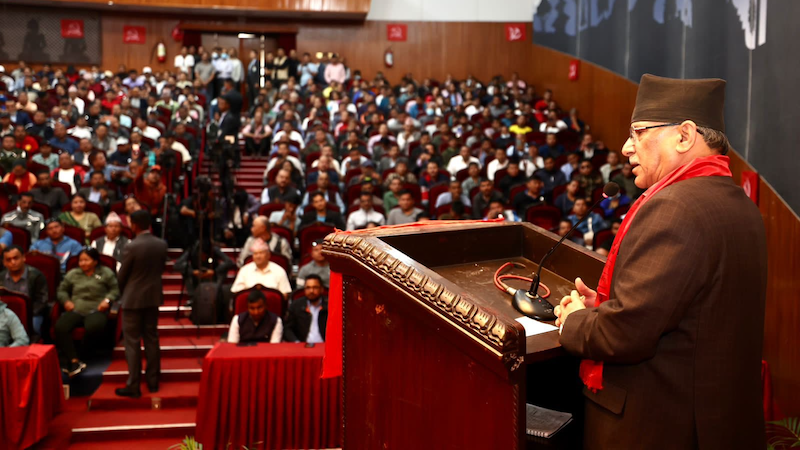
Nepal's Prime Minister Pushpa Kamal Dahal (also known as Prachanda). Photo Credit: Nepal PM Office

By Saurav Raj Pant

Nepali Prime Minister Pushpa Kamal Dahal “Prachanda” will undertake an official visit to China on 22 September 2023. This would be his second foreign visit after assuming office. His first foreign visit was to New Delhi, India in May–June 2023. This visit is being deemed as important in Nepal given the preceding government’s ‘neighbours first’ policy, which meant Nepal would maintain good relations with both its important neighbours—India and China. According to the Foreign Ministry of Nepal, relationship of the country with its neighbours is based on the principles of ‘sovereign equality, goodwill, mutual trust and benefits, understanding of each other’s concerns and sensitivities and cooperation for prosperity and development’.1

It is a truism to say that Nepal’s sustainability and progress depend on maintaining cordial relations with both India and China. Therefore, Prachanda’s visit to Nepal is only natural after his visit to India in May–June 2023. Despite the fact that India and China have different governance systems and differing perspectives on global politics, managing these two major powers has been a difficult task for the Nepali leaders. While there is a view in Kathmandu that the visit will balance his earlier visit to India, Prachanda could ill afford to delay it further, given the growing engagement of China in many sectors of Nepalese economy in the last few years. 

Nepal, due to its own internal constraints, is dependent on its neighbours for its development. While India has been engaged in this field for a long time, the entry of China into the development sector in recent years has been received well by the people at large, although there is skepticism in some sections that overdependence on China could lead Nepal to a ‘debt trap’ on the one hand and complicate relationship with India on the other.

Issues and Challenges

There are several projects in the pipeline which the Nepali side is expected to discuss with its Chinese counterparts. Some of these include infrastructure development projects such as the Seti Fast track road, Hilsa-Surkhet Road, Tokha-Chahare tunnel, and the upgrading of the Araniko Highway, implementation of the 2016 Trade and Transit Agreement with China and construction of the international exhibition center in Kathmandu.2 The health sector is another important issue to be discussed. China has, of late, expressed its interest to expand the Civil Service Hospital and relocate Bir Hospital to Bhaktapur for upgraded medical facilities. 

There is a popular enthusiasm in Nepal about the country joining China’s Belt and Road Initiative (BRI) in 2017, and some Nepali commentators would say that BRI has made its mark by “driving urban transformation in Nepal, reconfiguring geopolitical and geoeconomic relations and remaking the sociopolitical, cultural and material fabric of hitherto peripheral spaces”.3 The impact on the ground, however, may not have been as noticeable as it is being made out to be. For example, much like the special economic zone (SEZs) in the Terai region, there were plans to develop cross-border SEZs along the Nepal–China border. However, the MoU with China in 2016 to this effect has not been implemented till now. 

There are many challenges that have affected Nepal–China relationship in the past. One major challenge has been chronic political instability in recent years. As per the informal agreements that led to formation of the incumbent government headed by Prachanda, the mantle of leadership may have to be passed on to another leader of the coalition after two and half years. Such changes may interfere with the momentum of policy implementation and affect the image of Nepal in the region. There are observers in Nepal who point out that Nepal’s regional standing has plummeted so much that it was not invited to the G20 meeting in New Delhi while Bangladesh was given a chance to participate in it.4

Another important issue has been the high interest rate levied by China for loans it has extended to Nepal. The 2 per cent interest rate China has negotiated for its loan to build the Pokhara International Airport is being discussed in Nepal as an uncharitable gesture, which raises questions about China’s long-term strategic intention. This airport has not been fully operational since its inauguration on 1 January 2023. The Chinese have claimed this airport as part of BRI unilaterally, even though there was no BRI when Nepal had signed contract for this airport with the Exim Bank of China.  Prachanda must, therefore, discuss the possibility of waiving off the loan for six civilian aircrafts that Nepal has received from China. These aircrafts have so far been grounded due to technical, manpower and spares issues leading to loss of over NPR 2 billion.5

There is also the issue of lukewarm response from the Chinese side to import from Nepal. China has allowed zero-tariff entry for 8,000 goods of Nepali origin,6 . but this duty-free arrangement has so far not been implemented even after two years of the pandemic. This has led to Nepali goods rotting at the border. Prachanda and his team need to get assurance for easy and barrier-free access to Nepali products that can reduce trade deficit with China.7

Recently, the Chinese Ambassador to Nepal gave an ‘undiplomatic’ remark about India’s role in Nepal.8 He said that Nepal had been in a losing position vis-à-vis India in the field of trade and commerce and it can get many more benefits from its trade with China. Such rhetoric is often accepted uncritically by the people of Nepal. However, the facts stated above speak otherwise. The Chinese diplomats also had similar things to say during the case of Millennium Challenge Corporation (MCC) and the US diplomats had rebuffed such remarks.9 Such expressions only indicate how desperate China is to snap Nepal’s relationship with India, US and other friendly countries and betray a sense of anxiety about Nepal’s policy of seeking mutual trust with all.

There is also the issue of cultural difference. The exposure of Nepali people to Chinese tourists has not been very pleasant so far. In fact, when Chinese tourist stranded in Kathmandu due to COVID-19 lockdown attacked the Nepal Police, there was unnecessary anxiety in bilateral relations.10 Nepal was forced to remain silent lest any lawful action against the tourists would impair relationship with China.  

Of late, China is forcing Nepal to join various Chinese projects, i.e., the Global Security Initiative (GSI), Global Civilizational Initiative (GCI) and the Global Development Initiative (GDI). In fact, the GSI has been generally viewed as China’s version of NATO.11 Such initiatives look like a strategic alliance of some sort and militates against Nepal’s foreign policy goals. Prachanda should clarify Nepal’s position on these issues. 

Way forward

Nepal has a considerably large electorate wedded to left-leaning communist thinking, who idealise China as its closest friend. Moreover, they reflexively turn to China to balance India, a country with which they have deep and inerasable historical, geographical, cultural and familial bonds. As it happens in any such close association, proximity is often taken for granted and ignored, without objective analysis of the costs of dissolution of such relationship.

History is witness to the fact that China did not stand by Nepal when it passed through difficult times. Nepal–China border has not been fully operational since the 2015 earthquake followed by the COVID-19 pandemic even if China has ensured continued flow of Chinese goods while limiting flow of Nepali goods into China. There has been a hue and cry over the ‘text’ of the MCC compact but there has been no discussion over the terms and conditions of BRI in Nepal.

While managing relationships with both China and India can present challenges, Nepal would generally find negotiations with India to be easier, given the deep-rooted historical and cultural ties it shares with India, as opposed to dealing with China. The cultural links that some people in Nepal often claim with China do not point to a continued relationship anymore. China itself does not invoke these linkages currently. China is quietly proclaiming its Pax Sinica in the region and beyond, of which Nepal should be wary of. Nepal should avoid getting ‘trapped’ in the ‘Five Fingers Policy’ of Mao Zedong.12

Nepal has a difficult task ahead in sustaining its relationship with China in the backdrop of growing India–US partnership, US–China rivalry and declining India–China relationship. Securing its own interests would require perceptive appreciation of the evolving regional and global geopolitics and dealing with its two neighbours through effective and efficient diplomacy without getting caught up in the adversarial maze of relationship among countries, Nepal regards important for its progress and development.

Views expressed are of the author and do not necessarily reflect the views of the Manohar Parrikar IDSA or of the Government of India.

About the author: Saurav Raj Pant is a Visiting Fellow at the South Asia Centre, Manohar Parrikar Institute for Defence Studies and Analyses (MP-IDSA), New Delhi.

Source: This article was published by Manohar Parrikar IDSA


Categories
South Caucasus News

Canada’s Endorsement Of Terrorism Will Come Back To Haunt It – Analysis


Canada’s Endorsement Of Terrorism Will Come Back To Haunt It – Analysis

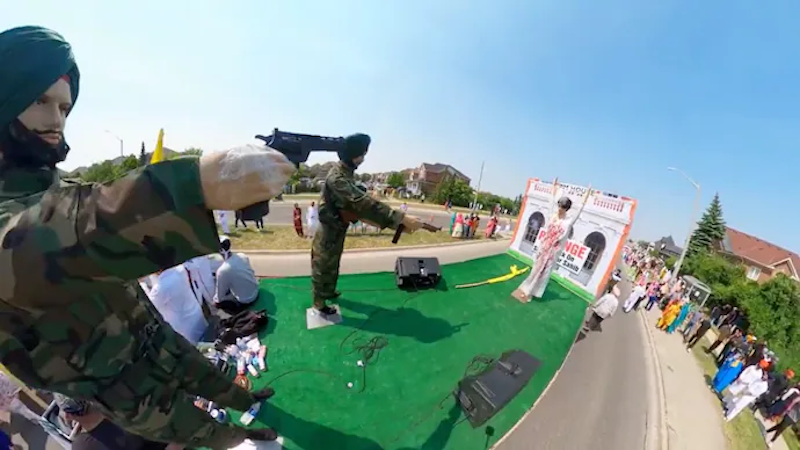
Screenshot of video showing float depicting Indira Gandhi’s assassination as part of Khalistani parade in Canada. Credit: Social Media

By Sushant Sareen and Gautam Chikermane

Relations between India and Canada have been strained ever since Justin Trudeau became Prime Minister. But it is, perhaps, Trudeau’s most dubious achievement to have deteriorated relations with India to a point where Canada is now being seen by most Indians as a new Pakistan. If the India-Canada bilateral readouts after the brief meeting on the sidelines of the G20 Summit in New Delhi reflected a relationship that’s destined to head the Pakistan way, then the diplomatic war that has been declared by Trudeau and joined by India has ended all pretence of normal ties and reduced Canada to the status of a new Pakistan.

Matters should have never reached such a pass. Both India and Canada have a lot that binds them together—democracy, diaspora (excluding the pernicious parts of it), defence and strategic ties, and, of course, a mutually beneficial economic relationship. And yet, the relations have been allowed to be held hostage by a small but well-organised fringe among the Canadian Sikh community.

Trudeau’s domestic political compulsions have forced him to pander to some of the most toxic elements of Canadian public life—the supporters of the Khalistanmovement, many of whom are members of Trudeau’s party, even his cabinet. His kowtowing to them reached a whole new level after the last general elections, which made his government dependent on the support of an unabashed Khalistani Jagmeet Dhaliwal’s New Democratic Party. With Khalistanis becoming more visible, vocal and even active in plugging their pernicious campaign against India, Trudeau started to wade into issues that clearly constituted interference in India’s internal affairs—the playbook support to protests against farm laws in 2021, for instance. Ironically, despite Canada and Khalistani Canadians openly interfering in India by supporting terrorism and separatism and taking responsibility for gangland killings in India, it was Canadian officials who first started alleging that India was interfering in Canadian affairs.

For someone like Trudeau—whose statements have strained relations with India because of what he calls interference in Canadian affairs and the need to uphold Canadian sovereignty—the nonchalance of his entitlement to comment on India’s internal affairs was rather incongruous. It is quite bizarre that Trudeau has decided to set bilateral relations aflame on nothing more than “credible allegations”, and a “potential link”; statements that he has since backtracked on. It is equally bizarre that his foreign minister announced the expulsion of a diplomat on merely an “allegation that a representative of a foreign government may have been involved”, and that allegation “if proven true…”. But it’s not surprising, considering that Trudeau is desperately trying to resurrect his falling political fortunes. At the least, it’s immature; at most, it’s Ottawa going all out to support the world’s No. 1 problem—terrorism.

Terrorism at the heart of tensions

The fundamental issue between India and Canada, like between India and Pakistan, is terrorism. Canada is turning a blind eye to the activities of subversive and radical elements who are using Canadian soil to destabilise India and carry out political assassinations and gangland killings, fund subversive elements, and support narcotics and human trafficking networks inside India. This is unacceptable. These were things Pakistan was notorious for. Canada followed. And now it has become Ottawa’s state policy to support terrorists, working on its soil, against India.

Trudeau explains it, in a flippant manner, as protecting freedom of speech and freedom of conscience. For their part, Islamabad defends its support for terrorists under the label of right to self-determination. Nice sounding words and concepts, except that they are both being utterly disingenuous. The people whose freedom of speech and conscience and right to self-determination they are defending are, in fact, the worst violators of these same rights when it comes to those who disagree with them.

Just as the Pakistanis are quick to speak with a forked tongue and assure the world that they will crack down on terrorism, so too is the Trudeau regime in Canada. While in Delhi for the G20 Summit, Trudeau claimed that “we are always there to prevent violence and to push back against hatred”. But, so far, there has been absolutely no action taken by the Canadian authorities against Khalistanis who have openly been targeting Indian diplomats, have been running a campaign to “Kill India” (isn’t that hate speech?), have vandalised the Indian consulates and High Commission, and have defiled Hindu temples. Further, Khalistani gangs have intimidated and threatened non-Khalistan Canadians (Sikhs and Hindus). All this while Canadian authorities have preferred to look away.

Parallels with Pakistan and its disingenuous ways

This is so much like what happens in Pakistan. Is Pakistani diplomats openly having deliberations with Khalistanis normal diplomatic activity in the eyes of Canadian authorities? If so, Canada must be reminded of the nexus between Khalistani Canadians and Pakistanis that wreaked havoc in Punjab in the 1980s and 1990s. Normally, if the Khalistanis were blowing off steam and hot air, India would have ignored them with the contempt they deserve. But the track record of the Khalistanis—involvement in the bombing of the AI182, bomb blasts in Tokyo’s Narita airport, the funding of subversives and political agitation in India, and freely flowing in a never-ending river of hate speech against India—means that India cannot ignore what has been happening in Canada.

The stage for the current spat (predicted by a Canadian politician) was probably set during the meeting between Prime Ministers Modi and Trudeau on the sidelines of the G20 summit in Delhi. In a 10 September 2023 bilateral meeting with Prime Minister Modi, Trudeau was steadfast in his resolve to support terrorists on Canadian soil. In fact, the two readouts could have been talking about two different events.

Modi raised concerns about the anti-India activities of “extremist elements in Canada” who are “promoting secessionism and inciting violence against Indian diplomats, damaging diplomatic premises, and threatening the Indian community in Canada and their places of worship. The nexus of such forces with organised crime, drug syndicates and human trafficking should be a concern for Canada as well. It is essential for the two countries to cooperate in dealing with such threats.” Mutual respect and trust, he said, is essential for the India-Canada relationship to progress.

Trudeau’s version of the same conversation was so benign that it was almost like the two had not met at all. To him, the meeting was about inclusive economic growth; access to concessional finance for sustainable development; the welcoming of the African Union as a member of G20; and the importance of respecting the rule of law, democratic principles, and national sovereignty.

Trudeau defended his stance as one that is meant to protect freedom of speech. “Obviously, Canada will always defend freedom of expression, freedom of peaceful protest. That is something extremely important to us,” he said, while justifying Khalistani terrorists operating from Canadian soil. “At the same time, we are always there to prevent violence to push back against hatred. I think on the issue of community, it is important to remember that the actions of the few do not represent the entire community or Canada.”

Nobody is arguing that every Sikh is a terrorist. But the shield called “few” that Trudeau raised merely hyphenates him further and equates his actions with those of the Pakistani army. There is nothing he or his government has done to fix the problem. “It a matter of concern that freedom of expression and speech is once again being misused by anti-India elements based in Canada and elsewhere,” India’s Official Spokesperson Arindam Bagchi had said on 6 July 2023. “…the issue is not about freedom of expression, but its misuse for advocating violence, for propagating separatism and for legitimizing terrorism.”

Like the attacks on the Indian High Commission in London, those in Canada, Bagchi said, will be judged by “what happens on the ground. In the name of freedom of expression, we should not be giving space to those who advocate violence or, as I said, propagate separatism or legitimise terrorism.” In the United States, for instance, the arson attempt on the Indian Consulate in San Francisco was brought under control. No such action has happened in Canada. Clearly, expressions such as free speech and all its liberal cousins are merely diversionary tactics.

Until now, sovereign support to terrorism seemed to be a monopoly of Pakistan and its most high-profile export to the world. Now, unfortunately, Canada is catching up. A wealthy G7 nation, with a per capita income of US$55,000, appears to be following the terror-support and terror-export playbook of its Pakistani counterparts. Terror factories in both nations are led by religious fanatics, whose actions tar their entire communities, when most just want to get by. And both are protected by sovereign leaders and institutions—the army and the governments in Islamabad, and the Trudeau government in Ottawa. But as Pakistan is realising—and Canada will soon—terrorists need to create terror and it is only a matter of time before they turn against their patrons.

The Ottawa-Islamabad terror-hyphenation is complete.

As far as India goes, there are five things it must do. First, it must initiate FATF (Financial Action Task Force) proceedings against Canadian terror financing routes. Second, it must tighten the vigil on OCI (Overseas Citizen of India) status granted to Indian Canadians; this is a privilege, not an entitlement. Third, it must issue travel advisories to citizens of India wanting to travel to Canada and restrict who enters India from Canada. Fourth, at some stage, a diplomatic downgrade might need to be considered. And finally, the India-Canada FTA (Free Trade Agreement) is off the table because clearly Trudeau’s Canada thinks it is better off aligning with the China-Pakistan terror axis than address India’s serious and legitimate concerns.


About the authors:

  • Sushant Sareen is Senior Fellow at the Observer Research Foundation.
  • Gautam Chikermane is Vice President at the Observer Research Foundation.

Source: This article was published by the Observer Research Foundation.


Categories
South Caucasus News

Secretary-General ‘Extremely Concerned’ about Use of Military … – United Nations


Secretary-General ‘Extremely Concerned’ about Use of Military …  United Nations

Categories
South Caucasus News

Nagorno-Karabakh Accepts Russian-Mediated Ceasefire Amid … – Arise News


Nagorno-Karabakh Accepts Russian-Mediated Ceasefire Amid …  Arise News

Categories
South Caucasus News

Azerbaijan has won Nagorno-Karabakh, but a bigger test is just starting – Moneycontrol


Azerbaijan has won Nagorno-Karabakh, but a bigger test is just starting  Moneycontrol

Categories
South Caucasus News

Japanese premier discusses Iran nuclear deal, Fukushima water … – Anadolu Agency | English


Japanese premier discusses Iran nuclear deal, Fukushima water …  Anadolu Agency | English

Categories
South Caucasus News

Iran’s Raisi Sees No Obstacle to Restoring Ties With Egypt – U.S. News & World Report


Iran’s Raisi Sees No Obstacle to Restoring Ties With Egypt  U.S. News & World Report

Categories
South Caucasus News

Iran’s president says US should ease sanctions to demonstrate it wants to return to nuclear deal – CBS17.com


Iran’s president says US should ease sanctions to demonstrate it wants to return to nuclear deal  CBS17.com

Categories
South Caucasus News

Morning brief: Trudeau staged drama in India ahead of G20, Iran`s new hijab bill, and more – WION


Morning brief: Trudeau staged drama in India ahead of G20, Iran`s new hijab bill, and more  WION