
I hope that the dialogue held today in Yevlakh will result in the reintegration of Armenian residents into Azerbaijani society, the Speaker of the Azerbaijani Parliament, Sahiba Gafarova, said at the opening ceremony of the meeting of the Standing Committ
Day: September 21, 2023

Ramin Mammadov, responsible for contacts with Armenian residents living in the Karabakh region of Azerbaijan, participates in negotiations with representatives of the Armenian minority of Karabakh in Yevlakh, according to Azerbaijan in Focus, reporting Trend.
The Armenian residents of Karabakh are represented at the talks by David Melkumyan and Sergey Martirosyan.
Representatives of the Armenian residents of Karabakh accompanied by the Russian peacekeeping contingent arrived in Yevlakh earlier this morning.
Ramin Mammadov was appointed responsible for contacts with Armenian residents living in the Karabakh region of the Republic of Azerbaijan. On March 1, in the city of Khojaly, at the headquarters of the peacekeeping contingent of the Russian Federation temporarily stationed on the territory of Azerbaijan, the parliamentarian met with representatives of Armenians living in the Karabakh region of the Republic of Azerbaijan.
Following the meeting held on March 1 in the city of Khojaly, and the invitation presented on March 13, as proposed by the Presidential Administration of the Republic of Azerbaijan once again, the meeting with the representatives of the Armenian residents living in the Karabakh region of Azerbaijan to discuss the reintegration issues, based on the Constitution of the Republic of Azerbaijan and its laws, is being held on September 21, 2023, in Yevlakh.
Meanwhile, in order to ensure the provisions of the Trilateral Statement, to stop large-scale provocations in the Karabakh economic region, to disarm and withdraw formations of the Armenian armed forces from the territories of Azerbaijan, to neutralize their military infrastructure, to ensure the safety of the peaceful population returning to the territories liberated from occupation, civil servants involved in construction and reconstruction works, and our military personnel, as well as to restore the constitutional order of the Republic of Azerbaijan, anti-terrorist measures have been launched in the region.
Taking into account the appeal of the representatives of the Armenian population of Karabakh through the Russian peacekeeping contingent, on September 20, 2023, at 13:00 (GMT+4), an agreement was reached on the cessation of local anti-terrorist activities under the following conditions: Armenian armed forces formations, illegal Armenian armed formations located in Azerbaijan’s Karabakh region, lay down their weapons, leave their combat positions and military posts, and completely disarm, Armenian armed forces formations leave the territory of Azerbaijan, illegal Armenian armed formations are disbanded.
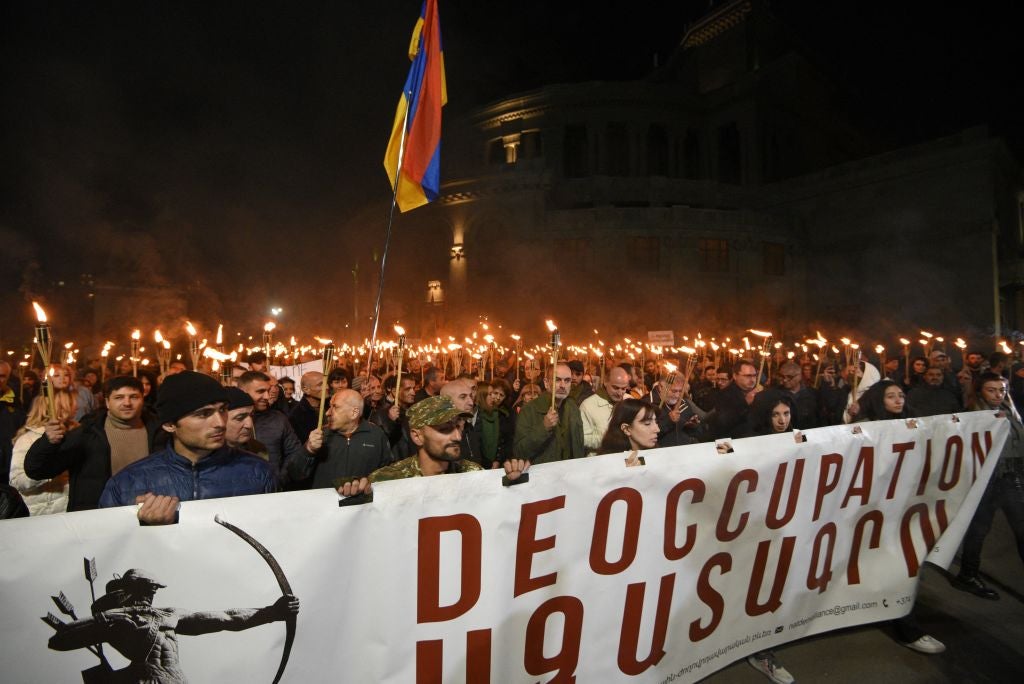
The small but mighty nation of Armenia is in an interesting geopolitical neighborhood. On its western border is Turkey, a NATO ally but longtime enemy. To its east is another enemy, Azerbaijan, with which Armenia just fought over the disputed Nagorno-Karabakh region, claimed by both countries.
In the north is Georgia which is in a never ending war of words and spies (and sometimes actual wars) with Russia. Both Georgia and Armenia were part of the Soviet Union, but even when Russia invaded Georgia in 2008, support for Russia in Armenia was high.
To Armenia south is Iran, which, for the moment, is friendly to Russia-aligned Armenia. But in late September 2023, Armenia will host the United States for a joint military exercise. The move is far more threatening to Russia, which hosts Russian military forces as part of its Collective Security Treaty Organization (CSTO) membership. The exercises are the latest in a split between Russia and Armenia, which could permanently break their relations – or worse.
Armenia and Russia have retained close relations since the fall of the Soviet Union in 1991. Armenia joined Russia in the Commonwealth of Independent States, and joined the economic military and mutual aid collaboration of the CSTO in 1997. But since Prime Minister Nikol Pashinyan was elected to lead Armenia in 2018, the country has been slowly breaking away from Russia’s sphere of influence.
When fighting between Armenia and Azerbaijan broke out over the Nagorno-Karabakh region once again in 2020, Russian President Vladimir Putin didn’t immediately intervene, cooling relations between the two even more. Pashinyan went further in September 2023.
“Moscow has been unable to deliver and is in the process of winding down its role in the wider South Caucasus region,” Pashinyan said. “The Russian Federation cannot meet Armenia’s security needs. This example should demonstrate to us that dependence on just one partner in security matters is a strategic mistake.”
The Prime Minister’s words come after Armenia announced it sent the first lady of the country to deliver humanitarian aid to Ukraine. It has also begun to further distance itself from the Russia-led CSTO. The military drills are just Armenia’s latest effort at realigning itself with the West.
Kremlin spokesperson Dmitry Peskov told reporters that the drills are “cause for concern” and Moscow will “monitor the situation.”
Armenia now finds itself in a Ukraine-like situation. Tired of dealing with Russian hegemony, which has caused a lot of economic hardships in Armenia, the Armenian government is beginning to look further and further West toward the U.S. and EU.
But Russia has built up a lot of armed forces inside Armenia. Even worse, Russians fleeing the war in Ukraine have moved to Armenia in droves, meaning Moscow has the ability to hide its own people among the refugees there, a potential hidden “fifth column” like the tactic used to seize Crimea.
Enemies on three borders, a country potentially filled with pro-Russian sympathizers and an ever-worsening lack of external will to keep Armenia independent could mean Armenia loses its independence entirely. It could be one more former Soviet republic absorbed by Putin’s dream of rebuilding the USSR.


Talks Have Opened on the Future of Nagorno-Karabakh as Azerbaijan Claims Full Control of the Region U.S. News & World Report
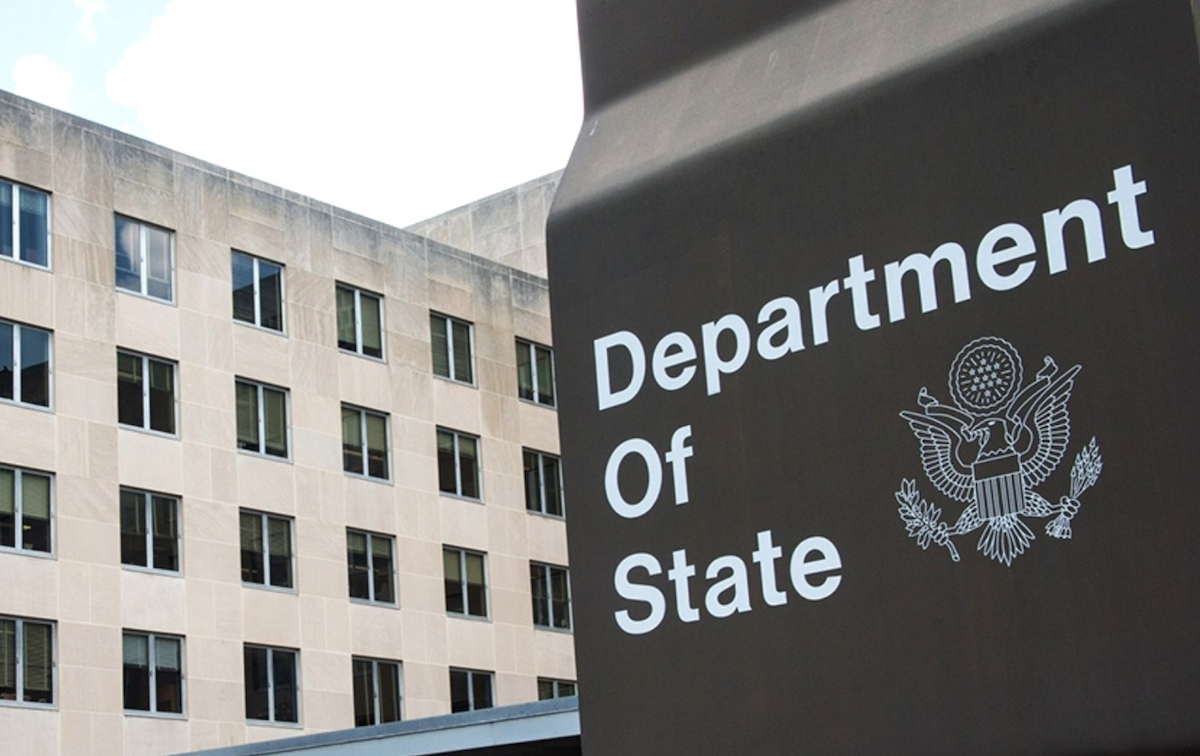
US State Department on sanctions against Partskhaladze
As the US State Department explained, legal entities and individuals who will carry out any transactions or deals with sanctioned former Prosecutor General of Georgia Otar Partskhaladze will also be subject to sanctions. The State Department’s statement is quoted by the Georgian TV station Formula.
In a letter published by Formula, the State Department expresses concern over the decision of the National Bank of Georgia not to follow the sanctions imposed against Otar Partskhaladze.
“On September 14, the United States imposed sanctions against Otar Partskhaladze, a Georgian-Russian oligarch who collaborated with the Russian FSB to influence Georgian society and politics in Russia’s interests. The sanctions against him were imposed under Decree No. 14024, which imposes sanctions on specific, damaging activities of the government of the Russian Federation.
We regret the decision of the National Bank of Georgia. Individuals and entities that conduct any transactions with Partskhaladze or other persons subject to restrictions under our Russia-related sanctions also expose themselves to the risk of sanctions.
Georgia’s banking system has been one of the best achievements in the democratic history of this country. An independent national bank is the cornerstone of any country’s healthy economy,” the US State Department said in the letter.
- Scandal around ex-general prosecutor continues in Georgia; Vice-presidents leave the National Bank
- “Legal absurdity”. Lawyer on National Bank of Georgia’s decision to unblock ex-general prosecutor’s accounts
- “That the Prosecutor General of Georgia was an agent of Russia’s FSB is a great misfortune” – President of Georgia
On September 14, the United States imposed sanctions against Otar Partskhaladze. This is related to his business activities and cooperation with the Russian FSB. Before the official announcement of the decision, the media reported that a “Georgian-Russian oligarch” was among those subject to sanctions.
According to the US State Department, the Russian Federal Security Service (FSB) worked with Otar Partskhaladze to influence Georgian society and politics in favor of Russia.
In addition, the U.S. State Department statement said that in addition to Partskhaladze, sanctions were imposed on Russian intelligence officer Alexander Onishchenko, who allegedly helped “his accomplice Partskhaladze obtain a Russian passport and possibly Russian citizenship.”
On September 18, it became known that the National Bank of Georgia restricted former Prosecutor General and under U.S. sanctions Otar Partskhaladze’s access to bank assets and financial transactions. All his accounts have been frozen.
As the National Bank explained, the sanctioned person is restricted both in the disposal of funds and in the ability to conduct all types of financial transactions.
In addition, on the evening of September 20, the Ministry of Justice of Georgia published a statement saying that the agency considers it appropriate to deprive former Prosecutor General Otar Partskhaladze of Georgian citizenship. The State Services Management Agency has already sent the report to the President of Georgia.