
On September 15, round table dedicated to the 105th anniversary of the liberation of Baku was held at the Training and Education Center of the Azerbaijan Army.
Day: September 15, 2023
Every day, Russia’s neighbors observe its hostile actions in Ukraine with concern and uncertainty. The war and its consequences are producing a variety of outcomes, many we cannot predict or observe, including dramatic ones that could overhaul history and politics. We cannot foretell decisionmaking from closed political systems or correctly assess decisionmakers’ psychological traits in autocratic regimes. Nor can we observe or extrapolate interactions among elite groups and players in such systems. Accordingly, forecasts on Russia may be frequent but lack value. For example, the start of Moscow’s large-scale offensive against Ukraine was only predicted by a tiny number of experts; most of us did not consider it a realistic option.
One of the main ways in which the war can go is positional and static, dragging on for years, similar to the Syrian conflict. Another direction is that Moscow might boost its fighting intensity in Ukraine and even beyond. President Vladimir Putin said in mid-September that Russia would “certainly use all the means at our disposal,” implying possible escalation and even the hint of using nuclear weapons. Domestic factors such as troop shortages, unhappy nationalists, re-shuffled army generals, variable energy prices, sanctions, disproportionate propaganda, pro-peace attitudes, and the changing season affect Kremlin decisionmaking, clouding projections and sequels. All of the various possibilities have different outcomes, and some of the consequences will have effects regardless of the outcome.
Russia Loses Even If It Wins
First, arguably, Russia has already lost its war against Ukraine. It will end up as the loser even if it wins on the battlefield because the war has consolidated the Ukrainian nation around its confrontation with Russia. We are witnessing a spurt of nation-building based on anti-Russian sentiment, amounting to the birth of the Ukrainian political nation. This is not a new trend in Ukraine; the Ukrainization of the public language space has been ongoing for many years there, as has the rise of anti-Russian sentiment and the political instrumentalization of tensions between the Ukrainian and Russian orthodox churches. However, the war has made these trends final and likely irreversible. Regardless of when and how the war ends, one can no longer imagine a pro-Russian Ukraine.
Second, Russia has lost the information war. After Bucha, Russia’s image suffered a catastrophic decline and will stay that way. Whatever follows, Russia stands no chance of creating anything remotely similar to the soft power toolbox of the West. Western public opinion about Russia is unlikely to change for many years.
Third, it is hard to imagine the West lifting its sanctions against Russia, regardless of future developments, except for the unlikely scenario of a regime change in Moscow and the return of all Ukrainian territories seized, including Crimea. In all other case scenarios, the sanctions will remain in place and will continue crippling Russia’s economy.
Fourth,this war consolidated Europe. True, European states disagree about many things, including this war; it is also true that the war affects European countries in different ways depending on their geographical situation, e.g., the implications are different for Lithuania and Portugal. However, in institutional terms, Russia’s aggression has made Europe more consolidated than it has been since the Cold War, and no outcome of the war can change this.
Fifth,Russia’s confrontation with the West will also continue regardless of how the war unfolds. Arguably, Russia’s ultimate motive for starting this war was to overhaul Europe’s security system, but there is no way that Russia could win a global confrontation with the West. Instead, Russia has landed in a trap of its own making: a protracted war that destroys its reputation, political ties, economy, and resources. This said, it is an open question whether Russia is more dangerous when it feels strong and secure or when it is weak and isolated.
A Post-Post-Soviet World Torn Apart
New post-Soviet allegiances can be seen from the March 2022 UN General Assembly resolution condemning the Russian war on Ukraine: only Moldova and Georgia supported Ukraine, Belarus aligned with Russia, and the rest were essentially absent. The war is changing the former post-Soviet space.
I call it “former” because no single paradigm unites all of its countries any longer. Russia’s manner of calling former Soviet republics its “near abroad” is an atavism that makes Russia treat its immediate neighbor Finland as its “far abroad” and Tajikistan, which has two large countries between it and Russia, as its “near abroad.” While in geopolitical terms, the nations of the former USSR can be defined as “countries surrounding Russia,” their starkly dissimilar geographical situation makes this definition meaningless. Arguably, the Ukraine war has highlighted the differences and contributed to the further disintegration of the post-post-Soviet world.
Moldova and Belarus, located in the zone of open rivalry between Russia and Europe, have been under duress. While Ukraine is the focus of the current rivalry, the competition for Moldova and Belarus was high until the war on Ukraine overshadowed everything. Notably, in all three countries—Ukraine, Moldova, and Belarus—domestic political struggles always boil down to a competition between East and West. In the case of Ukraine, one can argue that its fate will largely depend on how the war ends (or doesn’t), how Ukraine recovers, and what geographical configuration will result. The eventual stationing of Russian troops in the region is a crucial factor for Moldova. A scenario in which Russian troops reach Transnistria is radically different from one in which Moldova is separated from de-facto Russian-controlled regions by territory that is Ukrainian both de jure and de facto.
Contrastingly, Belarus has already joined all the possible unions and alliances with Russia. Strictly speaking, its 2020 elections and their aftermath, including the cruel suppression of mass unrest, the forced exile of the opposition, and the non-recognition of election results by the EU, UK, United States, and Ukraine, have left Belarus no choice but to support the Kremlin. President Alyaksandr Lukashenka has so far been able to refrain from directly sending Belarusian troops into the war, but in every other format, Belarus has given Russia full support. It is an irony of history that although Lukashenko has been on extremely bad terms with Putin for a long time, Moscow has to help him stay in power because any change of leadership in Minsk is prone to a u-turn in Belarusian politics. Lukashenka has no geopolitical choices, whereas a different leader of Belarus theoretically might. Belarus and Russia are thus doomed to mutual support, at least until a regime change in one or the other.
Wars of Their Own
In the South Caucasus, the Russia-Georgia War of 2008 and the Second Karabakh War of 2020 made it very clear that the West has no significant interests in this region, at least not ones that would warrant direct engagement or support to one of the parties in conflict. In the absence of global engagement, the South Caucasus remains at the mercy of regional players: Russia, Turkey, and Iran. Although the countries of the South Caucasus have no immediate stakes in the Russia-Ukraine confrontation, they are, each in its own way, concerned that the confrontation will alter Russia’s role in the South Caucasus.
To begin with, policymakers in Tbilisi have been extra cautious. Even though Georgia has openly chosen a pro-Western political orientation and has ambitions to join NATO, Georgia has been avoiding any direct clash with Russia. Georgian Prime Minister Irakli Garibashvili made it clear that Tbilisi was not going to join Western economic and financial sanctions against Russia because this would harm the country’s national interests. Such a position is understandable because Georgia’s economy is heavily dependent on Russia, whereas the Russian economy would not be significantly affected by a Georgian embargo. Georgia’s problematic relationship with its northern neighbor is ongoing—even intensifying, as masses of Russian men queue at the country’s border to escape Putin’s partial mobilization.
Also, understandably, Armenia has not made any clear statements with regard to sanctions against Russia. Since the Second Karabakh War of 2020, the safety of the Armenian population of Nagorno-Karabakh has been ensured by Russian peacekeepers. Should they leave, the Armenians of Nagorno-Karabakh face ethnic cleansing, which was the fate of civilians on territories seized by Azerbaijan during the 2020 war. Armenia avoids upsetting the fragile ceasefire and, so far without much success, seeks stabilization and transformation of the conflict paradigms, trying to initiate negotiations with Turkey on the normalization of mutual ties and resume talks with Azerbaijan in the framework of the OSCE Minsk Group. In light of these efforts, a fallout with Russia is the last thing on Armenia’s agenda. Besides, Yerevan has another reason to avoid antagonizing either Russia or Ukraine: both have Armenian communities numbering in the hundreds of thousands.
As for Azerbaijan, President Ilham Aliev met Putin just days before launching his military campaign in Ukraine. They signed a host of agreements that brought their relationship “to the level of an alliance.” Baku has been highly guarded since the start of the war but has, at the same time, escalated the number and intensity of clashes and incidents on its own borders with Nagorno-Karabakh and Armenia. With Nagorno-Karabakh clearly not a current priority for Russia, Azerbaijan is apparently testing the red lines and constraints of the Russian peacekeepers stationed there and also using this opportunity to seize convenient high ground. Arguably, it may also be probing for a new escalation in the event that Russia is so weakened by its campaign in Ukraine that it is no longer willing or able to sustain its peacekeeping mission in Nagorno-Karabakh.
In a region as problematic as the South Caucasus, any abrupt change in the power configuration and military balance is potentially threatening. And while the inner workings of regional conflicts in the Caucasus only marginally involve European and global players, geopoliticization of these conflicts is prone to further militarization and threats to the fragile peace. A light parallel can be drawn with Central Asia, which is even further from the direct influence of European players than the Caucasus. Along with Russian persuasions, Central Asian countries contend with powerful China, unstable Afghanistan, Islamic radicalism, and have no European prospects whatsoever, making these states as cautious as those in the South Caucasus about Russian designs.
Conclusion
The fate of Ukraine shows that the challenges of state-building on the ruins of the communist empire are just one step away from an apocalyptic, large-scale war in the spirit of the twentieth century. Post-Soviet countries that are smaller and less important to the West than Ukraine have the most to fear as geopolitical balances are put to the test. But all are vigilant, even Belarus, where the Russian invasion has “changed the structural environment of the Belarusian regime and complicated prospects for its survival,” write Ryhor Nizhnikau and Arkady Moshes. Indeed, Russia is larger and more powerful than all the other former Soviet countries combined by every parameter—population, territory, economy, military—even if it appears provisionally hesitant and weak.
Alexander Iskandaryan is Director of the Caucasus Institute, Armenia.
Image credit
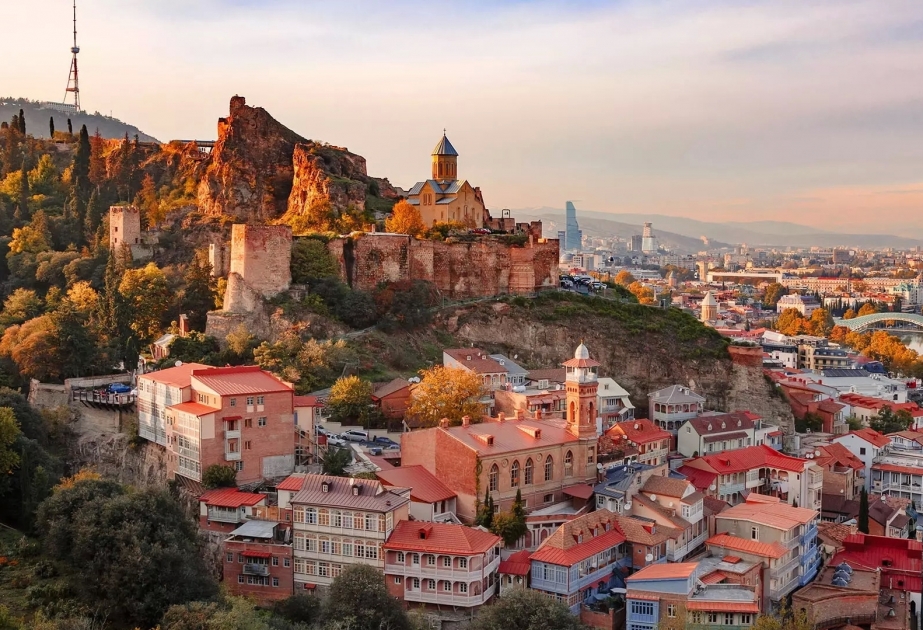
Baku, September 15, AZERTAC
The expert delegations from Azerbaijan and Armenia have met in the Georgian capital of Tbilisi.
The Azerbaijani delegation was headed by Chairman of the Board of the Center of Analysis of International Relations Farid Shafiyev (AIR Center), and the Armenian delegation by Director of the Caucasus Institute Alexander Iskandaryan.
The sides discussed the current issues involving the two countries.
The Lachin Corridor, connecting Nagorno-Karabakh to Armenia, remains blocked by Azerbaijan, as the region continues to grapple with supply shortages amid calls for its reopening.
Nagorno-Karabakh has been under blockade since December last year and has experienced increasingly severe food, medicine, and energy shortages since. The Red Cross and the Russian peacekeeping mission stationed in Nagorno-Karabakh have been unable to deliver supplies and humanitarian aid since June.
Stepanakert announced on Saturday its willingness to receive humanitarian aid sent by the Russian Red Cross through Azerbaijan-controlled territory, a change in position that came hours after the region’s parliament elected Samvel Shahramanyan as president, replacing Arayik Harutyunyan.
Nagorno-Karabakh officials stated that they would accept the delivery of humanitarian aid via the Aghdam–Stepanakert road due to ‘acute humanitarian problems’. It added that an agreement was reached ‘at the same time’ to allow Russian peacekeepers and the Red Cross to resume their transport of humanitarian aid via the Lachin Corridor, which connects Nagorno-Karabakh to Armenia.
However, the Lachin Corridor remains closed despite the arrival of one lorry of Russian humanitarian aid from Aghdam on Tuesday.
The blockade continues
Authorities in Baku and Stepanakert have mutually exchanged accusations and blame for the closure of the Lachin CorridorLachin.
On Thursday, Nagorno-Karabakh’s former state minister Ruben Vardanyan accused Azerbaijan of having ‘renounced established agreements’ in not allowing goods to be transported through the Lachin Corridor following the transportation of Russian humanitarian aid through Aghdam.
Artak Beglaryan, another former State Minister, has said that despite Aliyev’s regime had reneged on its promise to reopen the Lachin Corridor once humanitarian aid entereds the region via Aghdam.
The genocidal Aliyev regime has once again lied.
They publicly promised that once a truck enters from Azerbaijan to Nagorno-Karabakh, the Lachin Corridor would be opened in 24 hours.
Over 38 hours’ve passed since the entry of a RU truck, but the Lachin Corridor remains blocked.— Artak Beglaryan | #StopArtsakhGenocide (@Artak_Beglaryan) September 13, 2023
However, Aykhan Hajizada, spokesperson for the Azerbaijani Foreign Ministry, blamed the continued closure of the Lachin Corridor on Stepanakert.
‘As Azerbaijan noted during high-level contacts with the US and other partners, Azerbaijan agreed to the issue of the simultaneous use of these two roads through the ICRC. Unfortunately, the party that prevents the implementation of this agreement is the puppet regime created by Armenia in the Karabakh region.’
In mid-August, Nagorno-Karabakh reported that a 40-year-old man starved to death in the region, as authorities in Stepanakert warned of the blockade’s effect on the public health sector and vulnerable groups — children, pregnant women, people with chronic diseases, people with disabilities, and the elderly.
The region has also grappled with an acute shortage of fuel and electricity supplies from Armenia, which has led to blackouts and the suspension of public transport, cutting settlements off from each other.
[Read more: ‘Bread is all we have’: Nagorno-Karabakh’s population faces threat of starvation]
Calls for the Lachin Corridor’s opening
Both Russian and Western officials have commented in the days since the delivery of aid via the Aghdam road, with Western officials calling for the Lachin Corridor’s opening while Russian officials have maintained a more neutral position.
On Friday, Kremlin Spokesperson Dmitry Peskov stated that ‘different options are being discussed and worked out with the parties’, while refusing to directly comment on a question regarding the need to reopen the Lachin Corridor.
Following the delivery of Russian humanitarian aid to the blockaded region, Russian Foreign Ministry Spokesperson Maria Zakharova stated her expectation that the Lachin Corridor would be reopened, and that humanitarian aid would ‘regularly enter the region from both directions’.
Russian President Vladimir Putin also attempted to assuage fears of potential violence in Nagorno-Karabakh, stating that Baku had told Moscow that it ‘is not interested in any ethnic cleansing whatsoever’.
In the West, top EU diplomat Joseph Borrel reiterated that while the opening of the Aghdam–Stepanakert road could be ‘part of the solution’ to the blockade, it should not be an alternative to the Lachin Corridor.
In a call with
Foreign Minister @Bayramov_Jeyhun, I reiterated my concerns regarding the humanitarian situation facing Karabakh Armenians.
The Lachin corridor must be re-opened now. Other roads, such as Aghdam, can be opened as part of the solution, but not an alternative.
— Josep Borrell Fontelles (@JosepBorrellF) September 9, 2023
On Tuesday, European Council President Charles Michel similarly stated that the EU considered delivery of Russian humanitarian aid through Aghdam ‘an important step that should facilitate the reopening also of the Lachin corridor’. He also called on all parties ‘to show responsibility and flexibility in ensuring that both the Lachin and the Aghdam–Askeran route will be used’.
‘We reiterate our strong belief that the Lachin corridor must be unblocked, in line with past agreements and the ICJ Order, and underline our belief in the usefulness also of other supply routes, for the benefit of the local population,’ Charles Michel said.
Earlier this week, the US State Department expressed its concern about ‘the rapidly deteriorating humanitarian situation in Nagorno-Karabakh’, and called for the ‘immediate and simultaneous opening of both corridors’ to allow the movement of ‘desperately-needed humanitarian supplies’ to Nagorno-Karabakh.
In a press briefing on 11 September, State Department Spokesperson Matthew Miller also urged the leaders of Armenia and Azerbaijan to not take any actions that could raise tensions in the region.
Earlier, Miller had stressed the importance of opening the Lachin Corridor as well as the Aghdam road, urging Armenia and Azerbaijan to come to an ‘ultimate agreement’.
Also in Washington, Mike Abramowitz, the president of American rights watchdog Freedom House, stated that the blockade of the Lachin Corridor ‘risks ethnic cleansing of the region’s Armenian population’.
‘We urge the Azerbaijani government to engage sincerely in peace talks, refrain from weaponising the security of Nagorno-Karabakh Armenians, and unconditionally open the blockade to guarantee unimpeded two-way movement of people, vehicles, and cargo along the Lachin corridor’, stated Abramowitz.
Freedom House also urged the UN Human Rights Council to appoint a special rapporteur ‘to assess the human rights situation in Nagorno-Karabakh.’
For ease of reading, we choose not to use qualifiers such as ‘de facto’, ‘unrecognised’, or ‘partially recognised’ when discussing institutions or political positions within Abkhazia, Nagorno-Karabakh, and South Ossetia. This does not imply a position on their status.
The post Lachin Corridor remains closed despite ‘rapidly deteriorating humanitarian situation’ appeared first on OC Media.
