
Man tries robbing Zaxby’s at gunpoint, Georgia cops say. Then armed stranger steps in Sacramento Bee
Day: September 12, 2023
Ukraine Reports Dozens Of Clashes Along Front Line As Russian Drones Hit Ukrainian Ports Radio Free Europe / Radio Liberty

On September 6, 2023, the Tom Lantos Human Rights Commission (TLHRC) held a powerful emergency hearing to discuss the pressing situation in Artsakh, where 120,000 Armenians are being starved by the Azerbaijani government in an effort to exterminate the Armenian population in the region, marking another Armenian Genocide. The hearing was hosted by Commission co-chair Congressman Christopher Smith (R-NJ). Witnesses present at the hearing were former International Criminal Court (ICC) prosecutor Luis Moreno Ocampo and Director of Columbia University’s Artsakh Atrocities Project and Adjunct Professor at Georgetown University David L. Phillips.
Following are six key takeaways from the hearing:
- “There are different forms to commit genocide. One form requires zero victims. Genocide, under Article 2(c) requires just creating conditions to destroy the people…blocking the Lachin Corridor with a life system for the Nagorno-Karabakh people is exactly creating conditions.”
Former ICC prosecutor Ocampo argued that Azerbaijan is currently committing genocide against the people of Artsakh, based on Article 2(c) of the U.N. Convention on the Prevention and Punishment of the Crime of Genocide, which states: “deliberately inflicting on the group conditions of life calculated to bring about its physical destruction in whole or in part.” Azerbaijan’s 265+ day blockade of the Berdzor (Lachin) Corridor has stripped the 120,000 Armenians in Artsakh of access to food, medical supplies and humanitarian aid. If current conditions persist without intervention to put a stop to President Ilham Aliyev’s cruelty, the Armenians in Artsakh will starve to death.
Video Link: https://youtu.be/qLS764xsHTI
- “The negotiation is between a genocider and his victims. You cannot ask for a negotiation between Hitler and the people in Auschwitz. It’s not a negotiation.”
Ocampo highlighted that President Aliyev and the people of Artsakh are not equal parties at fault who can come to an agreement through negotiation. The fundamental issue is that Aliyev is the genocidal oppressor, and there cannot be a negotiation between the power committing genocide and the victims. Azerbaijan’s genocide of the Armenians in Artsakh must be stopped, before negotiation is an option. Once the Berdzor (Lachin) Corridor is opened and the 120,000 Armenians in Artsakh have access to the outside world, then negotiations can be discussed. The present situation, however, has no room for negotiation, because Aliyev has made no room.
Video Link: https://youtu.be/C2JT09tgi4c
- “This hearing has two empty chairs. Two. Those of the U.S. Department of State and USAID.”
Chairman Smith pointed out that despite numerous requests, representatives of the U.S. State Department and USAID did not respond to the commission’s invitation to participate in the hearing. “Since 1995, I have chaired hundreds of hearings with State Department or USAID witnesses. This is a unique case of absolute nonresponse,” explained Rep. Smith. The absence of the U.S. Department of State and USAID highlights a lack of accountability or of a justifiable defense of the current policy towards the blockade – a policy that promotes genocide and proposes impossible negotiations between the aggressor and the victims. If there was a policy worth defending or a reasonable claim as to why the United States has chosen not to act, there would surely have been two witnesses present, or a written response as to why they could not be there.
Video Link: https://youtu.be/bQQivJRDj1g
- “Why are we denying this genocide?”
Ocampo posed this question, which requires an answer from the Biden administration. There is ample evidence that there is a genocide being committed against the 120,000 Armenians in Artsakh. The United States, a signatory to the Genocide Convention, is a nation built on the ideal of preserving and protecting democratic ideals at home and abroad. By remaining silent as President Aliyev, who Rep. Christopher Smith noted “rules Azerbaijan with an iron fist as a dictator,” cuts off Artsakh to access to the outside world, including humanitarian aid, the United States is allowing a genocide to take place in the 21st century.
Video Link: https://youtu.be/DPtUJVthejY
- “By being silent, by not acting, the Biden administration is making a statement that it values Azeri oil and gas more than it does the lives of Armenians in Artsakh.”
Professor David Phillips identified where American interests come into play. The value of Azerbaijani oil seems great enough to the Biden administration that it can turn a blind eye to the humanitarian crisis in Artsakh and maintain relations with President Aliyev, a dictator who consistently acts in opposition to the U.S. ideal of democracy. American foreign policy is shaped by both ideals and interests, yet it seems ideals have been tossed to the side, as a genocide occurs without any response from the U.S. government. The hypocrisy here is strong, and the only ones who suffer are the people of Artsakh. Until there are consequences to hold Azerbaijan accountable for their actions, there will be no change for the Armenians in Artsakh.
Video Link: https://youtu.be/LcVbNQXiytU
- “Delay is Denial”
Chairman Smith captured the level of urgency needed from the United States in Artsakh. Delaying a clear and forceful U.S. condemnation of Azerbaijan’s genocide against Artsakh’s Armenia population is effectively complicity in that crime and its denial. U.S. denial and silence in the face of the genocide enable Azerbaijan to act without consequences. This emergency congressional hearing was held before Congress came back in session, because the situation in Artsakh is so pressing. It is essential that action is taken quickly without further delay, as every day counts for the Armenian people in Artsakh. The inability of the U.S. government to put forth a policy to assist the Armenians in Artsakh and condemn Aliyev’s actions is denial.
Video Link: https://youtu.be/PEoK9iQ5dPI
Author information
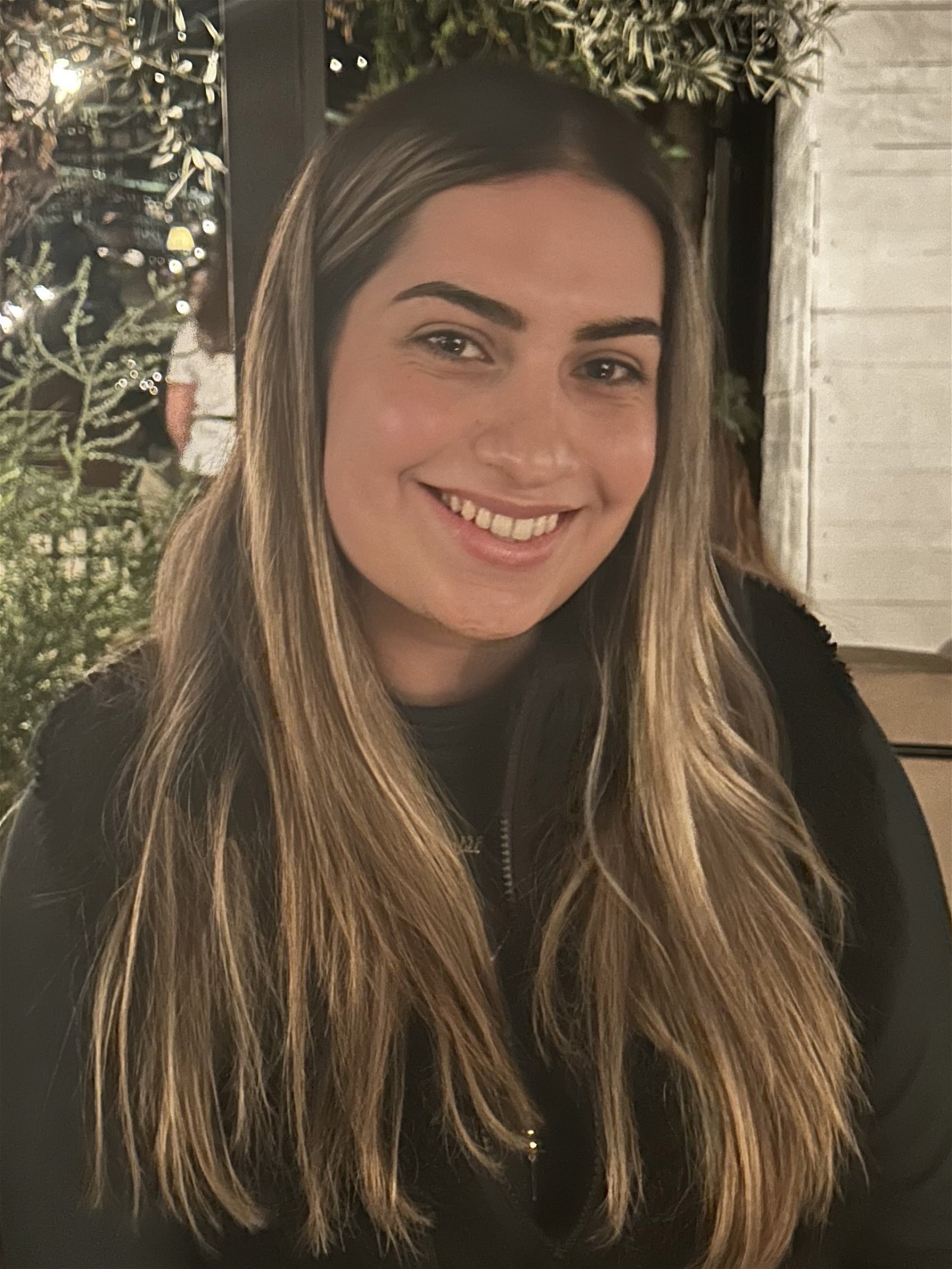
Madeline Bogdjalian
Madeline Bogdjalian is an undergraduate student at the College of the Holy Cross in Worcester, MA, pursuing a degree in political science with a minor in Middle Eastern Studies. Madeline’s academic interests include law and policy. She is a fall 2023 Hovig Apo Saghdejian Capital Gateway Intern in the ANCA’s Washington, D.C. headquarters, a staff writer for the College Street Journal at Holy Cross, a member of the Moot Court team, as well as the treasurer of the Worcester “Aram” AYF Chapter.
|
The post Six Key Takeaways from the Ocampo Hearing appeared first on The Armenian Weekly.
 Dear Rabbinical Center of Europe:
As a non-profit organization dedicated to genocide and human rights studies since 1982, the International Institute for Genocide and Human Rights Studies (“IIGHRS,” A Division of the Zoryan Institute) is deeply concerned about and takes great issue with the open joint letter that was released by the RCE signed by 50 senior leading European Rabbis.
We recognize that we are currently living in a time where antisemitism is at historically high levels. We also condemn the recent trend in which Holocaust imagery and language have been misappropriated, especially regarding the COVID-19 pandemic. We would like to point out, however, that the word “genocide,” coined by Jewish scholar Raphael Lemkin in 1943/1944, was adopted into law in 1948, many years after the Armenian Genocide and as a result of the Shoah. Article II of the 1948 Genocide Convention states:
Genocide means any of the following acts committed with intent to destroy, in whole or in part, a national, ethnical, racial, or religious group, as such:
- Killing members of the group;
- Causing serious bodily or mental harm to members of the group;
- Deliberately inflicting on the group conditions of life calculated to bring about its physical destruction in whole or in part;
- Imposing measures intended to prevent births within the group;
- Forcibly transferring children of the group to another group.
Kindly note that the above definition of the crime of genocide does not include any reference to the number of people who perished, or the magnitude of suffering, but rather to the intent behind the destruction of a group. According to this definition, the Srebrenica massacres (8,000 victims), the Genocide in Rwanda (800,000 victims), the Cambodian Genocide (2 million people), the Shoah (6 million people) and the Armenian Genocide (1.5 million) are all widely understood as constituting genocide under the definition of the Genocide Convention. Applying this term to the current situation in Artsakh, or Nagorno-Karabakh, is fully in accord with the scholarly and legal understandings of genocide and in no way trivializes or diminishes the Holocaust or any other example of genocide. In fact, various legal scholars, such as former prosecutor of the International Criminal Court Luis Moreno Ocampo, as well as genocide scholars have described the situation in Nagorno-Karabakh as constituting genocide. The situation there is not a simple “political disagreement” as was described in your letter.
We hope that the RCE can appreciate that the phenomenon of genocide is not unique to any one group, nation, religion or ethnicity. The attempted destruction of an entire population is a crime against all humanity and must be recognized as such, no matter who the victim group may be. In our view, genocide is a shared human experience, and unfortunately, this heinous crime has impacted many groups throughout history, and continues to do so in various parts of the world today. This includes Nagorno-Karabakh, whereby a government is deliberately inflicting conditions of life calculated to bring about another group’s physical destruction, which is one of the acts of genocide defined in Article II of the Convention listed above.
The Zoryan institute, by teaching genocide comparatively and by recognizing the destruction, trauma and pain that this crime inflicts, seeks not to prioritize one case over another, but rather to deepen our understanding about the common patterns and dynamics that allow genocide to take place, which allows us to more effectively prevent future instances of genocide moving forward. Our goal is to educate and teach about genocide in order to work towards a safer and more just world.
We cordially invite you to better acquaint yourselves with the ongoing situation in Nagorno-Karabakh and encourage you to read the recently published edition of the Zoryan Institute academic journal, Genocide Studies International, published by the University of Toronto Press, that is devoted to this particular crisis: https://www.utpjournals.press/toc/gsi/15/1.
We would be happy to send you a physical copy of this issue for your reference.
Sincerely,
The Zoryan Institute (IIGHRS) Board of Directors
Editors of Genocide Studies International
Editors of Diaspora: A Journal of Transnational Studies
Faculty Members of the Genocide and Human Rights University Program
Affiliates
SIGNATORIES
Dr. Maureen Hiebert, Chair of the Zoryan Institute’s Academic Board, Associate Professor, Political Science, University of Calgar
Dr. Varouj Aivazian, Chair of the Zoryan Institute’s Corporate Board, Professor of Finance and Chair of the Economics Department at University of Toronto Mississauga
Dr. Alexander Alvarez, Vice-chair Academic Advisory Board, Zoryan Institute, Co-Editor Genocide Studies International, Professor of Criminology & Criminal Justice, Northern Arizona University
Dr. Rouben Adalian, Board Member of the Zoryan Institute
Dr. Joyce Apsel, Clinical Professor, Liberal Studies, NYU, and President of the Institute for the Study of Genocide
Dr. Yair Auron, Professor of Emeritus, Open in University Israel
Mr. Diran Avedian, President, and Founder of Lactopur Inc.
Dr. Talar Chahinian, Co-editor of Diaspora: A Journal of Transnational Studies and Lecturer in the Program for Armenian Studies at University of California Irvine
Dr. Doris Bergen, Chancellor Rose and Ray Wolfe Professor of Holocaust Studies, the University of Toronto
Dr. Bedross Der Matossian, Professor of History, the Hymen Rosenberg Professor in Judaic Studies, University of Nebraska, Lincoln
Mr. Federico Gaitan Hairabedian, Esq., Lawyer and President of the Luisa Hairabedian Foundation, Argentina
Ms. Mari Hovhannisyan, the Zoryan Institute Armenia International Foundation for Research and Development
Dr. Elisa von Joeden-Forgey, Endowed Chair in Holocaust and Genocide Studies, Keene State College (NH, USA)
Dr. Sossie Kasbarian, Co-editor of Diaspora: A Journal of Transnational Studies and Senior Lecturer in Politics, University of Stirling
Ms. Arsinée Khanjian, Canadian actress, director, producer, playwright and human rights activist
Dr. Adam Muller, Co-Editor of Genocide Studies International and Director of the Peace and Conflict Studies Department, University of Manitoba
Dr. Jennifer Rich, Co-Editor of Genocide Studies International, Exec. Director of the Rowan Center for the Study of the Holocaust, Genocide, and Human Rights, Director of the MA Program in Holocaust and Genocide Education, and Associate Professor of Sociology at Rowan University
Dr. William Schabas, Professor of International Law at Middlesex University in London and Professor of International Humanitarian Law and Human Rights at Leiden University
Ms. Kate Simola, the Zoryan Institute of Canada Inc.
Dr. Lok Siu, Professor of Ethnic Studies at UC Berkeley and Chair of the Asian American Research Centre
Dr. Amy Sodaro, Associate Professor and Deputy Chairperson of the Social Sciences, Human Services and Criminal Justice Department at CUNY
Dr. Henry Theriault, Co-Editor of Genocide Studies International, Past President of the International Association of Genocide Scholars and Associate Vice President for Academic Affairs Worcester State University
Dr. Alan Whitehorn, Professor Emeritus, Royal Military College of Canada
Dr. Andrew Woolford, Professor and Department Head, Sociology & Criminology, University of Manitoba
Ambassador A. Yeganian, Chair of the Zoryan Institute Armenia International Foundation for Research and Development
Ms. Megan Reid, Deputy Executive Director of the Zoryan Institute
Mr. K. M. Greg Sarkissian, Co-Founder and President of the Zoryan Institute
Author information

Zoryan Institute and its subsidiary, the International Institute for Genocide and Human Rights Studies, is a non-profit organization that serves the cause of scholarship and public awareness relating to issues of universal human rights, genocide, and diaspora-homeland relations. This is done through the systematic continued efforts of scholars and specialists using a comparative and multidisciplinary approach and in accordance with the highest academic standards.
|
The post Open Letter to the Rabbinical Center of Europe appeared first on The Armenian Weekly.