
Ukrainian Foreign Ministry Rebukes Putin For Latest Anti-Semitic Comments Radio Free Europe / Radio Liberty
Day: September 10, 2023
Pakistani Troops Clash With ‘Hundreds’ Of Pakistan Taliban Near Afghan Border Radio Free Europe / Radio Liberty
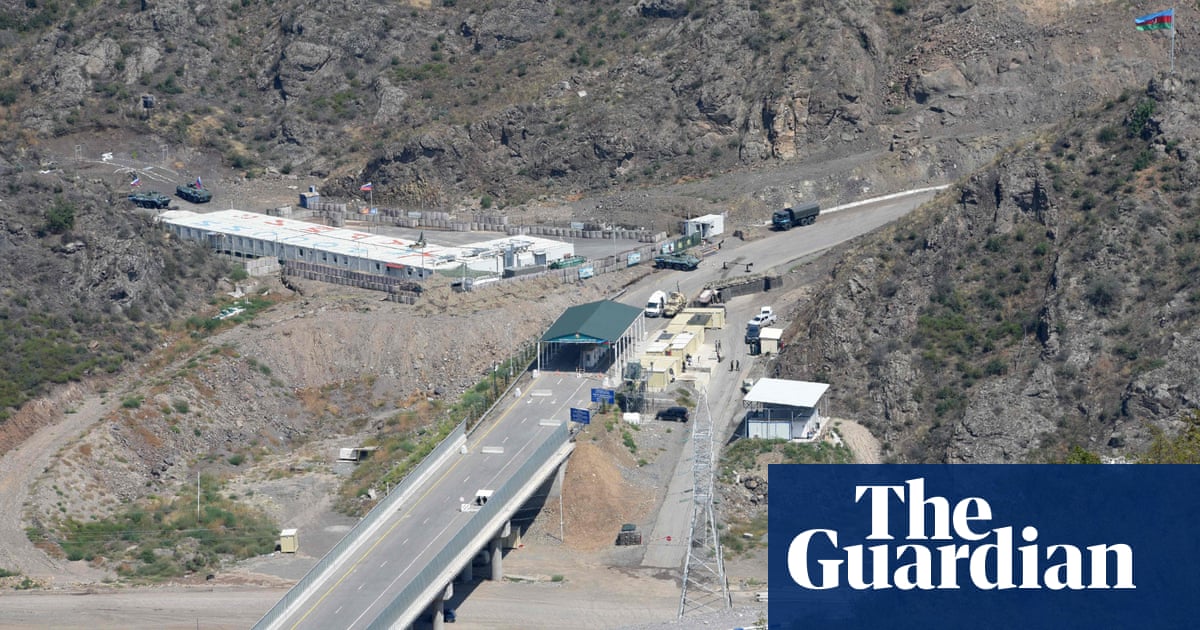
Azerbaijan’s government and separatist Armenians in Nagorno-Karabakh appeared to strike a deal reopening two disputed transport links including a key route known as the Lachin corridor.
The moves – initially reported by Armenia’s Armenpress state news agency and confirmed by Azerbaijan – appear at least partly to grant the latter’s decades-old demand to restore transport links between Azeri government-held territory and Nagorno-Karabakh, where Armenians seized control in the 1990s.
Karabakh is recognised globally as part of Azerbaijan, but has been controlled by its population of about 120,000 ethnic Armenians since a war that coincided with the breakup of the Soviet Union in the 1980s and 90s.
Azerbaijan recaptured large swathes of Nagorno-Karabakh in a 2020 war, and for the past nine months has exerted pressure by restricting access to Armenia through the Lachin corridor.
Armenpress cited Karabakh authorities as saying that they had “decided to allow access of the Russian goods to our republic through the town of Askeran”, referring to a Karabakh town close to the frontline with Azerbaijan.
“At the same time, an agreement has been reached to restore humanitarian shipments by the Russian peacekeepers and the International Committee of the Red Cross along the Lachin corridor,” the Armenpress report said, referring to the area through which the road linking Karabakh to Armenia passes. It said the move was driven by “severe humanitarian problems” in the blockaded region.
Hikmet Hajiyev, a foreign policy adviser to Azerbaijan’s president, Ilham Aliyev, told Reuters on Saturday that a deal had been struck to open roads between Armenia and Azerbaijan.
He stressed that the roads would be opened simultaneously and added that an Azerbaijani checkpoint on Lachin corridor to Armenia would remain.
Azerbaijan had previously accused Armenia of using the corridor to smuggle weapons, and of rejecting an offer to reopen the roads simultaneously.
The apparent deal came on a day Karabakh’s parliament chose a new president of its self-proclaimed independent republic, a move Azerbaijan has denounced as illegal, amid days of escalating tensions between Baku and Yerevan.
Azerbaijan has a close relationship with Turkey, while Armenia has historically held close ties with Russia, which sent peacekeepers to the area and promised to keep the Lachin corridor open as part of a peace deal that ended the 2020 war. Armenia has lately complained that Moscow failed to live up to its assurances, leading him to seek wider international support.
Azerbaijan said on Saturday that Armenian forces had fired on its troops overnight, and that Azerbaijan army units took “retaliatory measures”. Armenia denied the incident.
The Armenian government said its prime minister, Nikol Pashinyan, held phone conversations on Saturday with the leaders of France, Germany, Iran and Georgia, and with the US secretary of state, Antony Blinken. Azerbaijan said its foreign minister discussed the situation with a senior US state department official, Yuri Kim.
According to Armenia’s government, Pashinyan told the foreign leaders that tensions were rising on the border, and that Azerbaijan was concentrating troops there and around Nagorno-Karabakh. Azerbaijan has denied this, while accusing Armenia of similar steps.
On Saturday, Karabakh’s separatist parliament elected Samvel Shahramanyan, a military officer and former head of the territory’s security service, as its new president, replacing an incumbent who resigned a week ago.
In a speech to parliament, Shahramanyan called for direct negotiations with Azerbaijan, and for transport links to Armenia to be restored.
Azerbaijan’s foreign ministry called the ethnic Armenian leadership of Karabakh a “puppet separatist regime” and said the vote was illegal. “The only way to achieve peace and stability in the region is the unconditional and complete withdrawal of the Armenian armed forces from the Karabakh region of Azerbaijan and the disbandment of the puppet regime.”
Both Ukraine and Turkey condemned the election, and expressed support for Azerbaijan’s claim to Karabakh. The EU said it did not recognise the election, but that Karabakh residents should “consolidate around the de facto leadership” in talks with Armenia.
In the capitals of both Armenia and Azerbaijan, residents told Reuters they feared a new war between the two countries.
“We will probably have martyrs again,” said Mansura Lahicova, a woman in the Azerbaijani capital, Baku. “I have two sons who have reached military age. I hope it will be a victory and that everything calms down.”
In Armenia’s capital, Yerevan, a resident who gave his name as Hayk accused Azerbaijan of wanting to start another war.
“I hope this does not happen, but if it does, all of us, all friends and brothers, are ready to go to war. Last time we buried our friends, now it’s our turn.”
With Reuters

The constitutional rules for appointing a new president during a transitional phase in the event of a vacancy in the incumbent president’s office due to martial law are aimed to prevent immediate presidential and extraordinary parliamentary elections when a democratically elected president prematurely leaves office with unfinished pre-election plans, the newly elected President of Artsakh Samvel Shahramanyan stated in his speech.
“Dear Speaker of the National Assembly and members of Parliament!
The Basic Law of the Republic of Artsakh proclaimed Artsakh a sovereign, democratic, legal, and social state and established that power in the Republic of Artsakh belongs to the people, who exercise it through free elections, referendums, as well as in other ways provided for by the Constitution and laws.
The norms enshrined in the Constitution provide for certain counterbalance mechanisms designed to ensure the coordinated and uninterrupted operation of all branches of government. The institution of the president has its place in this system, whose task is to take responsibility in overcoming existing challenges. To realize the latter, it is extremely important to soberly assess reality and dispel illusions.
Dear members of parliament, I am not going to set out the election program in its classical sense. It is evident that the purpose of constitutional norms regarding the election of a new president during a transitional period in the event of a vacancy in the office of the incumbent president under conditions of martial law was to ensure that if the president, elected through direct democracy, prematurely departs from office for any reason and their pre-election plans remain unfinished, the country does not immediately proceed to presidential and extraordinary parliamentary elections.
The latest phase of the Artsakh conflict, which began on September 27, 2020, and was frozen by a trilateral agreement on November 9, not only made it impossible to implement the election program of the current president, but also gave rise to a number of new pressing problems.
Therefore, in the current situation, a candidate applying for the position of president should focus more on overcoming the crisis situation, solving ontological, security and humanitarian problems facing the state. The main provisions of the latter and the envisioned outcomes of the proposed actions have already been discussed during meetings held with the factions.
I would like to thank all the deputies who took part in the discussions for the questions raised, opinions and proposals expressed, as well as concerns voiced.
At the same time, I thank all the political forces that nominated my candidacy for the National Assembly.Dear MPs, the essence of the vision presented to you can be summarized in the following brief formulation: strengthening the state and maintaining internal stability, protecting Artsakh’s right to self-determination, ensuring its free life and security, promoting the economic development of the country, gradually improving the social situation of the people and strengthening the rule of law.
What challenges is Artsakh facing now?
Dear deputies, I am not revealing a secret when I say that the partial and then complete blockade of the Republic of Artsakh by Azerbaijan since December 12, 2022 has created a number of problems for the republic.
There is no doubt that the geopolitical conflict between Russia and the West and the Russian-Ukrainian war are influencing the current situation. This conflict is reflected in our region, considering the settlement of the Artsakh issue as part of the steps taken against each other within the framework of this conflict.
By reevaluating its security concept in light of post-war realities, the Republic of Armenia has effectively shifted away from its long-term role as the guarantor of Artsakh’s security and adopted an approach known as the “peace agenda.” The core of this agenda is the recognition of Azerbaijan’s territorial integrity, including Artsakh, with the condition of safeguarding the fundamental rights and the rights of Artsakh Armenians.
In turn, Azerbaijan, taking advantage of the fact that international players have not taken objective steps, is gradually violating the provisions of the Tripartite Statement of November 9, 2020 and increasing pressure on Artsakh in order to implement its own “integration” program. At the same time, Azerbaijan continues to trumpet on all international platforms that the Artsakh conflict has already been resolved, that there is no such thing as Nagorno-Karabakh, and the issue of ensuring the rights and freedoms of local Armenians is an internal issue of its country.
On the contrary, prominent players in global politics are satisfied only by the daily increasing volume of concerns, exhortations and appeals. The implementation of decisions of international and European courts of human rights also remains incomplete. It is obvious that not a single international player is currently interested in applying harsh measures to influence Azerbaijan. Moreover, there is a belief that it is realistic to engage Stepanakert in discussions regarding the integration agenda.
In other words, we can state that the rights and legitimate interests of the Armenians of Artsakh are not protected within the framework of international law. Accordingly, I consider our ideas and expectations regarding international law to be unrealistic and divorced from reality, since it is obvious that international politics, geopolitics, even wars do not occur within the framework of international law.
The above leaves Artsakh no other choice but to try to find intermediate solutions based on the situation,” said the President of Artsakh Republic.
Even though Russia and the collective West hold opposing views on the conflict, it’s important to acknowledge that there is global consensus on certain aspects of the Artsakh conflict, including the following:
1) The Artsakh conflict has not been resolved, as Azerbaijan claims, therefore Nagorno-Karabakh is a disputed territory that should receive a specific status.
2) Artsakh and Armenia must have direct transport links – the [Berdzor] Lachin Corridor. Contrary to Baku’s claims, the latter has been closed for a long time and should be opened. Other regional roads should also be launched, but they cannot replace the Lachin Corridor or be considered as an alternative to it.
3) Stepanakert should negotiate with Baku. Moreover, in this matter, both the Russian Federation and the collective West are ready to provide a platform and act as a mediator, which Azerbaijan is categorically opposed to.
The above-mentioned points are the basis for building Artsakh’s foreign policy within this framework. Therefore, the priority of the future president should be to transform Stepanakert from an object for resolving the Artsakh conflict into a subject of negotiations. At the same time, depending on the scale of the issues currently being discussed, the format of negotiations can be either multilateral or bilateral. The only mandatory condition should be the organization of negotiations by a third country with its guarantee of implementation of the agreements reached.

Edmon Marukyan, Ambassador-at-Large of Armenia, countered Azerbaijani presidential aide Hikmet Hajiyev’s false statement that the Lachin corridor is not blocked and there is no blockade in Nagorno-Karabakh.
“During an interview with Arab News, [Azerbaijani president] Aliyev’s assistant Hikmet Hajiyev said that the Lachin corridor is not blocked and there is no blockade in Nagorno Karabakh. By this, Azerbaijan wants to deceive the international community about the fact that the Lachin Corridor is illegally blocked, which has been confirmed by such renowned international organizations as the Human Rights Watch, the UN Security Council and confirmed by the interim decisions of the UN International Court of Justice that the corridor is blocked and the people are starving. After all, if the Lachin Corridor is not blocked and there is no siege and hunger in Nagorno Karabakh, as Aliyev’s aide claims, then why did Azerbaijan send that mysterious humanitarian aid to Aghdam?” Marukyan wrote on X—former Twitter.