
Day: September 10, 2023

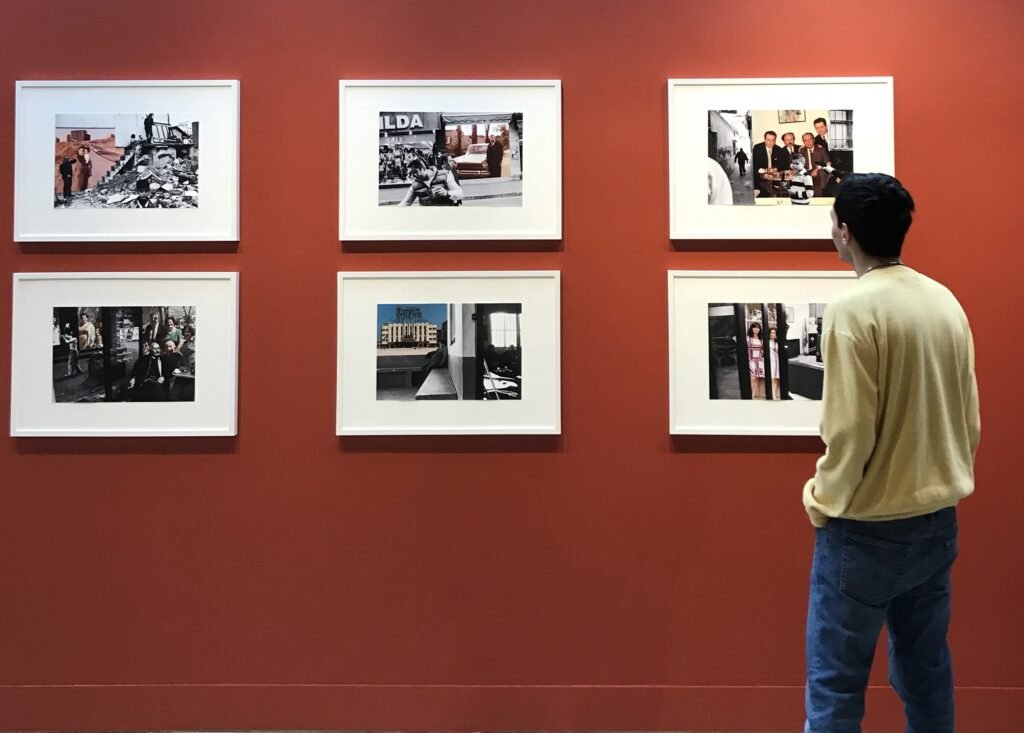 The Armenian Museum of America is offering a series of events on September 23-24, including a panel discussion on “The Image as Disruption and Identity” with artist Ara Oshagan, curator Ryann Casey, art critic Hrag Vartanian and Prof. Christina Maranci of Harvard University.
WATERTOWN, Mass.—The Armenian Museum of America will host a series of programs the weekend of September 23-24 highlighted by an artist panel discussing Ara Oshagan’s “Disrupted, Borders” exhibition currently showing in the museum’s contemporary galleries.
The event will bring Oshagan together with curator Ryann Casey, art critic Hrag Vartanian and Professor Christina Maranci, all of whom touch upon contemporary art and politics in their respective work.
The panel, titled “The Image as Disruption and Identity,” is free and open to the public, and will take place in the Adele and Haig Der Manuelian Galleries on Saturday, September 23 at 2 p.m., followed by a light reception. The museum is also offering free admission for all visitors that weekend, along with free guided tours of “Ara Oshagan: Disrupted, Borders” to its members.
“This show connects many of the diasporic and homeland entanglements that have occupied me over the past decade or more, from Los Angeles to Beirut to Artsakh,” states Oshagan. With more than 55 works on display, “Ara Oshagan: Disrupted, Borders” combines photography, collage, installation and film.
“The panel will concentrate on the role that image-making plays in our understanding of diasporic identity, displacement and our collective history,” Oshagan explains. “Of particular interest is the use of historical objects and family archives in the conversation around dislocation, borders and (un)imagined futures.”
About the Panelists
Ara Oshagan is a multi-disciplinary artist, curator and cultural worker whose practice explores collective and personal histories of dispossession, legacies of violence and identity. He works in photography, film, collage, installation and public art. Oshagan is an artist-in-residence at 18th Street Art Center in Santa Monica and curator at ReflectSpace Gallery in Glendale.
Ryann Casey curated “Disrupted, Borders” and is a New Jersey based artist and educator. She is an adjunct professor of photography, art history and critical theory at Stockton University, and her current photographic and curatorial projects focus on themes of loss, trauma and memory. Casey has curated a number of exhibitions surrounding Armenian artists and history.
Dr. Christina Maranci is one of the world’s foremost experts on Armenian architecture. The first woman and first person of Armenian descent to serve as Harvard University’s Mashtots Chair of Armenian Studies, Dr. Maranci’s research focuses on at-risk Armenian churches and monasteries. She is also one of the Armenian Museum’s esteemed academic advisors.
An artist, curator and critic, Hrag Vartanian has written widely on Armenian artists and cultural production for over two decades. After co-founding Hyperallergic in 2009, Vartanian has served as the arts magazine’s editor-in-chief ever since. His writings have appeared in the Brooklyn Rail, Huffington Post, Al Jazeera and NPR.
More Weekend Offerings
Museum admission will be free for all visitors on September 23-24, sponsored by the Alan K. and Isabelle DerKazarian Foundation. “We’ve participated in Smithsonian’s free Museum Day program the past few years,” says Executive Director Jason Sohigian. “So when it was canceled this year, we decided in partnership with the Alan K. and Isabelle DerKazarian Foundation to offer free admission on the same weekend as Watertown’s Faire on the Square celebration, and show the Museum’s connection to the community.”
“In addition to the panel discussion and free admission, we are offering a special benefit to members of the Armenian Museum. The artist Ara Oshagan and curator Ryann Casey will offer free tours of the exhibition exclusively for members on September 23 at 11 a.m. and on September 24 at noon,” adds Sohigian. “We hope everyone will take advantage of these offerings as we kick off our fall programming.”
To RSVP for the artist panel and artist tours for members, please visit the “Events” tab of the museum’s website.
This artist panel and “Disrupted, Borders” have been generously sponsored by Michele M. Kolligian in memory of Haig Der Manuelian for his dedication and foresight in sharing Armenia’s rich history and culture with the world, including an impressive collection of manuscripts that he gifted to the Armenian Museum.
Author information

The Armenian Museum of America is the largest Armenian museum in the Diaspora. It has grown into a major repository for all forms of Armenian material culture that illustrate the creative endeavors of the Armenian people over the centuries. Today, the Museum’s collections hold more than 25,000 artifacts including 5,000 ancient and medieval Armenian coins, 1,000 stamps and maps, 30,000 books, 3,000 textiles and 180 Armenian inscribed rugs, and an extensive collection of Urartian and religious artifacts, ceramics, medieval illuminations and various other objects. The collection includes historically significant objects, including five of the Armenian Bibles printed in Amsterdam in 1666.
| Twitter |
The post Artist panel at Armenian Museum to feature Harvard’s Christina Maranci and Hrag Vartanian of Hyperallergic appeared first on The Armenian Weekly.
WASHINGTON, D.C.—Former International Criminal Court (ICC) prosecutor Luis Moreno Ocampo called out U.S. President Joe Biden’s complicity in Azerbaijan’s ongoing genocide against Artsakh’s 120,000 indigenous Christian Armenians, in powerful remarks delivered before a congressional hearing of the Tom Lantos Human Rights Commission (TLHRC), reported the Armenian National Committee of America (ANCA).
“President Biden or Secretary Blinken can officially tell Mr. Aliyev to remove tomorrow, unconditionally, the blockade of the Lachin Corridor, or we consider you responsible for genocide. […] And, of course, that will trigger a lot of consequences,” stated Ocampo, speaking in a packed Rayburn House Office Building hearing room.
Ocampo pushed back against arguments that Armenia-Azerbaijan negotiations may be hampered by the proper characterization of genocide to describe Azerbaijan’s over 260-day blockade of Artsakh. “The negotiation is between a genocider and his victims. You cannot ask for a negotiation between Hitler and the people in Auschwitz. It’s not a negotiation. You have to stop Auschwitz and then discuss negotiation. And that, I think, is the secret here,” stated Ocampo. The former ICC prosecutor went on to note that “knowing that President Aliyev is using genocide and trying to deny the genocide, the U.S. assistance to deny the genocide could be considered complicity.”
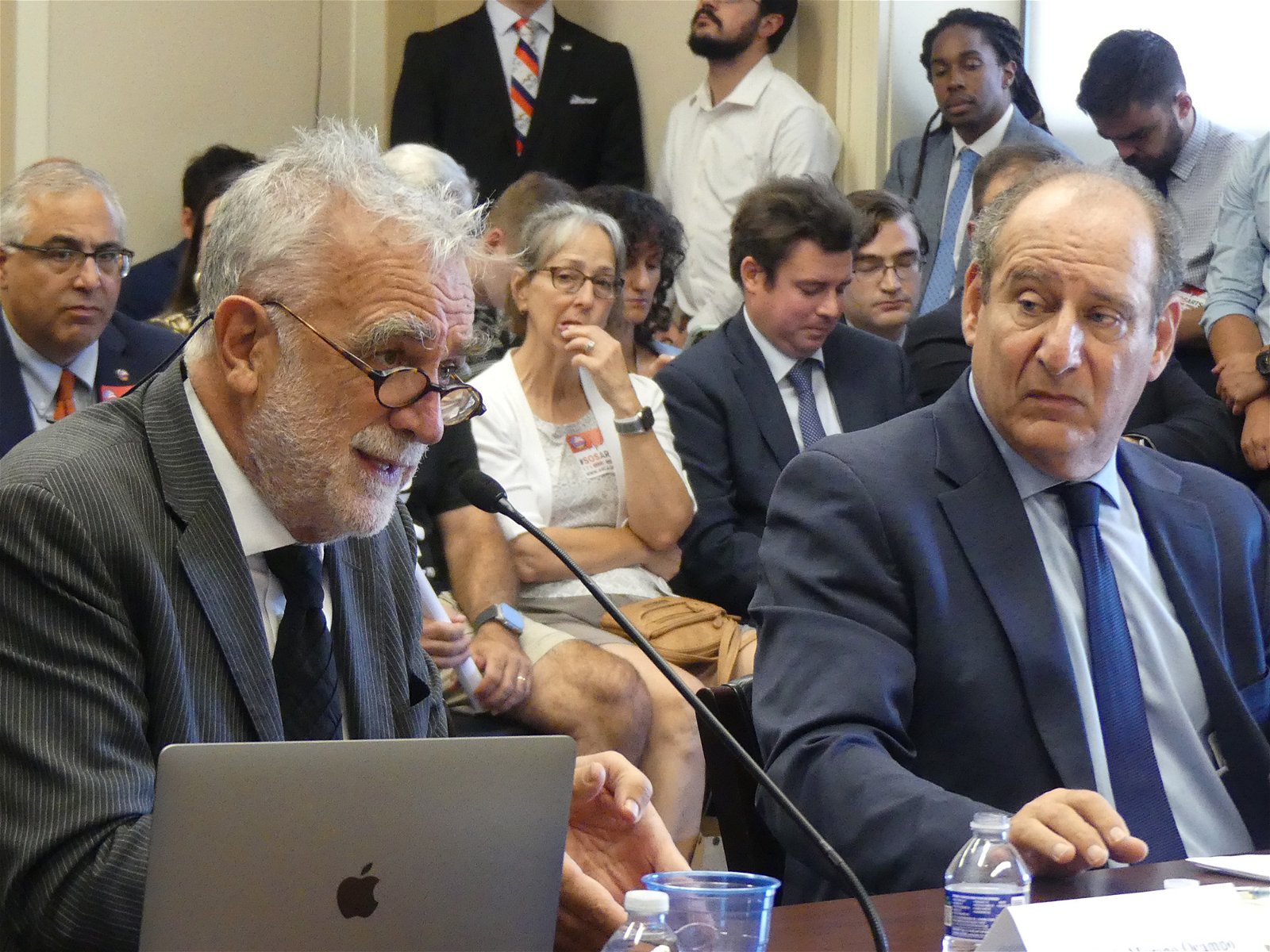 Former ICC prosecutor Luis Moreno Ocampo described Azerbaijan’s 260+ day Artsakh blockade as a “an ongoing genocide. It’s happening now,” in powerful remarks delivered at the Tom Lantos Human Rights Commission hearing, titled “Nagorno Karabakh: Update.”
ANCA executive director Aram Hamparian echoed Ocampo, underscoring, “Today’s hearing put President Biden on public notice that he is – according to the spirit and the letter of the Genocide Convention – complicit in Azerbaijan’s genocide against the 120,000 indigenous Christian Armenians of Artsakh – citizens of an at-risk democracy blockaded by an oil-rich dictatorship.”
Rep. Chris Smith: “This horrible crime, this crime of genocide, was planned, tested and imposed by the government of Azerbaijan.”
Tom Lantos Human Rights Commission co-chair Rep. Chris Smith (R-NJ) – a longtime champion of human rights around the world and leading voice in the decades-long effort to secure U.S. reaffirmation of the Armenian Genocide – was outspoken in his characterization of Azerbaijan’s genocide in Artsakh.
“There are 120,000 ethnic Armenians who have been sealed off from food and medicine and are being starved to death by the government of Azerbaijan. […] This horrible crime, this crime of genocide, was planned, tested and imposed by the government of Azerbaijan; that is to say, by President Aliyev who rules Azerbaijan with an iron fist as a dictator,” stated Chairman Smith in his opening remarks of the hearing.
He went to slam Biden administration officials for not responding to repeated invitations to participate in today’s hearing. “This hearing has two empty chairs. Two. Those of the U.S. Department of State and USAID. I requested that they both provide a witness for this hearing. Despite repeated requests by phone and email, neither responded. Not even a response. Since 1995, I have chaired hundreds of hearings with State Department or USAID witnesses. This is a unique case of absolute nonresponse,” stated Chairman Smith.
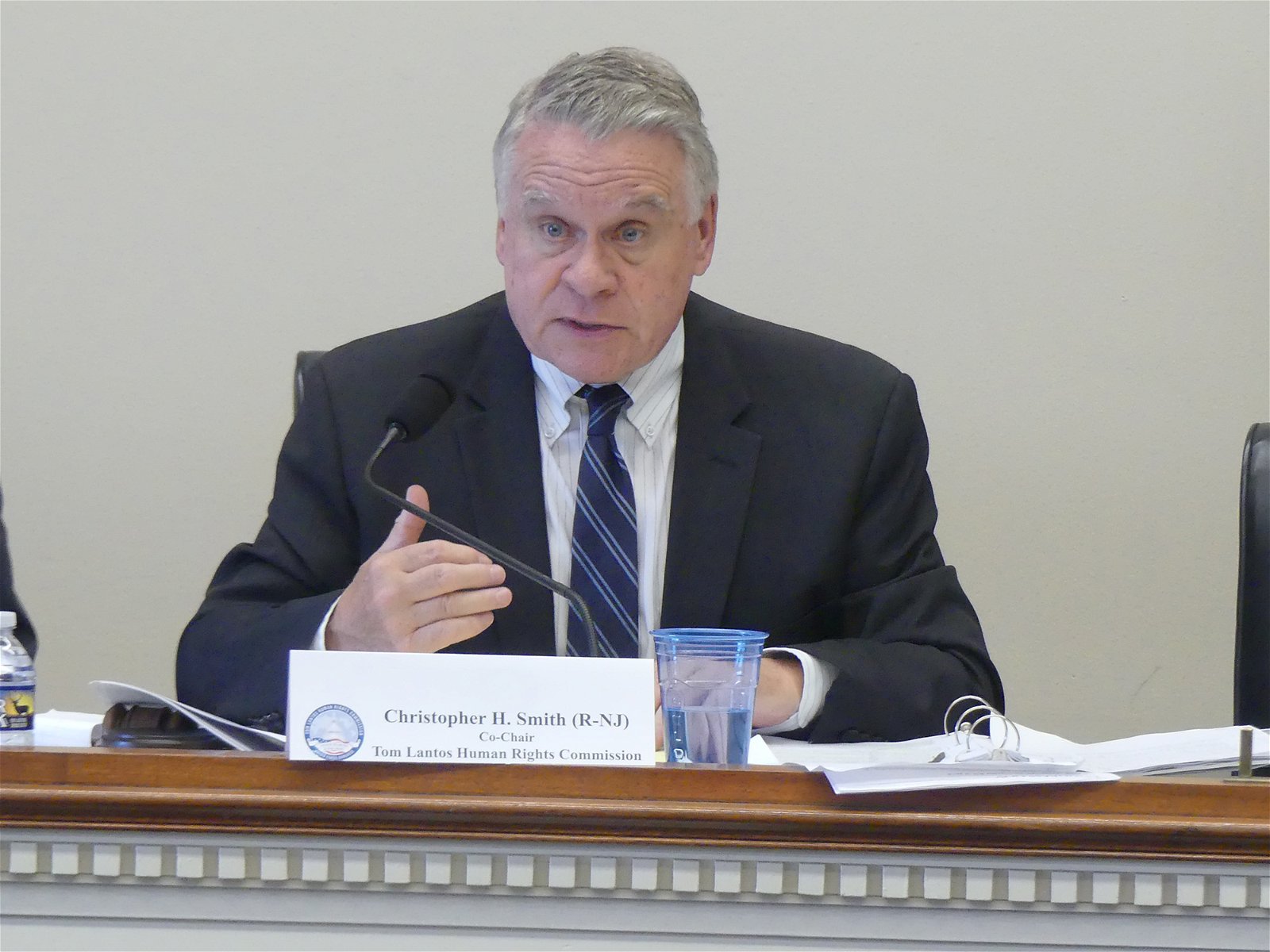 Tom Lantos Human Rights Commission co-chair Chris Smith (R-NJ) called Artsakh’s integration into Azerbaijan a “death sentence” during the September 6 emergency hearing.
“It speaks volumes about the bankruptcy of the Biden-Harris administration’s genocide-aligned policies on Artsakh that they refused Chairman Smith’s repeated requests to send even a single U.S. State Department or USAID witness to today’s hearing,” noted the ANCA’s Hamparian.
Chairman Smith highlighted the Biden administration’s failure to adequately respond to Azerbaijan’s escalating aggression and blockade against Artsakh. “Requests in bland bureaucratic language do not count, not when people are being subjected to genocide,” stated Rep. Smith. “Today, the State Department issued a readout of Secretary Blinken’s September 1 call with President Aliyev, where [they expressed] ‘concern over the deteriorating humanitarian situation, reiterated our call to reopen, underscored the need for a dialogue and compromise.’ This is completely inadequate, and I believe it is insulting. One side is committing genocide against the other, and the State Department expresses concern urging the victim to dialogue and to compromise.”
David Phillips: “By being silent, by not acting, the Biden administration is making a statement that it values Azeri oil and gas more than it does the lives of Armenians in Artsakh”
David L. Phillips, the director of Columbia University’s Artsakh Atrocities Project and adjunct professor at Georgetown University, offered powerful testimony citing atrocities committed by Azerbaijani government officials against Armenians in the Republics of Artsakh and Armenia and calling for concrete U.S. sanctions against both Azerbaijan and its top leadership.
“Azerbaijan does not have a diversified economy. It relies on oil and gas resources. The levels of corruption by the Aliyev family are well documented. Freezing accounts and financial resources of officials and corrupt leadership responsible would be more effective in Azerbaijan than it would be elsewhere,” argued Phillips. “If the situation is not dramatically reversed soon, the U.S. and its allies should give the Armenians the means to defend themselves and exercise of the duty to prevent genocide, lest history repeat itself.”
Phillips went on to criticize the international community for not imposing sanctions against Azerbaijan sooner. “The international community failed to sanction individuals who committed crimes after the wars in 2016 and 2020. Its message of failure sent a communication to the government of Azerbaijan that it can act with impunity and escape repercussions for its crimes against humanity, ethnic cleansing and acts of genocide,” stated Phillips. “This signals Azerbaijan, as well as other regimes around the world, that they can escape consequences for violating international humanitarian law and committing crimes against humanity.”
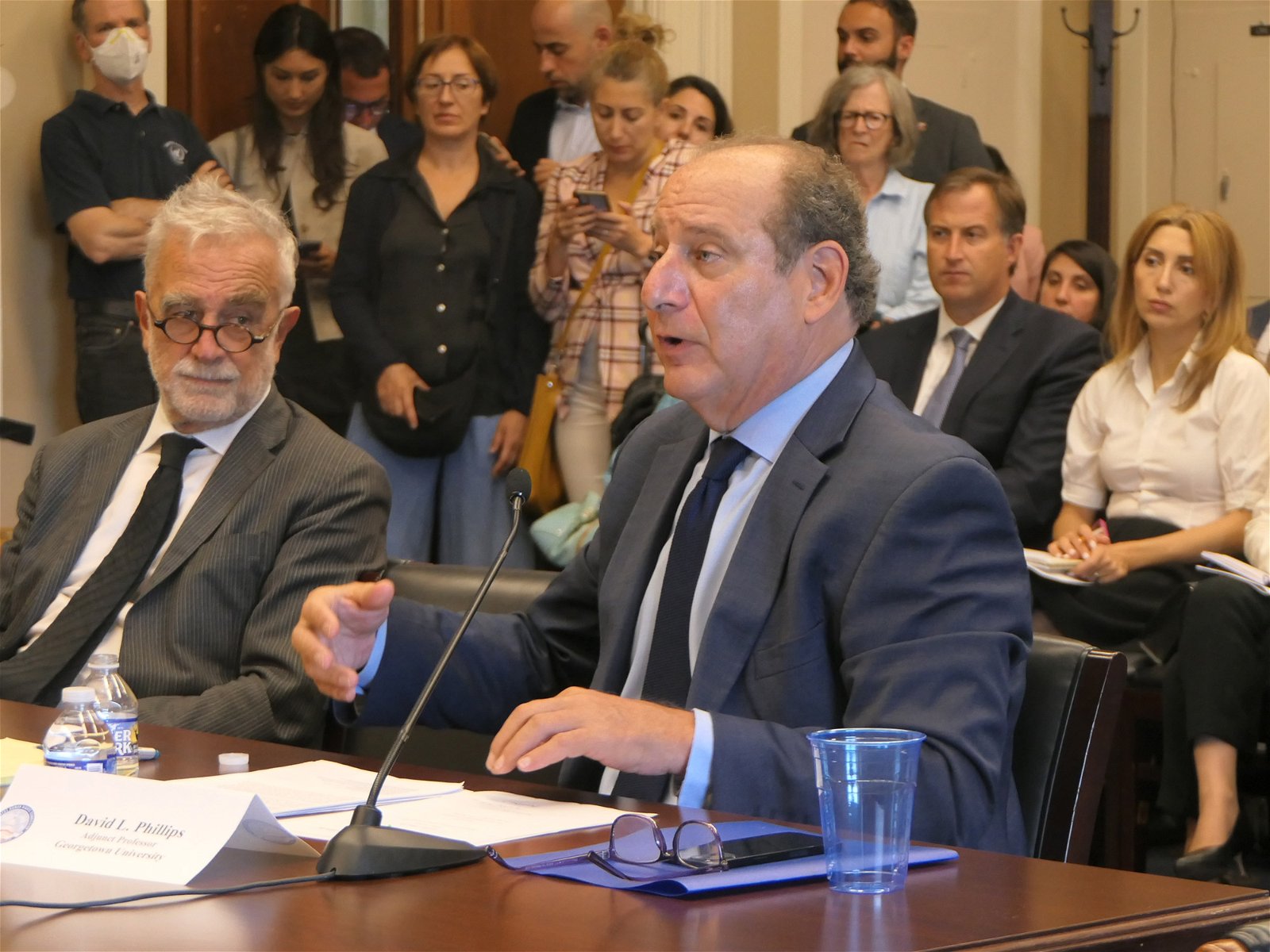 Columbia University director of the Artsakh Atrocities Project David L. Phillips argued that the international community’s failure to sanction Azerbaijan sent the clear message that they can act with impunity.
The September 6 emergency hearing on Nagorno Karabakh (Artsakh) followed the June 22 hearing hosted by TLHRC co-chairs Chris Smith (R-NJ) and James McGovern (D-MA), which included remarks by Congressional Armenian Caucus co-chairs Gus Bilirakis (R-FL) and Frank Pallone (D-NJ). Rep. Adam Schiff (D-CA) also submitted a written statement for the record. Titled “Safeguarding the people of Nagorno Karabakh,” the hearing included testimony by former U.S. Ambassador-at-Large for International Religious Freedom Sam Brownback, former U.S. Ambassador to Armenia John Evans, American Enterprise Institute Senior Fellow Michael Rubin and Columbia University’s Phillips.
The ANCA streamed the Tom Lantos Human Rights Commission hearing live on its social media channels. The complete video is available on the Commission’s website.
The ANCA has launched a national call-in campaign asking Senators to place a hold on all of President Biden’s State Department nominees until he takes decisive action to stop Azerbaijan’s genocide against Artsakh. To learn more and take action, visit www.anca.org/hold.
Author information

The Armenian National Committee of America (ANCA) is the largest and most influential Armenian-American grassroots organization. Working in coordination with a network of offices, chapters and supporters throughout the United States and affiliated organizations around the world, the ANCA actively advances the concerns of the Armenian American community on a broad range of issues.
| Twitter |
The post Congressional Hearing: President Biden complicit in Azerbaijan’s genocide against Artsakh appeared first on The Armenian Weekly.
 WASHINGTON, D.C.—From a Nationals baseball game on Thursday to the traditional Friday golf, tennis and swimming matches, Saturday softball and Sunday’s track and field events, this year’s 89th AYF Olympics continued the tradition in classic D.C. style.
The weekend was dedicated to the brave people of Artsakh standing strong in the face of the ongoing siege by Azerbaijan. Those attending the Olympics clearly demonstrated their commitment to our brothers and sisters in Artsakh by coming out in the hundreds for the “SOS Artsakh!” protest on Friday, September 1.
The Washington, D.C. “Ani” AYF Chapter, the Olympics Steering Committee and the many community volunteers did an outstanding job. The venues were professional, the competition was fierce and the entertainment had everyone dancing until sunrise.
Full reporting of the weekend’s events will appear in the Weekly’s upcoming AYF Olympics Special Issue. If you would like to support the publication of the special issue by being a page sponsor, please visit hairenik.com/ayfolympics/.
Following is a summary of the results from the 89th AYF Olympic Games:
Final Chapter Standings|
1 – Detroit: 200
2 – Greater Boston: 156.5
3 – Philadelphia: 72.5
4 – Providence: 64
5 – New Jersey: 49
6 – New York: 30
7 – North Andover: 19
8 – Chicago: 18
9 – Member at Large: 11
10 – Granite City: 8
11 – Washington, D.C. : 3
12 – Racine: 2
13 – Middlesex West: 1
Most Improved: Chicago
Softball Winner: Providence
| High Scorer | Chapter | Event 1 | Event 2 | Event 3 |
| Natalia Oganesian | Providence | 50 yd. Butterfly | 50 yd. Breaststroke | 100 yd. Freestyle |
| Nareg Minassian | Greater Boston | 50 yd. Butterfly | 50 yd. Freestyle | 100 yd. Freestyle |
| Knar Topouzian | Detroit | Discus | Triple Jump | High Jump |
| Melanie Sarafian | Detroit | 50 m. dash | 100 m. dash | 200 m. dash |
| Avo Sarkissian | New York | 100 m. dash | 200 m. dash | 400 m. dash |
| Alexander Dardarian | Philadelphia | 800 m. run | 1600 m. run | 3200 m. run |
Women’s Pentathlon Winner: Anoush Krafian – Greater Boston – 3170 points
Men’s Pentathlon Winner: Sasoun Tcholakian – Detroit – 2583 points
Outstanding Records
Natalia Oganesian, Providence, 50 yd. butterfly, 28.69 (Old record 35.87 set 1981 by Grace Chakarian, Lowell)
Anoush Krafian, Greater Boston, Pentathlon, 3170 pts (Old record 3037 set 1979 by Allison Aylaian, Boston)
Running Relay, Detroit, 4×200 Coed, 1:43.96 (Old record 1:45.27 set 2019 by Gr. Boston)
Ernest Nahigian Sportsmanship Award: Anto Keshgegian – Philadelphia
The post 2023 AYF Olympics in D.C., Dedicated to Artsakh appeared first on The Armenian Weekly.
Categories
Barbie could be Armenian
I always thought about Barbie as a controversial symbol of unrealistic body standards for women. Yet the recent surge of Barbie’s popularity following the movie release has opened my eyes to the ways Barbie can inspire. I’ve been reflecting on her diverse range of careers. Barbie’s talents extend to singing, dancing, acting, playing musical instruments, excelling in professional sports and even thriving in the STEM field. She’s navigated low-paying jobs to ascend to self-sufficiency, all while battling crime and fires as a public servant, parachuting from planes as a paratrooper and successfully venturing into entrepreneurship. Impressively, she reportedly held an executive position a full nine years before any woman became a CEO of a Fortune 500 company.
Beyond the glitz and smiles lies a more complex narrative. Barbie may also grapple with the challenges of making ends meet, adapting to a new culture and language as an immigrant, confronting mental health issues, persevering through physical obstacles and caring for her parents and extended family. Does this sound familiar? Armenian women have a history of shattering barriers and persist in achieving the extraordinary every day. They’ve excelled in the arts, business, medicine, science, engineering, politics, public service, transportation, education and sports. Many of their stories remain untold, but their presence is undeniable.
Let’s face it – Barbie could be Armenian.
She embodies resilience, ambition and intelligence. With her guiding mantra, “You can be anything,” she stands tall as a role model for young girls. The glass ceilings that persist in the United States can be shattered by the young Armenian girls of today, who will become the trailblazing women of tomorrow.
Join me in a forward-looking conversation as we envision a dialogue with Barbi Marsoobian, the first Armenian American woman to participate in the 2040 all-female spacewalk on Mars.
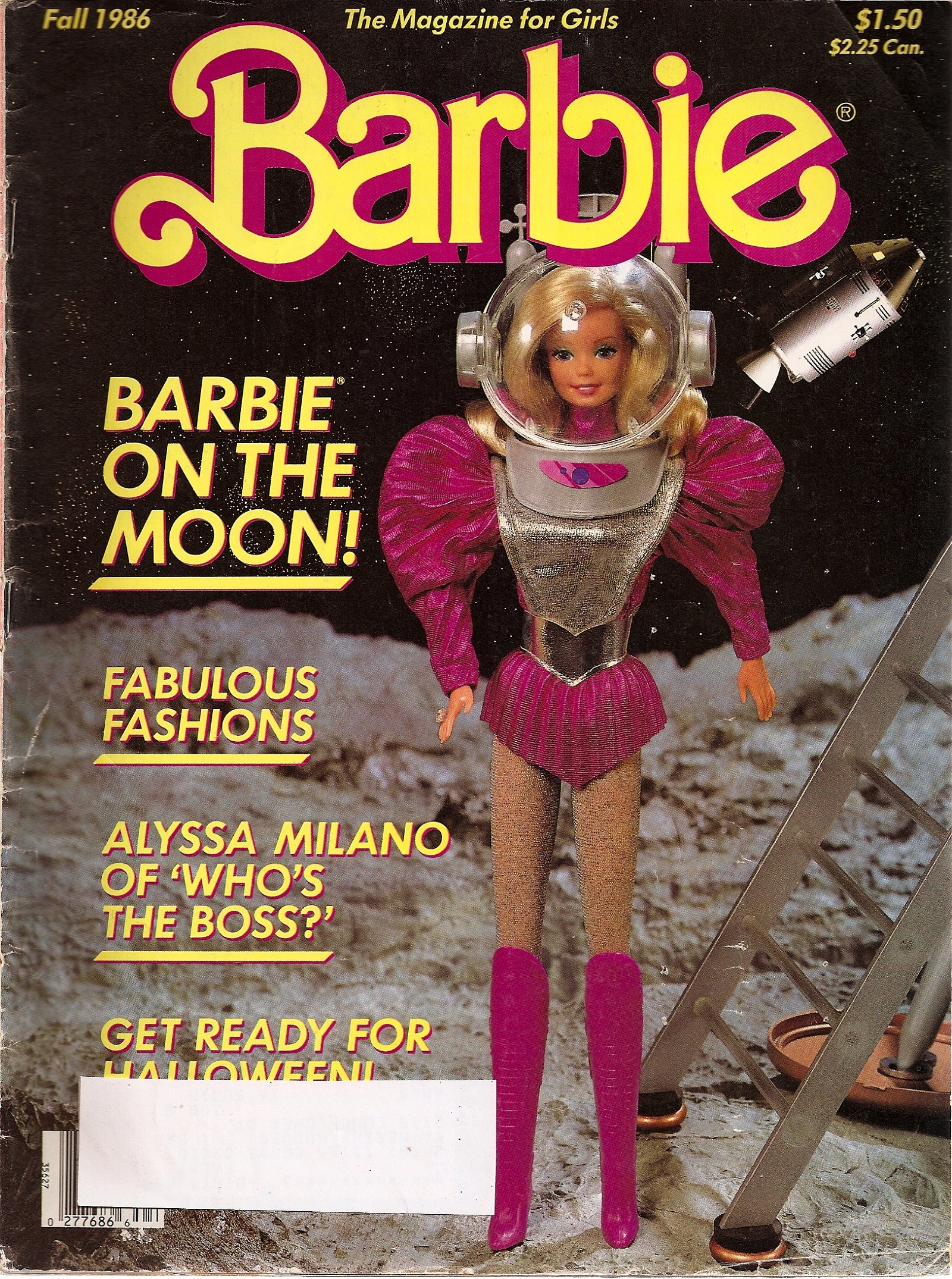 Barbie magazine, 1986
Me: Greetings and Parev Astronaut Barbi. My feet haven’t touched the ground since I learned we would be speaking. I can only imagine the exhilaration you felt when your entire body lifted off the Earth. It is 2040, and you have reached the summit for many young space enthusiasts, as well as an older generation like me who watched the first moon landing in black & white TV in 1969.
When I was growing up, girls played with baby dolls and were encouraged to be nurses or teachers. While these are honorable professions, many of us yearned for broader paths. Over the years, we championed the pursuit of diverse careers for both our sons and daughters, instilling the belief that the sky was the limit. Not everyone took this as literally as you did! How would you describe the worldview that shaped your upbringing?
Barbi: I came into this world in 2000 as the 21st century dawned. During that time, the percentage of girls in STEM fields was relatively modest. In 2008, when I was eight years old, I experienced a defining moment – the 25th anniversary of the first American woman’s voyage into space. We watched a video about it at school. The sheer coolness of that event struck me profoundly, and at that precise instant, I resolved to become a space explorer. The astronaut’s name, Sally Ride, was even cool to me. Little did I know then that I would actually “ride” on Sally Ride’s coattails, as the saying goes.
I wish I could claim that I played with the original, vintage Astronaut Barbie doll. Interestingly, the 1965 “Miss Astronaut” Barbie doll was issued four years before the first man on the moon and 18 years before the first American woman in space.
Me: What does being the first Armenian American in space mean to you?
Barbi: Strangely enough, it didn’t cross my mind until someone pointed it out. Despite being aware of the underrepresentation of Armenians and women in space, I never saw myself as a trailblazer in that sense. I’ll admit, I often struggled with not feeling “Armenian enough.” I’m half Armenian, a dropout from Armenian school, and I wasn’t immersed in the language. My paternal grandparents frequently recounted stories of the 1915 Armenian Genocide, but that seemed like a distant past to me. I lacked a connection until around 2023, during grad school, when I witnessed the generational trauma resurface as my grandparents observed the tragic recurrence of genocide affecting Armenians in Artsakh. The weight of this historical burden haunted me for years.
Much like how I saw myself in Sally Ride, I gradually began viewing myself as a trailblazer embodying all my identities, a role model for those who could relate to me. Recent decades have powerfully demonstrated that representation holds immense significance, extending beyond race and gender to encompass multifaceted identities – and indeed, Armenian identity matters.
Me: What guidance would you offer to the young Armenian girls and boys listening to this conversation?
Barbi: Visualize yourself as an onion, its layers gradually peeled away, or as a rose unveiling its depths. Envision the outermost layers, holding your different identities. Now, peel them back, layer by layer. If you have Armenian heritage, let that identity find a place among those layers. Even if it constitutes a small fraction, recognize its significance in preserving our heritage. If, like me, you need to peel back multiple layers to uncover your Armenian identity, that’s perfectly fine, as long as you eventually embrace it. For those who find their Armenian identity closer to the surface or just beneath it, extend patience to those who are still unraveling their layers. They haven’t yet forged that personal connection. Embrace them, demonstrate your pride and become role models for them.
Me: If you made a wish upon a star, what would it be?
Barbi: My heartfelt wish is for humanity to heed the pressing threat of global warming and acknowledge the fragility of our precious planet. But for the context of this conversation, and to keep it less complex, I’d wish for Mattel to recognize my identity and create a new doll named “Barbi – Armenian Astronaut,” with the headline, “Armenian Woman – First Human to Set Foot on Mars.”
Author information
Victoria Waterman
Victoria (Atamian) Waterman is an aspiring author who was born in Rhode Island. Growing up in an immigrant, bilingual, multi-generational home with survivors of the Armenian Genocide has shaped the storyteller she has become. She is a trustee of Soorp Asdvadzadzin Armenian Apostolic Church and chair of the Armenian Heritage Monument in Whitinsville, MA.
|
The post Barbie could be Armenian appeared first on The Armenian Weekly.
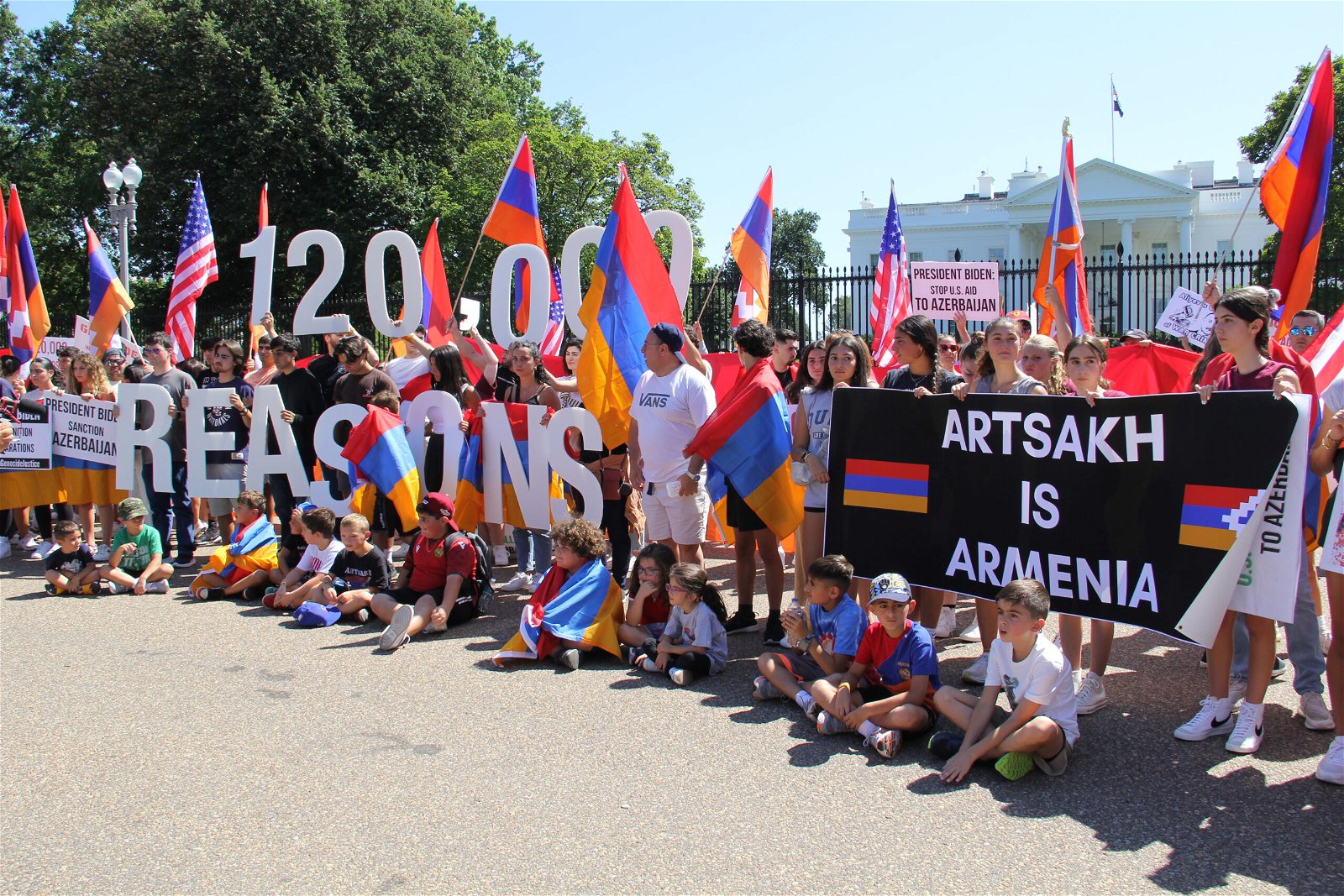 Protesters hold letters outside of White House reading, “120,000 Reasons” (Photo: Sona Gevorkian)
Hundreds of protesters took to Washington, D.C.’s streets on Friday, Sept. 1 to kick off the Armenian Revolutionary Federation’s (ARF) “SOS Artsakh” global call to action to demand government intervention to end Azerbaijan’s nearly nine-month blockade of Artsakh.
Marchers of all ages gathered in front of the Renaissance Washington, D.C. Downtown Hotel, the headquarters of the annual AYF Olympics, at 1:30 p.m., to walk to Lafayette Park across from the White House nearly a mile away.
“We are approaching nine months since Azerbaijan began its genocidal blockade of Artsakh. Food shortages across Artsakh, a reported death by starvation, fainting episodes due to waiting for hours in bread lines, water supplies being cut, miscarriages due to bad nutrition, electricity being cut,” said AYF-YOARF Central Executive member Areni Margossian, before leading the marchers toward Lafayette Park.
“For nine months, the international community and the United States along with it have remained largely indifferent, so we gather here today to send an SOS, to make our voices heard, to show our support for Artsakh, show that they are not alone and that we will stop at nothing to fight for the freedom of Artsakh and its security,” Margossian continued.
Protesters carrying signs, banners, and Artsakh and Armenia flags walked down the middle of New York Avenue chanting slogans aimed at U.S. President Joe Biden including, “Biden: Stop the second Armenian Genocide,” “Biden: Break the blockade” and “Biden: End U.S. aid to Azerbaijan.”
Gevik Atakhanian of Cresskill, New Jersey was motivated to march to end the consequences of the ongoing blockade. “We are still suffering, and nobody is doing anything about it,” Atakhanian said. “We have to get our message across somehow. I don’t know how long those people are going to suffer.”
The day before the march, the U.S. State Department issued a press statement on the humanitarian situation in Nagorno-Karabakh. The five-sentence statement conveyed the department’s deep “concern about the deteriorating humanitarian conditions in Nagorno-Karabakh resulting from the continued blockage of food, medicine and other goods essential to a dignified existence.” It included a “call to immediately re-open the Lachin corridor to humanitarian, commercial and passenger traffic.”
“Officials from Baku and representatives from Stepanakert should convene without delay to agree on the means of transporting critical provisions to the men, women and children of Nagorno-Karabakh – including additional supply routes – and resume discussions on all outstanding issues,” the statement reads. “Additional supply routes” likely refers to Azerbaijan’s proposal to deliver supplies to Artsakh through Aghdam. Artsakh authorities have rejected this offer, stating that it would normalize the continued blockade of the Berdzor (Lachin) Corridor.
ARF Eastern Region Central Committee chair Ani Tchaghlasian responded to the statement’s implication that Artsakh can negotiate with Azerbaijani President Ilham Aliyev’s regime to end the ongoing blockade.
“We do not accept this,” Tchaghlasian said. “President Biden, we are here to tell you – you can stop this genocide. You must stop this genocide. We are here to tell you that we will hold your administration personally responsible for this genocide.”
“Your so-called interests in the South Caucasus do not trump our right to live. They do not trump the right of 30,000 children to live in liberty in their millennia-old homeland. We are here to tell you, this is enough!” Tchaghlasian continued during her speech in front of the White House.
ANCA executive director Aram Hamparian said that Biden must stop “both-siding genocide.”
“There is the victim and the aggressor, and Azerbaijan is the guilty party. That’s why our president and State Department are so hell-bent for ‘peace’ that would integrate Artsakh into Azerbaijan, which we all know is a death sentence for the Artsakh population. A genocide. A second genocide. President Biden knows it. Ilham Aliyev knows it. The world sees it, and it is up to us to stop it,” Hamparian said.
AYF-YOARF Central Executive member Alec Soghomonian also chided the Biden administration for its inaction “at the expense of Armenian lives.” He said the U.S. has “aided and abetted Baku by sending military aid and refusing to enforce Section 907,” referring to the provision in the United States Freedom Support Act which bans direct U.S. military aid to Azerbaijan.
In 2022, the U.S. Government Accountability Office found that while the State Department has provided certified presidential waivers of Section 907 annually to Congress, it has failed “to provide Congress with all required information – such as the impact of aid on the military balance between Azerbaijan and Armenia.”
Soghomonian rallied the crowd, beseeching, “Act now! Wake up from your complacency! This blockade cannot become the new normal. We have all grown accustomed to chanting, ‘1915 never again!’ Unfortunately, 1915 is here. It is up to us to stop it.”
Speaking on behalf of the Armenian Relief Society, Eastern United States, Karine Shamlian said that schools should have opened for the fall in Artsakh, among them the ARS Sosseh kindergartens which have been closed due to the blockade. “Today, on September 1st, the ARS would have once again opened its doors and welcomed a new generation of students in its kindergartens, as the first day of school would have begun,” Shamlian said. “Unfortunately, kindergartens will have to remain closed, and due to this blockade, we are unable to provide the necessary back-to-school items or even give the access to education, depriving students of a basic human right.”
“It is our moral duty to stand up and advocate for the rights of those who cannot speak for themselves,” Shamlian said. “We must insist that the world does not turn a blind eye to the suffering of the innocent, for silence in the face of injustice is complicity.”
Hamazkayin Eastern United States representative Dr. Aline Baghdassarian also focused on the 30,000 children living under blockade in Artsakh and subjected to the genocide-by-starvation. She expressed hope that “our children will firmly stand on the shoulders of the people who have thrived for millennia.”
“Our children will remain deeply rooted in our faith, our culture, history and struggle for existence and independence. Only then can we build our future on solid ground,” Dr. Baghdassarian said.
The protest included the participation of Archbishop Vicken Aykazian of the Diocese of the Eastern Armenian Apostolic Church of America, as well as Rev. Asadour Minassian of St. Mark Catholic Church, Wynnewood, Penn. and Rev. Hovsep Karapetian of St. Mary Armenian Church, Washington, D.C. After leading the crowd in the Hayr Mer, or the Our Father, Archbishop Aykazian turned his attention to the president of the United States.
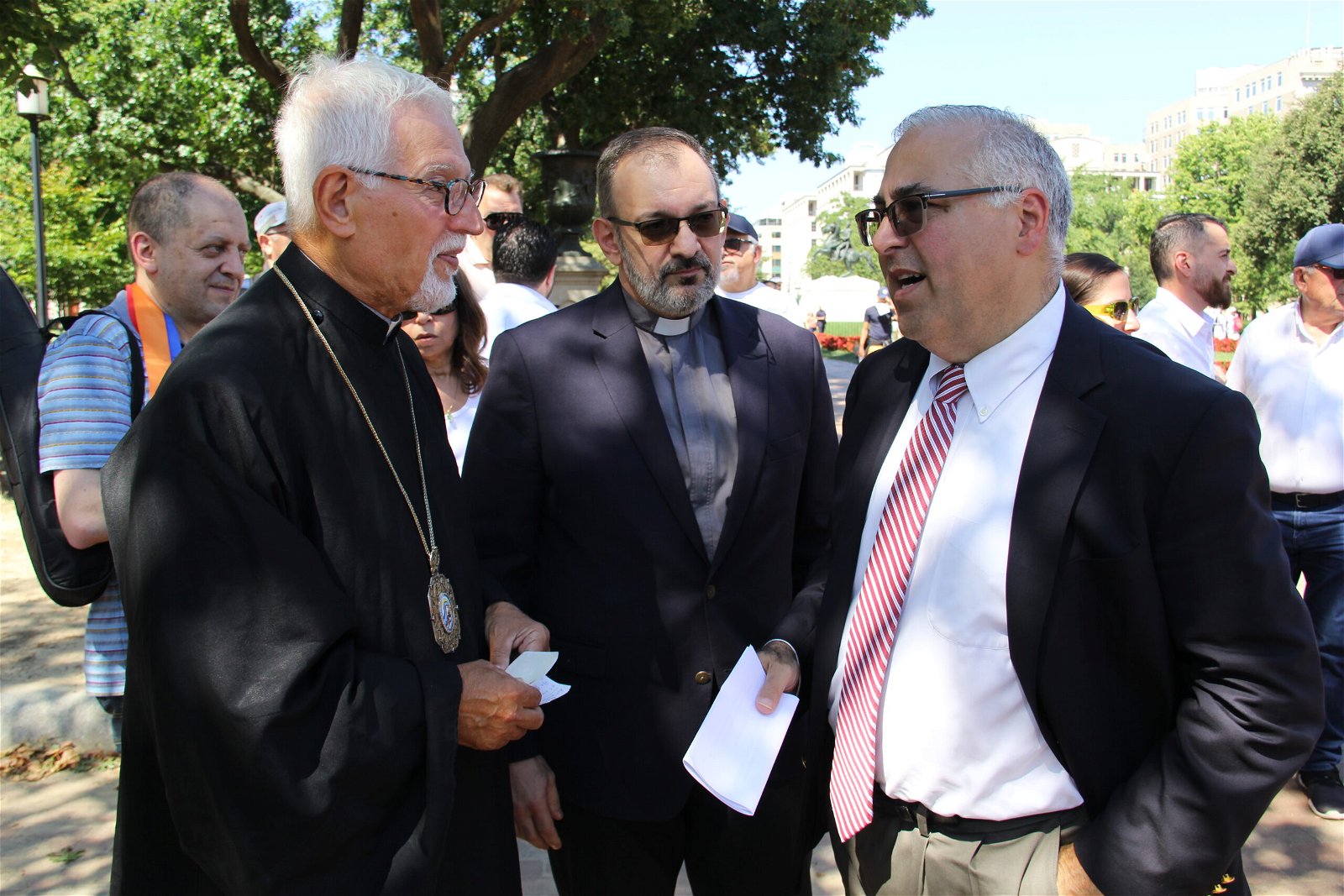 Archbishop Vicken Aykazian, Rev. Hovsep Karapetian and Aram Hamparian, pictured l. to r. (Photo: Sona Gevorkian)
“Mr. Biden, do you hear me? I’m sure you hear me. You are the first president of the United States to recognize the Armenian Genocide, for which we are grateful. Mr. President, we beseech you. Please do not foresee the second genocide of the Armenian people, because we will not forget. We will never forget,” Archbishop Aykazian said.
“You have to know that every single Christian church in this country has been standing up and sending letters to the White House, the State Department and many other people,” he added. “They are with us. We are not alone.”
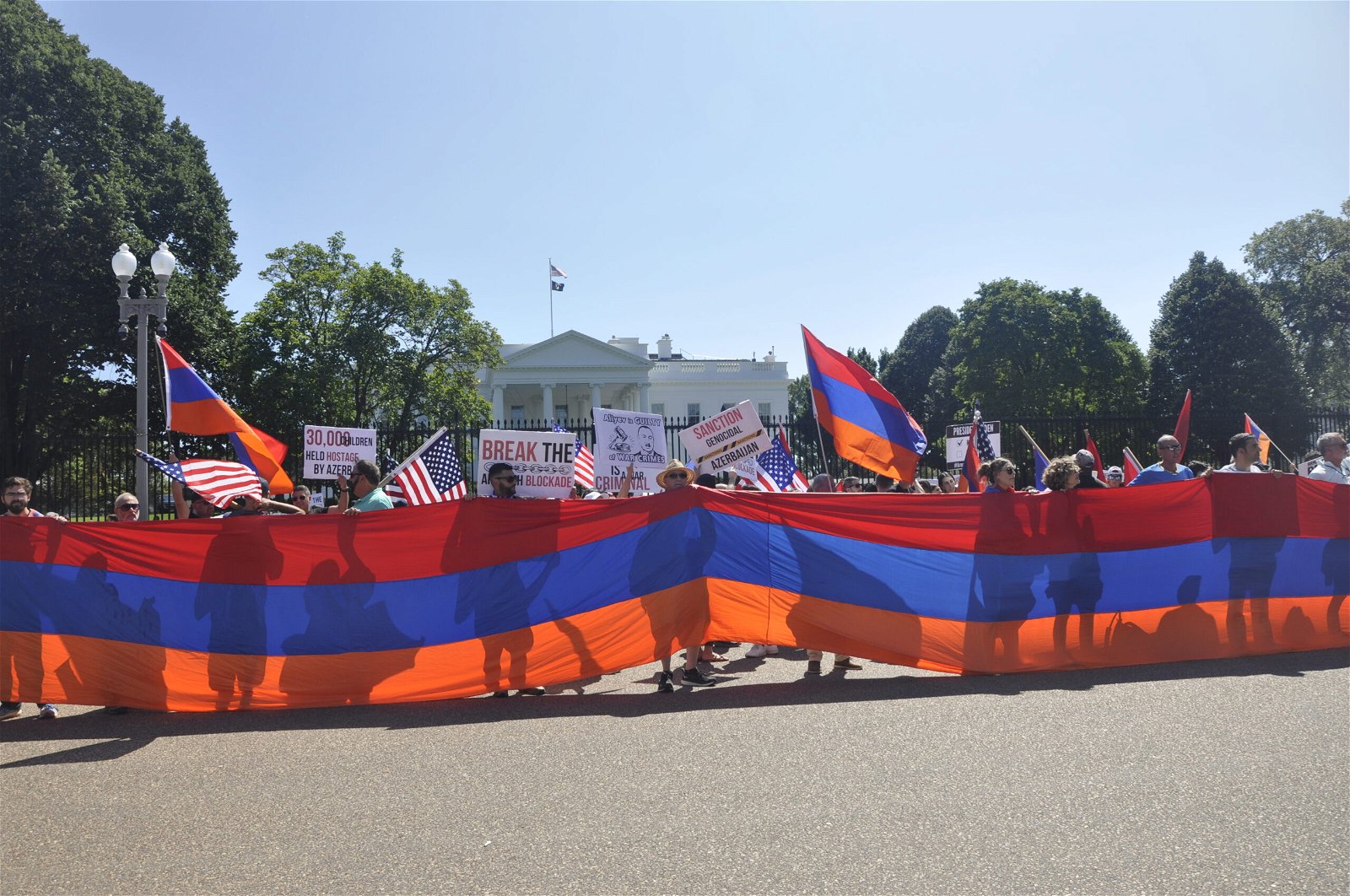 Protesters hold the Armenian flag outside of the White House (Photo: George Aghjayan)
Author information
Georgi Bargamian
Georgi Bargamian is a former editor of the Armenian Weekly. After 10 years working in community journalism, she attended law school and is an attorney, but she remains committed to her first love journalism by writing for the Armenian Weekly.
|
The post SOS Artsakh protest demands Biden administration take action to end blockade appeared first on The Armenian Weekly.